




Special Collections:
Food Security

This video features an interview with Krystal Crumpler, Coordinator of FAO’s IMP-ACT project, which runs from 2025 to 2030. Funded by Germany’s Federal Ministry for Economic Cooperation and Development with EUR 6.5 million, the project aims to enhance climate support in agriculture.
IMP-ACT will assist countries in integrating food and agriculture into their national climate plans, advocate for agriculture's role in climate negotiations, and attract targeted climate finance for agrifood systems. For more details, visit the FAO IMP-ACT page and learn about climate initiatives at FAO Climate Change.

This video showcases how safe fish production begins at the farm, featuring an FAO aquaculture expert and Georgian trout producers. They highlight improved water quality monitoring, biosecurity, and food safety practices that enhance fish health and market competitiveness, supported by the European Union and Sweden.
Farmers utilize field test kits and multi-parameter water quality analyzers to quickly detect harmful bacteria and monitor essential water parameters. With FAO training and matching grants under the European Neighbourhood Programme for Agriculture and Rural Development (ENPARD IV), producers are equipped to ensure clean water and high-quality fish.
Subscribe! YouTube | Follow FAO on Facebook, Instagram, LinkedIn, TikTok, Twitter, Weibo.

This video highlights the FISH4ACP program, which connects artisanal fishers in the Dominican Republic to high-value markets through the marketing channel La Ruta del Dorado. The mahi-mahi, or dorado, is crucial for the income and nutrition of these fishers.
FISH4ACP aims to enhance the mahi-mahi value chain by making it more profitable, inclusive, and sustainable. The program provides training in fish handling and strengthens the cold chain to improve product freshness and pricing. FISH4ACP is an initiative of the Organisation of African, Caribbean and Pacific States (OACPS), implemented by the FAO with support from the EU and the German Federal Ministry for Economic Cooperation and Development (BMZ).

This COFI Special Event celebrates blue foods with live cooking, tasting, and storytelling, while launching the IYWF Cookbook, From Land and Sea. Honored guests, the Jeju Haenyeo women divers, will share their experiences and collaborate with chefs to prepare Sea Urchin Noodle Soup. Dishes from Italy, Tanzania, the Dominican Republic, and Brazil will showcase women's knowledge and leadership in sustainable aquatic food systems.
Subscribe to our channel: FAO on YouTube. Follow FAO on social media: Facebook, Instagram, LinkedIn, TikTok, Twitter, Weibo.

Innovation encompasses not only technology like AI and robotics but also new and existing ideas. It involves using resources in novel ways and enhancing knowledge sharing to benefit everyone. For innovation to be impactful, it must be accessible and tailored to diverse communities worldwide.
Whether through modern or traditional methods, innovation seeks smart solutions to grow food, protect nature, and ensure a sustainable future. Join us this World Food Day to innovate today and nourish tomorrow. Learn more at World Food Day.
Subscribe to our channel here and follow us on social media: Facebook, Instagram, LinkedIn, TikTok, Twitter, Weibo.

Este video ofrece una visión general de los criterios y políticas del Programa de Cooperación Técnica (PCT) de la FAO, que regula la asistencia proporcionada a través del programa.
Para más información, visita este enlace. Suscríbete al canal de la FAO en YouTube y síguenos en nuestras redes sociales: Facebook, Instagram, LinkedIn, TikTok, Twitter, y Weibo.


Chef Fatmata Binta, FAO Regional Goodwill Ambassador for Africa, highlights the significance of grains like fonio and foxtail millet in promoting resilience, culture, and shared knowledge among communities. These climate-resilient crops support smallholder farmers and inspire healthier agrifood systems.
On the United Nations Day for South-South Cooperation (12 September), we celebrate the exchange of traditions and solutions across the Global South, fostering cultural connections through agriculture.
Subscribe to our channel: FAO on YouTube. Follow us on Facebook, Instagram, LinkedIn, TikTok, Twitter, and Weibo.

إنريكو بيروتي، الأمين العام للاتفاقية الدولية لوقاية النباتات، يفتتح ورش العمل الإقليمية لعام 2026، مشيداً بدور الأطراف المتعاقدة والمنظمات الإقليمية في تعزيز صحة النبات. تعتبر هذه الورش منتدىً سنوياً لمراجعة الحوكمة والاستراتيجية وتبادل الخبرات.
تركز الورش على مسودات المعايير الدولية لممارسات الصحة النباتية ومبادرات مثل مشروع شهادات الصحة النباتية الإلكترونية. تشمل التحديثات البرامج الجارية مثل برنامج الحاويات البحرية وشبكات المختبرات التشخيصية.
Subscribe! YouTube | Follow FAO: Facebook, Instagram, LinkedIn, TikTok, Twitter, Weibo

The 2026 IPPC Regional Workshop is set to open soon. IPPC Secretary-General Enrico Perotti emphasized the crucial role of contracting parties and Regional Plant Protection Organizations (RPPO) in shaping the future of global plant health. This workshop will review IPPC governance, strategies, standards, and capacity building, while providing a platform for regions to share experiences and priorities.
Key topics include the draft International Standards for Phytosanitary Measures (ISPM), advancements in the IPPC ePhyto solutions, and updates on initiatives like the maritime container program and the African Plant Quarantine Program.
Subscribe to our channel: FAO YouTube. Follow us on Facebook, Instagram, LinkedIn, TikTok, Twitter, and Weibo.
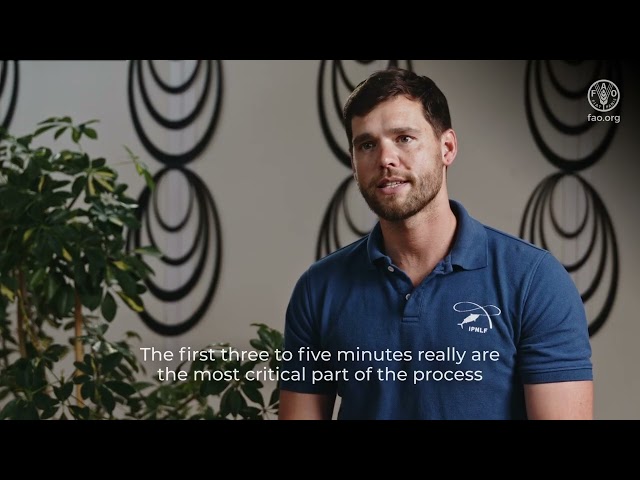
Small-scale tuna fishers can enhance their catch quality and market access through seven practical steps introduced in this video. Developed by the Common Oceans Tuna Project, led by the Food and Agriculture Organization (FAO) with support from the Global Environment Facility (GEF), these steps focus on careful handling, rapid cooling, and maintaining a cold chain to minimize losses and maximize value.
Collaborating with the International Pole and Line Foundation (IPNLF), this method has been tested with fishers in Indonesia, Tanzania, and Oman. By implementing these strategies, fishers can improve their livelihoods and promote sustainable tuna fisheries. For more information, read the guide on best practice handling.


Kyrgyzstan is leveraging innovation by combining science, technology, and local knowledge to enhance food production and protect natural resources. Solutions like seed balls for arid areas and artificial glaciers for water storage are empowering communities. Traditional knowledge continues to guide pastoralists, who now integrate modern tools like GPS and drones.
The FAO is also promoting sustainable fish farming and safeguarding Kyrgyzstan's unique walnut forests. These initiatives illustrate how innovation can create resilient food systems while preserving vital resources. This World Food Day, learn how Kyrgyzstan is merging new ideas with traditional practices for a sustainable food future.
Subscribe to the FAO on YouTube and follow them on Facebook, Instagram, LinkedIn, TikTok, Twitter, and Weibo.

Deep-sea sharks are some of the most intriguing and least understood creatures on Earth, with over 500 species adapted to survive in extreme ocean depths. These sharks possess unique features like glowing eyes and enhanced senses, allowing them to thrive in their dark habitats.
Researchers, fishers, and fisheries management organizations are working together through the Common Oceans Deep Sea Fisheries Project to enhance scientific understanding, promote sustainable fishing, and conserve vulnerable deep-sea ecosystems. Discover more about these efforts and the hidden lives of deep-sea sharks at FAO.

跨境动物疫病威胁全球粮食安全和经济发展。加强伙伴关系和持续投入对于保护动物卫生和建设韧性农业体系至关重要。此视频介绍全球跨境动物疫病防控合作计划(GPP-TAD),旨在通过“同一健康”方法支持疫病的预防和控制。
GPP-TAD汇聚各国政府、区域组织、发展伙伴和私营部门,围绕共同优先事项开展协调行动,推动资源向最具影响力的领域倾斜。了解更多信息,请访问 FAO。

منذ منتصف عام 2025، حصل 1,700 مزارع في قطاع غزة على مدخلات زراعية ومساعدات نقدية مشروطة من منظمة الأغذية والزراعة للأمم المتحدة (الفاو). بفضل هذا الدعم، أصبح بإمكانهم إنتاج ما يكفي من الخضروات الطازجة لأكثر من 120,000 شخص.
شاهد الفيديو لمعرفة المزيد عن هذا المشروع المدعوم من بلجيكا والاتحاد الأوروبي ووزارة الخارجية الإيطالية ومكتب الأمم المتحدة لتنسيق الشؤون الإنسانية. لمتابعة الفاو على وسائل التواصل الاجتماعي، يمكنك زيارة: فيسبوك, إنستغرام, لينكدإن, تيك توك, تويتر, و ويبو.

Since mid-2025, 1,700 farmers in the Gaza Strip have received agricultural inputs and conditional cash from the Food and Agriculture Organization of the United Nations (FAO). This support has enabled them to produce enough fresh vegetables for over 120,000 people, funded by Belgium, the European Union, Italy, and the United Nations Office for the Coordination of Humanitarian Affairs.
Watch the video to learn more about this initiative. Subscribe to FAO's channel here. Follow FAO on social media: Facebook, Instagram, LinkedIn, TikTok, Twitter, Weibo. © FAO: www.fao.org #SDGs #Agenda2030 #GlobalGoals

Rangelands and pastoralists are essential for maintaining ecosystems and biodiversity.
NGOs, cooperatives, and civil society can support and protect these vital resources through six key actions.
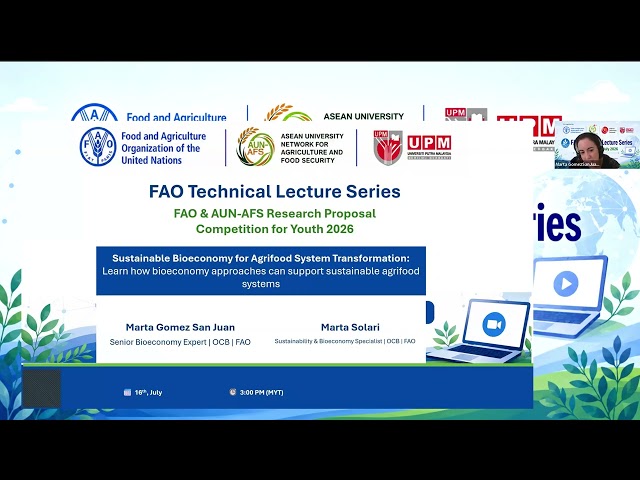
This FAO Technical Lecture Series webinar, part of the FAO & AUN-AFS Research Proposal Competition for Youth 2026, discusses the sustainable bioeconomy’s role in transforming agrifood systems. Presented by Marta Solari and Marta Gómez from FAO, the session covers how bioeconomy can create value from biological resources, reduce waste, and enhance climate resilience.
The discussion includes practical examples from various countries, focusing on waste valorization, bioinputs, and value chain development. It emphasizes the importance of innovation, green jobs, youth engagement, and collaboration for building sustainable agrifood systems. For more information, visit FAO.
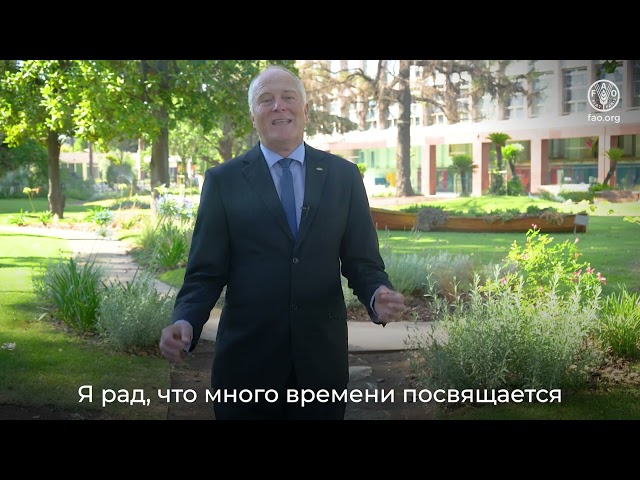
Enrico Perotti, Secretary of the International Plant Protection Convention (IPPC), opens the Regional IPPC Seminars, highlighting the crucial role of contracting parties and regional organizations in shaping plant health protection. He emphasizes that these seminars serve as a key annual forum for discussing IPPC management, strategy, standard development, and capacity-building activities, allowing regions to share experiences and address challenges.
The seminars focus on International Standards for Phytosanitary Measures (ISPM) projects, implementation initiatives like the IPPC EFS Program, and the IPPC "Plant Health" Virtual Campus. They also provide updates on programs related to maritime container transport, diagnostic laboratory networks, and the African Phytosanitary Program.
Subscribe! YouTube
Follow FAO on social media: Facebook, Instagram, LinkedIn, TikTok, Twitter, Weibo.
© FAO: FAO #SDGs #Agenda2030 #GlobalGoals
Environmental Scientist and Advocate
What EarthSayers stands for
Discover Diverse Voices on EarthSayers
Unlike algorithm-driven platforms that push you into a content bubble, we ensure you hear a variety of perspectives from scientists, activists, Indigenous leaders, business innovators, and everyday citizens working toward sustainability.
EarthSayers CINEMA
Watch, learn and lead—sustainability starts with you.
How to Live on Earth | Feature Documentary | Presented by Benedict Cumberbatch
What if the solutions to building a better future already exist? How to Live on Earth is an ambitious documentary that explores how humanity can create a thriving future by collaborating with nature. Presented by Benedict Cumberbatch, the film reveals the potential of teaming up with nature to address our greatest challenges.
Heartwarming and energizing, it offers a hopeful vision for a future where both nature and humanity can thrive. How to Live on Earth is produced by Open Planet Studios in association with Villars Institute Foundation and Silvania. Join the conversation by downloading film assets and sharing your reaction at howtoliveonearth.net/social-toolkit. Explore educational resources from the Villars Institute at YouTube.


