



Special Collections:
Food Security
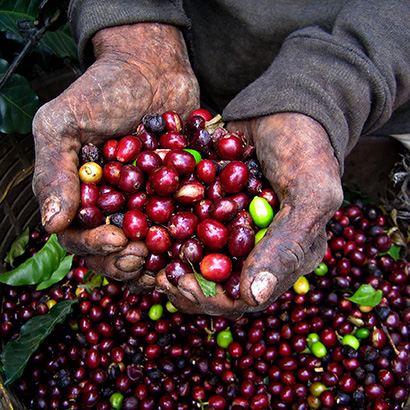

AGROVOC is the FAO’s multilingual thesaurus for food and agriculture, designed to connect concepts and terms across languages. This tool enhances the organization and discovery of agricultural research, making it accessible across various languages and disciplines.
Learn more about how AGROVOC promotes the visibility of agricultural knowledge worldwide at www.fao.org/agrovoc. Subscribe to our channel for updates at YouTube and follow FAO on social media: Facebook, Instagram, LinkedIn, TikTok, X, and Weibo.

Explore the One Country One Priority Product Initiative and the Digital Village Initiative aimed at enhancing the environment and improving lives.
Subscribe to our channel: FAOoftheUN. Follow FAO on social media: Facebook, Instagram, LinkedIn, TikTok, X, Weibo. © FAO: fao.org #SDGs #Agenda2030 #GlobalGoals

The FISH4ACP program, initiated by the Organisation of African, Caribbean and Pacific States (OACPS) and implemented by the FAO, aids oyster harvesters in Senegal and Gambia in transitioning to modern farming practices. Insights gained from this initiative are applied to enhance oyster farming in Guinea-Bissau through the New Aquatic Value Chains (NAVAC) project.
NAVAC aims to improve access to nutritious aquatic foods for vulnerable communities while bolstering local economies via innovative aquatic value chains. This initiative is funded by the European Union as part of the Global Gateway and is executed in collaboration with the Technical University of Denmark.

The FAO Regional Office for the Near East and North Africa participated in the second edition of Seeds to Foods 2026 in Rome from October 8 to 12. The NENA Region Pavilion showcased the region's agricultural heritage, featuring food tastings, cultural performances, cooking demonstrations, and interactive activities that celebrated its diversity.
This event brought together people and flavors from across the region, highlighting the communities behind its rich food traditions.
Subscribe to FAO on YouTube: FAOoftheUN. Follow FAO on social media: Facebook, Instagram, LinkedIn, TikTok, X, Weibo.

The report, Nature’s Comeback – Scaling Ecosystem Restoration for People and Planet, is released during the UN Decade on Ecosystem Restoration (2021–2030). It offers the first comprehensive global assessment of progress towards restoring one billion hectares and achieving the Kunming-Montreal Global Biodiversity Framework target of restoring at least 30% of degraded ecosystems by 2030.
For more details, visit FAO Newsroom. Subscribe to our channel here and follow FAO on social media: Facebook, Instagram, LinkedIn, TikTok, X, and Weibo.

The FISH4ACP program is enhancing Nigeria's catfish sector by training small-scale fish farmers in best practices and facilitating access to finance for business growth. This initiative aims to improve the resilience and efficiency of the catfish industry, ensuring affordable food for the population while creating jobs and reducing environmental impact.
FISH4ACP is implemented by the Food and Agriculture Organization (FAO) and funded by the European Union and the German Federal Ministry for Economic Cooperation and Development. For more information, visit FISH4ACP.

Il Museo e Rete per l'Alimentazione e l'Agricoltura (#FAOMuNe) offre esperienze immersive, una collezione internazionale, mostre ed eventi in tutta Italia, avvicinando il pubblico al mondo dell'alimentazione e dell'agricoltura. È uno spazio per scoprire, creare connessioni e guardare al futuro da nuove prospettive.
Scopri di più e prenota la tua visita: FAO Museum Network. #FAOMuNe compie un anno e il viaggio continua con te. Iscriviti al nostro canale YouTube: FAOoftheUN. Seguici sui social: Facebook, Instagram, LinkedIn, TikTok, X, Weibo.

Kamonwan "Saeb" Roongprasertwong, a young farmer in Thailand, is revolutionizing the cultivation and consumption of Wolffia, a nutrient-rich aquatic plant. By leveraging digital technology and sustainable farming practices, she empowers farmers to boost their incomes and develop innovative food products.
Saeb's work inspires a new generation to view agriculture as a means for entrepreneurship, environmental stewardship, and rural development. Join the movement by subscribing to the FAO on YouTube and follow them on Facebook, Instagram, LinkedIn, TikTok, X, and Weibo.

In western Mongolia, herder and cooperative leader Altantsetseg Ganbold is empowering pastoral communities to adapt to climate change. By enhancing sheep breeding, adopting modern wool production techniques, and utilizing digital livestock management, local herders are boosting productivity and preserving their traditional lifestyles for future generations.
Stay connected with FAO: Subscribe on YouTube, and follow us on Facebook, Instagram, LinkedIn, TikTok, X, and Weibo. © FAO: fao.org #SDGs #Agenda2030 #GlobalGoals

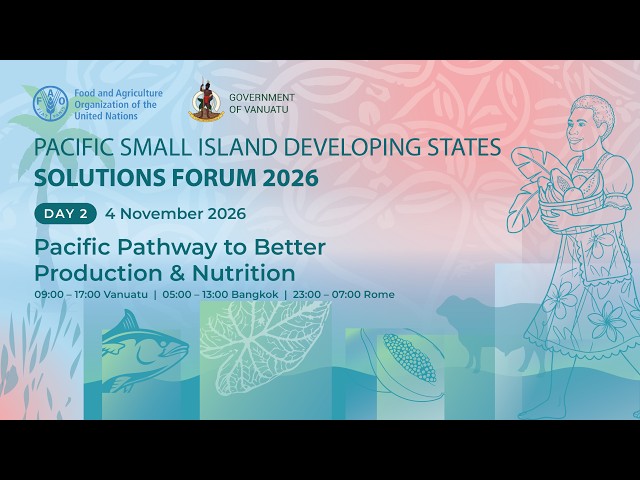
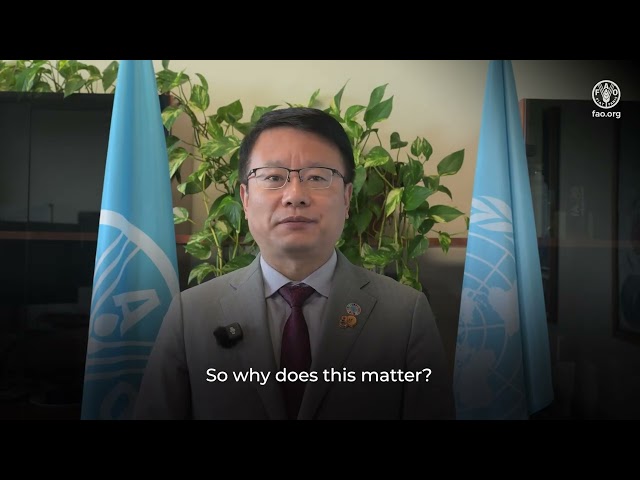
At the 2026 Pacific SIDS Solutions Forum in Vanuatu, Maurizio Martina, FAO Deputy Director-General, emphasized the need for stronger partnerships, innovative solutions, and investment to combat food insecurity and enhance agrifood systems in Pacific Small Island Developing States.
Stay connected with FAO: Subscribe on YouTube. Follow us on Facebook, Instagram, LinkedIn, TikTok, X, and Weibo. Visit our website: FAO.

Danny Bernstein, CEO of Reservoir, oversees Reservoir Farms in Salinas, California, where robotics startups test machines on real crops. With nearly 20 years in Silicon Valley, including roles at Google and Microsoft, he now focuses on agriculture technology. In this episode, he discusses the significant labor shortage in farming, highlighted by over 400,000 H-2A positions in 2025 and only 182 domestic applicants.
Bernstein outlines three areas for innovation: replacing agricultural chemicals with physics, using machine vision to minimize chemical application, and automating unfilled jobs. He emphasizes the challenges of harvesting fresh produce and the importance of community engagement, as Reservoir collaborates with local colleges to train interns and develop agricultural technology. Recorded at Reservoir Farms in August 2026.

The climate crisis has heightened challenges for the Wayuu Indigenous communities in Venezuela’s La Guajira region. To aid their recovery, FAO has implemented initiatives to enhance food security and livelihoods for 5,745 individuals across six communities.
These efforts include rehabilitating degraded lands, managing soil and water sustainably, and boosting agricultural production with drought-tolerant seeds and climate-resilient irrigation systems. The project also restored community wells and water reservoirs using renewable energy to ensure access to water for households and agriculture. A gender-responsive approach empowered Indigenous women in food production and resource management, blending traditional knowledge with technical skills to create resilient agrifood systems.
Ecosystem restoration is vital for both people and the planet, enhancing food security, climate goals, biodiversity, and land degradation neutrality. It supports the healthy ecosystems essential for our food, water, and economies. The first global Restoration Progress Report reveals that 252 million hectares are now under restoration, demonstrating that nature can recover.
As we enter the final five years of the UN Decade on Ecosystem Restoration, everyone can contribute to Generation Restoration. It is crucial to accelerate restoration efforts and transform commitments into tangible actions.
Subscribe to our channel: FAO. Follow us on Facebook, Instagram, LinkedIn, TikTok, X, and Weibo.

This video discusses the development of a National Strategic Vision for transforming agrifood systems, promoting a resilient Blue Pacific, and advancing the Hand-in-Hand Initiative.
Stay updated by subscribing to our channel: FAO on YouTube. Follow us on social media: Facebook, Instagram, LinkedIn, TikTok, X, and Weibo. © FAO: fao.org #SDGs #Agenda2030 #GlobalGoals

Explore the National Strategic Vision for transforming agrifood systems, fostering a resilient Blue Pacific, and implementing the Hand-in-Hand Initiative.
Stay connected with FAO by subscribing to their YouTube channel: FAO on YouTube. Follow them on social media: Facebook, Instagram, LinkedIn, TikTok, X, and Weibo. © FAO: FAO Website #SDGs #Agenda2030 #GlobalGoals

This video highlights key moments from the World Food Day 2026 event at Al-Hussein Cultural Center, under the patronage of HRH Princess Basma bint Talal. It features opening remarks, awards from a drawing competition organized with the Ministry of Education, and recognition of Jordanian participants in FAO’s From Seeds to Foods Global Exhibition in Rome.
The event also showcased an innovation exhibition focused on climate-smart agriculture technologies, sustainable food processing solutions, and value-added agricultural products, all aimed at enhancing food security and creating economic opportunities, especially for women and youth.
Subscribe to the FAO channel: YouTube. Follow FAO on Facebook, Instagram, LinkedIn, TikTok, X, and Weibo.

World Food Day, celebrated on October 16, is an international day established by the United Nations to address global food issues. The theme for World Food Day 2026 is "Innovate today. Nourish tomorrow," emphasizing the importance of leveraging human ingenuity to develop new technologies and share knowledge, ensuring solutions reach those in need.
This event, hosted by FAO in collaboration with IFAD, WFP, and Yokohama Municipal Nishishiba Junior High School, received support from Japan's Ministry of Foreign Affairs and Ministry of Agriculture, Forestry and Fisheries.
Subscribe to FAO: YouTube. Follow FAO on Facebook, Instagram, LinkedIn, TikTok, X, and Weibo.

This video serves as a practical guide for hatchery operators on decapsulating Artemia cysts, enhancing hatching efficiency and reducing contamination risks. It details the entire process, including cyst hydration, chemical decapsulation, monitoring, washing, chlorine neutralization, and storage, while emphasizing safety measures for handling hazardous chemicals and managing effluents.
Based on the fact sheet "Artemia hatchery practices – Cyst decapsulation," this resource is part of a series of on-farm hatchery management guides from the FAO. For more updates, subscribe to the FAO YouTube channel here and follow FAO on Facebook, Instagram, LinkedIn, TikTok, X, and Weibo.

The Measurement, Reporting and Verification (MRV) dashboard offers insights into countries’ forest reference level submissions to the UNFCCC and the assessed emission reductions. It also summarizes emission reductions reported under jurisdictional REDD+ schemes, showcasing the progress in transparent forest monitoring and reporting for climate action.
Explore the MRV Dashboard here. Learn more about Forest Monitoring and AIM4Forests. Subscribe to our channel here and follow FAO on social media: Facebook, Instagram, LinkedIn, TikTok, X, Weibo.
Environmental Scientist and Advocate

