




Special Collections:
Forests and Oceans
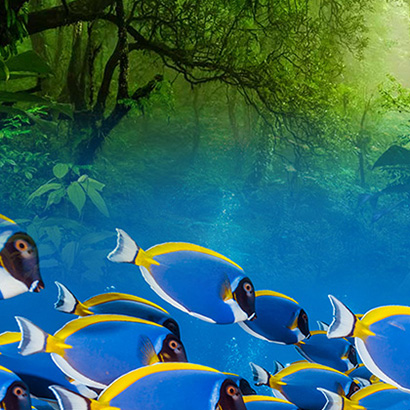

Patricia Gualinga of Ecuador's Kichwa community criticizes the lack of economic analysis on the Amazon's true value, asserting that oil extraction is prioritized for "easy money" to repay China's debt, without considering "what is lost by destroying the Amazon." This concern arose as an oil round in southeastern Ecuador offered 3 million hectares of tropical forest, home to seven indigenous nationalities, to companies, with contracts anticipated by October 2013.
This report was published on March 9, 2013, and produced by Pacha Producciones in Quito, Ecuador.

WWF's Global Marine Programme works to increase international attention for ocean conservation and protect the high seas.
These international waters, comprising 64% of the oceans (half the planet), lie beyond national jurisdiction and are open-access common areas. For more information, visit panda.org/highseas.

From 60 feet beneath the sea, Dr. Sylvia Earle delivered a powerful wake-up call about the ocean's critical state and its necessity for human survival. This message originated from Aquarius' final mission as a research base, recorded during a live event on July 17, 2012.
The ocean is our lifeline, supplying over half our oxygen, 97% of Earth's water, and countless species. Our very existence depends on it. Watch this compelling clip featuring "Her Deepness" Sylvia Earle, a renowned ocean advocate, to understand why.

In Dana Point, California, Melissa McGinnis spoke with eco expert Anthony Zolezzi, fresh from the Fortune Green conference. Zolezzi shared a profound takeaway: 50% of our oxygen comes from the ocean. He noted that the ocean's vital importance is often overshadowed by concerns for rainforests or carbon emissions.
Consequently, Zolezzi emphasized the critical need for extreme sensitivity in how we view and manage water resources moving forward. He urged a shift in perspective to prioritize the ocean's role in global ecosystems.
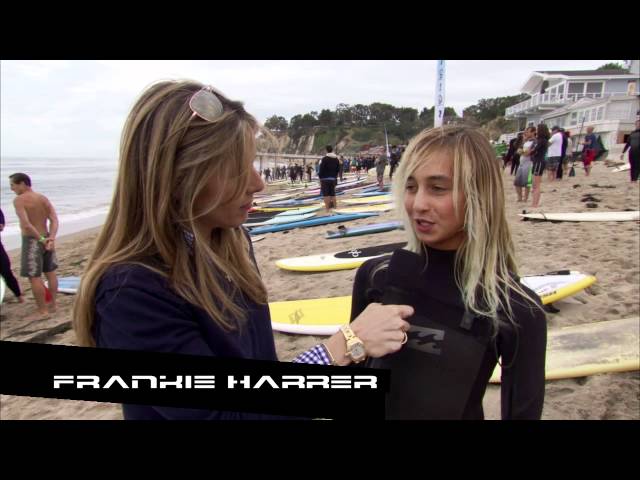
Hundreds have joined to demonstrate their support for ocean conservation, proving that actions speak louder than words.
You can also show your support by asking President Obama to represent our oceans' needs at Rio+20. Click here.
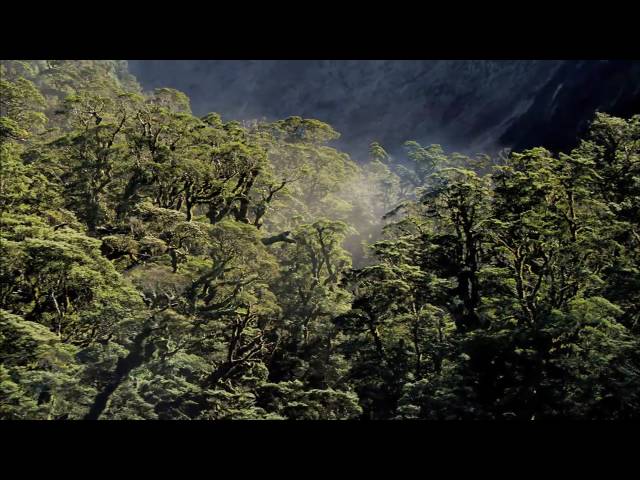
Yann Arthus-Bertrand was appointed by the United Nations to produce the official film for the International Year of Forests. This commission followed the significant success of his previous work, "Home," which garnered 400 million viewers.
In February 2011, Arthus-Bertrand began creating a concise 7-minute film on forests. It features aerial images compiled from both "Home" and his "Vu du Ciel" television programs.

Despite California's global warming legislation, greenhouse gas emissions continue to rise, potentially leading to a four-degree annual temperature increase. This highlights an urgent environmental challenge.
Randy Hayes, founder of the Rainforest Action Network and described by the Wall Street Journal as “an environmental pit bull,” is addressing this. From Washington D.C., he leads Foundation Earth, a new organization dedicated to rethinking human systems to align with the planet’s life support capabilities.
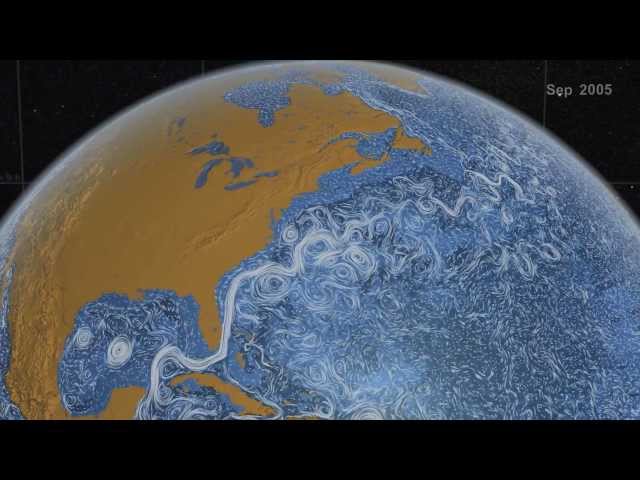
This visualization displays global ocean surface currents from June 2005 to December 2007. It provides a simple, visceral experience using ocean flow data, without narration or annotations.
The visualization was produced using NASA/JPL's computational model, Estimating the Circulation and Climate of the Ocean, Phase II (ECCO2).
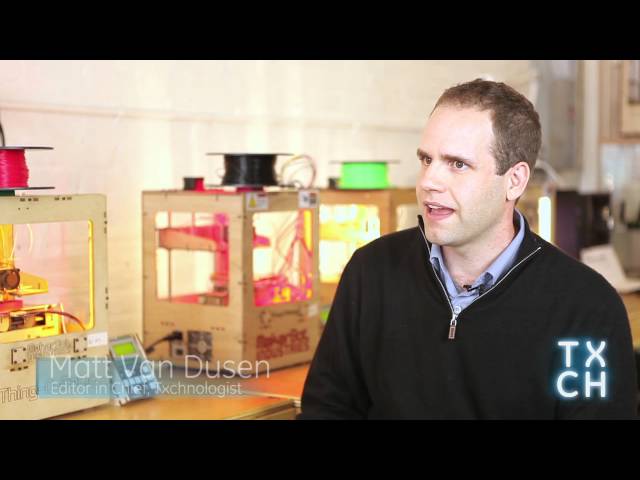
Hermit crabs, which scavenge shells for homes, are facing a critical housing shortage due to declining worldwide supplies. This vulnerable species needs community support.
The MakerBot community can utilize digital design and 3D printing to create alternative homes: 3D printed shells. This "Project Shellter" initiative offers a vital solution. For more details, see this Txchnologist magazine article.

At the TBN National Conference 2011, Greg Spencer presented the Paradigm Project. This for-profit business supplies healthy, efficient stoves to Africa, significantly reducing families' wood consumption and smoke inhalation, while improving their economic stability.
The project not only aids the poor but also leverages billions in carbon markets, combats deforestation, and challenges the notion that profiting from the poor cannot benefit them.
Explore other presentations, videos, and audio recordings from the conference here: http://www.tbnetwork.org/uknc11/media

This award-winning documentary chronicles the remarkable story of a woman who spent two years living 200 feet up in a redwood tree.
Her extraordinary journey was undertaken to protect the thousand-year-old tree from destruction.

Environmental and social justice activist Julia Butterfly Hill argues that our perception of being separate from the natural world has cultivated a "disposability consciousness."
This mindset, she explains, leads to the exploitation of resources and people, contributing to both environmental degradation and social injustice. Hill advocates for a shift towards interconnectedness to foster a more sustainable and equitable future.

Michael Fishbach recounts his encounter with a humpback whale entangled in a fishing net.
He and Gershon Cohen co-founded The Great Whale Conservancy to protect these magnificent marine animals.
Support their mission to save whales and become a Facebook fan.
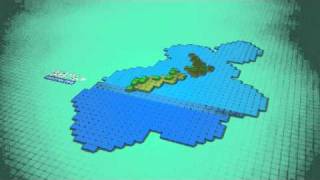
Recent polling shows New Zealanders want over a third of their oceans protected in marine reserves, a 100-fold increase from current levels.
WWF-NZ is dedicated to safeguarding these vital marine environments.
Support their conservation efforts: http://www.wwf.org.nz/

Ocean explorer Robert Ballard unveils hidden underwater worlds, revealing unexpected life, resources, and new mountains. His expeditions highlight the vast, unexplored depths of our planet.
Ballard advocates for serious exploration and mapping of these crucial environments. He implicitly asks if tools like Google Ocean (now part of Google Earth) could further this vital research.

"Circle of Life" is a series of interconnected short films that can be played individually or as a continuous narrative. These HD films offer a personal snapshot of the marine world at the end of the 21st century's first decade, reflecting the creator's unique observations rather than a definitive record.
To view the complete series, visit the whitewitchwares YouTube channel.

This touching and often funny film follows "everyman" Jeb Berrier on a global journey to unravel the complexities of our plastic world. What begins as an exploration of plastic bags quickly expands into a comprehensive investigation of plastic's impact on our waterways, oceans, and even our own bodies.
The film reveals how our reliance on plastic has finally caught up to us, urging immediate action. It challenges viewers to consider a day without plastic and what we can do about this critical issue, starting today.

This presentation summarizes strategic initiatives from the Aitkin County Land Department's Strategic Forestry Plan, detailing progress made between 2000 and 2008. The department manages 222,000 acres of tax-forfeited land in Aitkin County, Minnesota.
Published by Dovetail Partners in February 2010.
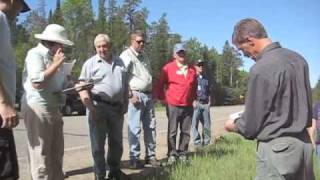
In May 2010, a tour explored recreation trails and high conservation value forests.
These areas are managed by the Crow Wing County Land Services Department in Crow Wing County, Minnesota, USA.

The Ocean Conservancy underscores the ocean's fundamental role in planetary health. It sustains us daily with food, water, and air, connecting all living things. Recognizing this vital link, the organization advocates that true environmentalism—"going green"—begins with "living blue."
It's time to initiate a significant "sea change" in our approach to global well-being.
Environmental Scientist and Advocate
What EarthSayers stands for
Discover Diverse Voices on EarthSayers
Unlike algorithm-driven platforms that push you into a content bubble, we ensure you hear a variety of perspectives from scientists, activists, Indigenous leaders, business innovators, and everyday citizens working toward sustainability.
EarthSayers CINEMA
Watch, learn and lead—sustainability starts with you.
How to Live on Earth | Feature Documentary | Presented by Benedict Cumberbatch
What if the solutions to building a better future already exist? How to Live on Earth is an ambitious documentary that explores how humanity can create a thriving future by collaborating with nature. Presented by Benedict Cumberbatch, the film reveals the potential of teaming up with nature to address our greatest challenges.
Heartwarming and energizing, it offers a hopeful vision for a future where both nature and humanity can thrive. How to Live on Earth is produced by Open Planet Studios in association with Villars Institute Foundation and Silvania. Join the conversation by downloading film assets and sharing your reaction at howtoliveonearth.net/social-toolkit. Explore educational resources from the Villars Institute at YouTube.


