




Special Collections:
Forests and Oceans

Boyan Slat, born 1994, is a Dutch inventor and entrepreneur. At 18, after encountering more plastic than fish while diving in Greece, he questioned why ocean pollution couldn't be cleaned. This inspired him to research plastic pollution, leading to his passive clean-up concept, which he presented at TEDxDelft in 2012.
He founded The Ocean Cleanup, temporarily pausing his aerospace engineering studies to lead a team of approximately 50. His 2017 speech detailed a design breakthrough for the project.
Follow The Ocean Cleanup's progress on their website, Facebook, and Twitter.

The ocean profoundly impacts everyone, even those far from the coast. It regulates our climate, stores carbon, and provides essential nutrients that sustain forests.
Oceana is dedicated to protecting these vital marine environments. Through efforts against offshore drilling, seafood fraud, and other threats, Oceana works to safeguard our oceans now and in the future.

In March 2016, the Obama administration removed the Atlantic from oil drilling plans for five years, a decision influenced by coastal residents. This marked a significant victory for Oceana and the people of the East Coast, demonstrating that their voices were heard in Washington.
Learn more about Oceana's campaigns: Oceana Climate & Energy Campaign
Music by Adam Lindquist: fa-da-do.com

Global Fishing Watch is an independent organization dedicated to advancing ocean transparency through cutting-edge technology.
It utilizes satellite data and machine learning to visualize, track, and analyze global commercial fishing activity. This platform helps combat illegal, unreported, and unregulated (IUU) fishing, promoting sustainable practices worldwide.
Their free, public platform provides critical data and tools for governments, researchers, and the public to better understand and manage marine resources.

Global Fishing Watch provides a powerful platform for monitoring global fishing activity. It leverages satellite technology and public data to visualize, track, and analyze vessel movements worldwide, promoting transparency in our oceans.
This initiative is crucial for combating illegal fishing, supporting marine conservation, and driving sustainable management of marine resources. Explore their work and data at globalfishingwatch.org.

Support marine life conservation by symbolically adopting a sea otter today.
Your adoption helps protect these vital creatures. Click here to make a difference.
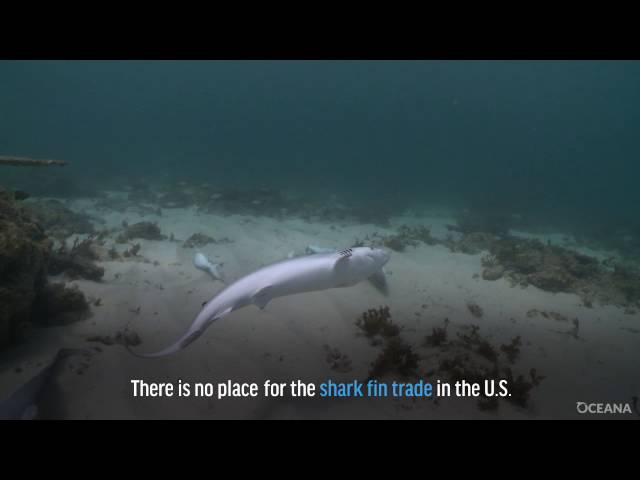
Shark finning is an inhumane and wasteful practice where fins are cut from sharks, whose bodies are then discarded at sea. Up to 73 million shark fins enter the global trade annually.
While illegal in American waters, shark fins are still bought and sold in the U.S. A nationwide ban on this trade is crucial to ensure the U.S. does not support finning and to protect sharks worldwide.
Add your name to our petition and tell Congress to prohibit the sale and trade of all shark fin products in the U.S.: http://bit.ly/2aZhHw0

Nearly 800 million people lack sufficient food, and two billion suffer from micronutrient deficiencies. As the global population grows, food production must dramatically increase. Our oceans offer a powerful solution: by restoring them, we can feed the world.
Fish are a "perfect protein"—nutritious, inexpensive to produce, and require no farmland or freshwater. A fully restored ocean could sustainably provide a healthy fish meal daily for over one billion people. We can achieve this by implementing three basic steps in just 25 countries: managing catch and protecting vital habitats.
To learn more, visit Oceana.org.

Global Fishing Watch (GFW), a free online tool from Oceana, SkyTruth, and Google, reveals the apparent fishing activity of over 35,000 commercial vessels globally. Regularly updated with data since 2012, GFW publicly shares vital information to enhance ocean health, support fishery management, and combat illegal fishing. This revolutionary tool empowers governments, journalists, and citizens to track vessels, enforce rules, and protect marine ecosystems.
GFW uses public Automatic Identification System (AIS) data, collected by satellite and terrestrial receivers. Over 20 million data points are added daily, enabling GFW to track vessel movement and classify it as "fishing" or "non-fishing" activity.

Global Fishing Watch is an international nonprofit dedicated to increasing transparency of human activity at sea. They leverage satellite technology, artificial intelligence, and data analysis to monitor and visualize global fishing efforts.
Their primary goal is to combat illegal, unreported, and unregulated (IUU) fishing, promote sustainable fisheries, and protect marine ecosystems. By making fishing activity visible, they empower governments, researchers, and the public to make informed decisions.
A key output is their free, public map, accessible at globalfishingwatch.org, which provides unprecedented insights into vessel movements worldwide.

Support ocean creatures, like killer whales, through a symbolic adoption.
Visit our store to find your adoption package and help protect marine life: Find them here.
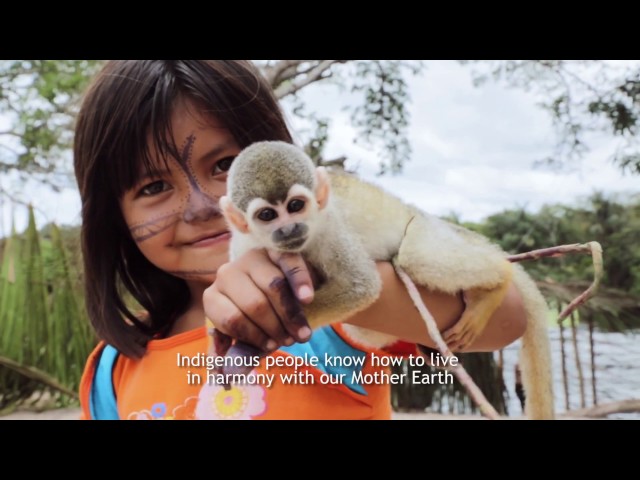
Amazon Watch defends indigenous rights and territories, vital for protecting the Amazon rainforest. Indigenous lands, holding 80% of global biodiversity, face constant threats from extractive industries seeking resources. If unchecked, the Amazon's Sacred Headwaters could become an oil field, and other regions destroyed by agribusiness and mega-dams.
We stand with indigenous allies to establish "No Go Zones" and champion Sarayaku's Kawsak Sacha (Living Forests) proposal, advocating to keep oil in the ground and expand this model across the Amazon, protecting areas like Yasuní National Park. Our international campaigns, including the Amazon Crude Campaign, reduce demand for destructive oil and expose harmful financiers. Learn more and join the movement at amazonwatch.org. Produced by Ecodeo.

Monitoring the vast amount of heat stored in Earth's warming oceans is challenging. Scientists at NASA's Goddard Space Flight Center are developing a novel satellite-based method using magnetic field observations to measure ocean heat content.
This technique leverages seawater's electrical conductivity, which changes with temperature. As conductive ocean water moves, it creates slight magnetic field fluctuations detectable by satellites. This approach promises the first global, all-depth ocean heat measurements from space.
Learn more: NASA Feature
Global sea levels are rising. NASA's Tom Wagner leads research, with scientists studying the Greenland Ice Sheet to understand this phenomenon. Explore NASA's sea level rise research here.
Thomas P. Wagner, NASA's Program Scientist for the Cryosphere, directs studies of Earth's polar regions, glaciers, sea ice, and their connection to climate change and sea level rise. Learn more about him here.

A new NASA study reveals significant global declines in microscopic ocean plant-life, or phytoplankton, which form the base of the marine food chain. This research is the first to analyze long-term phytoplankton community trends using NASA satellite data.
Diatoms, the largest type of phytoplankton, decreased over 1% annually from 1998 to 2012, particularly in the North Pacific, North Indian, and Equatorial Indian oceans. This reduction could impact the amount of atmospheric carbon dioxide absorbed and stored in the deep ocean. Dr. Cecile Rousseaux is featured.
This public domain video is available for download at http://svs.gsfc.nasa.gov/goto?12009.

Kayapó leaders Megaron Txukaramae and Raoni Metuktire, iconic figures of Brazil's Amazonian indigenous movement, address critical threats to their land. They highlight the importance of indigenous stewardship over the Amazonian landscape, particularly concerning draft bills that could weaken their control.
Survival International facilitated this public forum. For more information, visit Survival International.

Miriam Turner, Interface's Assistant VP of Co-Innovation, identified a unique opportunity. With 660 million people globally relying on oceans for livelihoods, many in poverty, she was inspired by Aquafil's recycling efforts to create an inclusive business model.
Her vision involved purchasing discarded fishing nets directly from local fishermen, providing them with vital extra income. This initiative would simultaneously clean beaches and oceans, benefiting both communities and the environment.
This concept was published by Interface Europe on September 3, 2013. More details can be found at www.interface.com/neteffect.

Beyond terrestrial climate change, oceans face significant threats. They absorb a quarter of all greenhouse gases, fundamentally altering their chemistry. This causes severe problems for marine ecosystems.
Such changes ultimately jeopardize the billions who depend on oceans for food and livelihood, diminishing their vital beauty. This information was published on March 23, 2015, by Grist, described as "a Beacon in the smog."
Explore more from Grist on YouTube.

This video features two excerpts from Mark Plotkin's speeches. His October 2014 TED Global talk in Rio de Janeiro addresses the critical endangerment of Amazonian indigenous cultures and uncontacted tribes, arguing they are the rainforest's most vulnerable species, not jaguars or eagles. Mark's Speech.
A second excerpt, from his August 2006 Authors@Google speech, emphasizes his view that protecting the earth is spiritually beneficial. Mark's August 2006 talk.
Published on December 1, 2014.

This film documents the Harakbut people's discovery of an enormous, ancient carved stone face in the Peruvian Amazon. This significant find could help prevent gold mining and petroleum companies from encroaching on their territories. Explore similar short films at If Not Us Then Who.
Produced by Handcrafted Films, this is one of many stories from over two years of participatory filming, articulating individual narratives from Indonesia to Peru.
These powerful visuals will be featured in a global roadshow leading up to COP21 in Paris. The initiative aims to draw attention to deforestation, promote community-based solutions, and pressure governments to commit to slowing climate change.
Environmental Scientist and Advocate
What EarthSayers stands for
Discover Diverse Voices on EarthSayers
Unlike algorithm-driven platforms that push you into a content bubble, we ensure you hear a variety of perspectives from scientists, activists, Indigenous leaders, business innovators, and everyday citizens working toward sustainability.
EarthSayers CINEMA
Watch, learn and lead—sustainability starts with you.
How to Live on Earth | Feature Documentary | Presented by Benedict Cumberbatch
What if the solutions to building a better future already exist? How to Live on Earth is an ambitious documentary that explores how humanity can create a thriving future by collaborating with nature. Presented by Benedict Cumberbatch, the film reveals the potential of teaming up with nature to address our greatest challenges.
Heartwarming and energizing, it offers a hopeful vision for a future where both nature and humanity can thrive. How to Live on Earth is produced by Open Planet Studios in association with Villars Institute Foundation and Silvania. Join the conversation by downloading film assets and sharing your reaction at howtoliveonearth.net/social-toolkit. Explore educational resources from the Villars Institute at YouTube.


