




Special Collections:
Forests and Oceans

Stand up for polar bears and protect the Arctic. New offshore drilling poses a dangerous threat to this vital ecosystem and its wildlife.
Add your name to say NO to these plans. Take action now: Protect Our Coast.

Baby sea turtles are dying due to ingested microplastics, highlighting an urgent environmental crisis.
You can help protect marine life. Take the pledge to #BreakFreeFromPlastic and make a difference: https://bit.ly/2UHjppR

This Earth Day, our focus is on protecting species. Discover five marine species that urgently need your help today.
We urge you to take action. Add your name to tell your members of Congress to oppose any legislation that would weaken the Endangered Species Act.
Learn more and make your voice heard: https://bit.ly/2PmbZaB

Manatees and dugongs, though distinct, share many common threats.
Join the fight against extinction. Add your name now: #StopExtinction
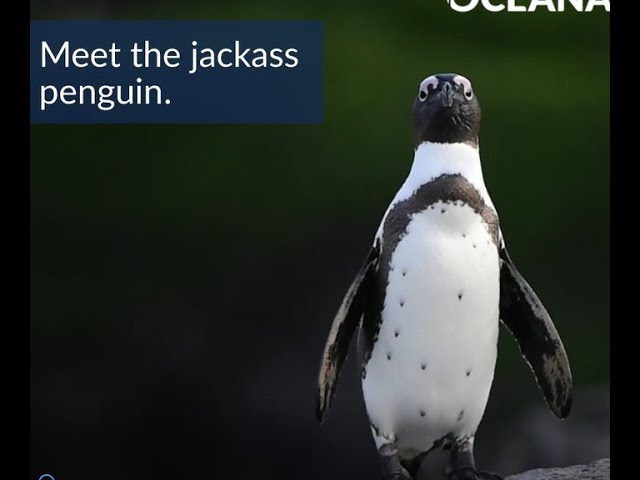
The jackass penguin earned its name from its donkey-like call. This unique species is restricted to the waters and rocky shores of southern Africa, making it the only penguin species that nests on the African continent.
For more information about these fascinating birds, visit Oceana's Marine Encyclopedia: Oceana's Marine Encyclopedia.

Simon Bernard, Expedition Leader of Plastic Odyssey, presents the first round-the-world expedition on a boat powered solely by plastic waste. A graduate of the French Merchant Navy Academy, Simon is passionate about environmental solutions. He founded the Plastic Odyssey NGO to reduce ocean pollution by promoting plastic recycling solutions adapted for developing countries.
His talk will explore the mystery of missing plastic, challenging the "continent of plastic" myth. It will also discuss how open innovation can reduce plastic leakage and how we can all contribute to a circular economy. Connect online at @simn_bernard and @PlasticOdyssey.

Narwhals are often called the "unicorns of the sea" due to their distinctive, spiraled tusk. This remarkable appendage, which can grow up to 10 feet long, is actually an elongated tooth.
Despite its prominent appearance, the precise function of the narwhal's tusk has long puzzled scientists. What exactly do these Arctic whales use their unique "horn" for?

Have you ever wondered about cuttlefish eggs?
Their unique appearance is quite striking.
They are, in fact, truly incredible.

A new study reveals blue whales rely on memory to guide their migrations to food sources. These intelligent creatures are vital to marine ecosystems.
However, blue whales face significant threats. Don't let them become just a memory. Join Oceana to help protect blue whales and other marine mammals: https://bit.ly/2OEoCNL #DefendMarineMammals

Meet the hammerhead shark, a species threatened by the global fin trade. Up to 73 million sharks are killed annually for their fins.
To protect sharks and our oceans, we must ban the buying and selling of shark fins in the United States. Join the movement to demand a #FinBanNow.
Add your name to the petition: https://bit.ly/2VbNEpN

A recent study identifies balloons as the deadliest form of plastic debris for seabirds. This highlights a critical threat to marine avian populations.
You can help combat plastic pollution. Take the pledge to #BreakFreeFromPlastic by visiting: https://bit.ly/2HG1MVs.

Plastics are now found even in the deepest parts of our oceans, highlighting the pervasive nature of this pollution.
Join Oceana and the #BreakFreeFromPlastic movement to help address this critical issue: https://bit.ly/2FxAZYR.
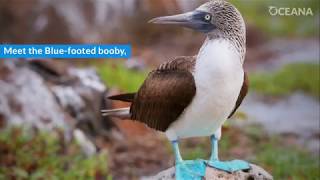
The blue-footed booby is a distinctive seabird, easily recognized by its bright blue feet.
For more information about these unique birds, visit our marine encyclopedia: Marine Encyclopedia.

Chambered nautiluses, often called "living fossils," are critically endangered. These unique marine creatures urgently require the protections of the Endangered Species Act to prevent their extinction.
Add your name now to support their survival and help #StopExtinction. Sign the petition here: https://bit.ly/2XIY8yD

Humpback whales are renowned for their complex songs. However, these magnificent creatures now face threats that require our immediate attention and support.
Your voice is crucial to their protection. Join the effort to #DefendMarineMammals by adding your name here: Defend Marine Mammals.

West Indian manatees typically reside in shallow coastal seas but seek warm freshwater springs during colder winter months. This migration is crucial for their survival in dropping temperatures.
You can help protect these vulnerable creatures. Support the Endangered Species Act and the #StopExtinction movement by adding your name here.

Spinner dolphins are renowned for their acrobatic spins. While this unique behavior is captivating, these incredible creatures face a significant threat from dangerous offshore oil drilling.
You can help protect spinner dolphins and ensure they keep "spinning." Use your voice by adding your name to support their protection. Learn more and sign the petition here: Protect Our Coast.

The Trump administration's decision to open nearly all U.S. waters to offshore oil drilling faces strong opposition from coastal communities, a stance Washington should acknowledge.
Learn more about this issue on Oceana's website. Music by Adam Lindquist: adamlindquist.com.

The coconut octopus is renowned for its unique mobility and defense. It utilizes discarded shells as a portable home, extending its arms to "stilt walk" across the seafloor.
When threatened, this clever cephalopod quickly forms a dome-like shelter by bringing two shell halves together.

The sailfish, named for its distinctive dorsal fin, is widely recognized as the ocean's fastest fish, capable of reaching speeds up to 70 mph.
To learn more about this remarkable species, visit our marine encyclopedia.
Environmental Scientist and Advocate
What EarthSayers stands for
Discover Diverse Voices on EarthSayers
Unlike algorithm-driven platforms that push you into a content bubble, we ensure you hear a variety of perspectives from scientists, activists, Indigenous leaders, business innovators, and everyday citizens working toward sustainability.
EarthSayers CINEMA
Watch, learn and lead—sustainability starts with you.
How to Live on Earth | Feature Documentary | Presented by Benedict Cumberbatch
What if the solutions to building a better future already exist? How to Live on Earth is an ambitious documentary that explores how humanity can create a thriving future by collaborating with nature. Presented by Benedict Cumberbatch, the film reveals the potential of teaming up with nature to address our greatest challenges.
Heartwarming and energizing, it offers a hopeful vision for a future where both nature and humanity can thrive. How to Live on Earth is produced by Open Planet Studios in association with Villars Institute Foundation and Silvania. Join the conversation by downloading film assets and sharing your reaction at howtoliveonearth.net/social-toolkit. Explore educational resources from the Villars Institute at YouTube.


