



Special Collections:
Forests and Oceans
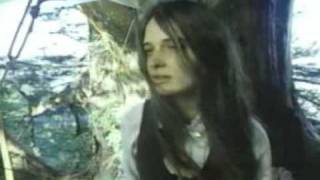
This Dateline story, uploaded December 31, 2008, features Julia Butterfly Hill. It documents her 14-month stay in a redwood tree, twenty stories high, to protect an old-growth Northern California forest.
Learn more about Julia at juliabutterfly.com.
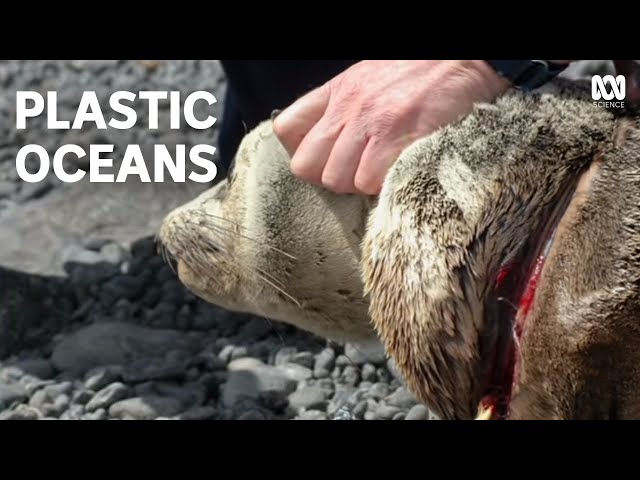
Plastic and synthetic debris are silently choking our oceans, posing horrific impacts on marine wildlife and ecosystems. As an island continent, marine debris is particularly important for Australia. Creatures become entangled, drown, or ingest concentrated toxins, jeopardizing the food chain. Plastics also transport and introduce new species into environments.
To address this critical issue, the CSIRO research team spearheaded the world-first Marine Debris Survey, studying plastic pollution along Australia's coastline. This vital research was published on September 9, 2012, by ABC Catalyst.

In OCEAN HEROES, Anna Cummins and Marcus Eriksen of the 5 Gyres Institute explain: WHAT IS A GYRE?
Learn more about protecting our oceans at One World Oceans. You can also explore our special collection, "Plastics in Our Oceans," and find the 5 Gyres Institute's documentary, Plasticized.

Global Forest Watch (GFW) is a dynamic online system for monitoring forests and providing alerts, empowering people worldwide to manage forests more effectively.
It integrates satellite technology, open data, and crowdsourcing to deliver timely, reliable information. This enables governments, businesses, and communities to take action and halt forest loss.
Created by the World Resources Institute with over 40 partners, including Google and the University of Maryland, GFW receives major funding from organizations like USAID and the Norwegian Climate and Forests Initiative. (Published Feb 20, 2014)
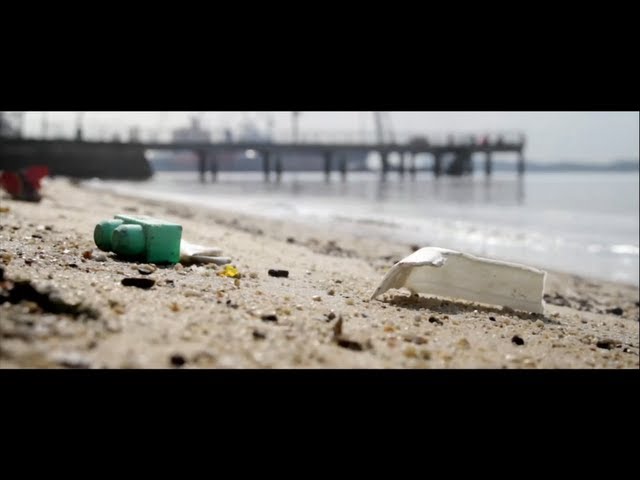
PLASTICIZED documents a pioneering scientific expedition focused on plastic waste. It recounts a first-hand journey aboard the Sea Dragon with the 5 Gyres Institute through the South Atlantic Ocean.
This eye-opening film highlights the institute's global mission to study the reality, effects, and scale of plastic pollution worldwide. It was published on December 24, 2012.

British ocean rower and environmental campaigner Roz Savage discusses plastic pollution, labeling it a "man-made global catastrophe." Her solo row from San Francisco to Hawaii provided first-hand experience with the problem's immense scale, including meeting scientists on a "Junk craft" hundreds of miles east of Hawaii to share research.
The core message is clear: we must reduce our plastic use. Each individual can significantly lessen their consumption, making a positive global difference.
This interview, conducted by Ruth Ann Barrett of EarthSayers.tv, was published on January 28, 2014. For more information about Roz Savage, visit www.rozsavage.com.

Howard Lack, CEO of the Plastic Oceans documentary project, discusses his fundraising efforts to raise awareness about plastic pollution in our oceans, particularly microplastics. He references UNESCO leaders and naturalist David Attenborough, who believe that public awareness drives problem-solving. The film's core focus is to increase this understanding.
Lack was interviewed in Fall 2013 in San Francisco by Ruth Ann Barrett of EarthSayers.tv, Voices of Sustainability.

In an interview, Howard Lack, CEO of Plastic Oceans, discusses their film project. This initiative aims to raise awareness about ocean plastic's detrimental effects on wildlife and human health, especially children, as it moves through the food chain.
Lack passionately addresses the impact of plastic toxins on developing nations, the importance of personal responsibility, and the development of solutions. He also highlights recycled plastic's potential as an energy source. Plastic Oceans provides a powerful platform, campaigning for, supporting, and funding targeted solutions to significantly reduce environmental plastic pollution.
Update
While the film was produced under the banner of Plastic Oceans UK, the charity officially rebranded to Ocean Generation in 2021. The documentary, A Plastic Ocean (2017) remains their most significant media contribution to global awareness regarding plastic waste.
You can currently find the documentary on various streaming platforms, including Netflix and Apple TV, or through educational screenings organized by the charity.

Wildlife cameraman Doug Allan, a passionate advocate for the environment and oceans, shares his insights on plastic pollution. In this clip, he discusses the evolving nature of the problem and his personal emotional response to plastic in our oceans.
This video was uploaded on December 29, 2011. Learn more about Doug Allan at dougallan.com.

World record-holding free diver Tanya Streeter discusses her experiences with plastic pollution in our oceans.
She offers a unique perspective on this critical environmental challenge.

Steve Russell, VP of the Plastics Department at ACC Plastics, emphasizes a shared commitment: plastics should be used wisely, reduced when possible, and recycled after use.
He expresses confidence in achieving these goals, attributing his optimism to the goodwill and collaborative spirit among all parties involved in addressing this critical issue.

This three-minute video examines the critical issue of plastic pollution in our oceans.
It also discusses potential solutions to this environmental challenge.

Dr. Sylvia Earle is a National Geographic Society Explorer-in-Residence, renowned oceanographer, explorer, author, and lecturer. She has been called a "Living Legend" by the Library of Congress and the first "Hero for the Planet" by *Time* magazine.
In this video, Dr. Earle addresses the devastating impact of our plastic addiction on the world's oceans.

Released March 22, 2010, "The Story of Bottled Water" is a five-minute film exposing the bottled water industry's deceptive practices. It reveals how the industry undermines tap water and uses environmental-themed advertising to mask the vast plastic waste it generates. The film strongly advises avoiding bottled water.
Production partners for the film include five leading sustainability organizations: Corporate Accountability International, Environmental Working Group, Food & Water Watch, Pacific Institute, and Polaris Institute.
For more information on Annie Leonard, visit storyofstuff.org/about/annie-leonard/.

Plastic pollution is an alarming global issue, with indigestible debris accumulating rapidly in communities, rivers, deserts, and oceans. Disposable plastics are the primary source. Start today by refusing them.
For more information, visit the [Plastic Pollution Coalition](http://plasticpollutioncoalition.org/). The film "Plastic Seduction," written, directed, and produced by Katrin Peters, further explores this topic. Learn more about her work [here](http://www.dailydifference.org/).

Hilario Saant, a community leader in Ecuador's Kapawi Achuar Territory, shares his firsthand account of oil extraction's devastating impact on his community and the forest.
This interview was conducted in February 2013 by Barry Heidt of Sustainability Action Media, with support from EarthSayers.tv and the Pachamama Alliance. An English translation is currently underway.

The World Resources Institute and partners recently previewed Global Forest Watch 2.0 at the UN Forum on Forests 10 (UNFF) in Istanbul. This powerful new initiative aims to improve forest monitoring and management globally.
Speakers at the event included Zulkifli Hasan (Minister of Forestry, Indonesia), Kerri-Ann Jones (Assistant Secretary, U.S. Department of State), Wu Hongbo (Under-Secretary-General, United Nations), Naoko Ishii (CEO, Global Environment Facility), Tim Christophersen (Senior Program Officer, UNEP), and Nigel Sizer (Director, WRI).

Jeremy Irons and Sinead Cusack lent their voices to a cause against the sale of Irish public forests. This video captures Jeremy Irons reading at the Avondale Forest Walk on April 28, 2013.
Cathy Fitzgerald, Green Party Forest policy spokesperson, filmed this event. The Green Party's comprehensive 2012 Forest Policy advocates for continuous cover, permanent, non-clearfell forestry.

In Irish mythology, trees symbolize wealth. The Irish Government plans to sell over 1 million acres of public forests, managed by Coillte, to private investors. This vast area, equivalent to two counties, includes valuable native woodlands and vital refuges for Ireland's flora and fauna, which will be lost forever. Sign the petition here.
Swiss finance company Helvetia Wealth, owners of the International Forestry Fund (IFF) chaired by former Irish Prime Minister Bertie Ahern, has expressed interest, as has The China Investment Corporation.

The Surui Cultural Map showcases the Amazonian Surui tribe's vision of their forest, territory, and traditional history. Surui youth documented ancestral sites, including their 1969 first contact and 1970s battles with colonists, along with places of interest like jaguar sightings. To preserve their forest and livelihood, the Surui utilize Open Data Kit software on Android smartphones to measure carbon and monitor illegal logging, engaging with the Carbon Credit marketplace.
Google Earth Outreach provides nonprofits and public benefit organizations with resources to visualize their causes and share their stories with a global audience through Google Earth & Maps.
Environmental Scientist and Advocate
What EarthSayers stands for
Discover Diverse Voices on EarthSayers
Unlike algorithm-driven platforms that push you into a content bubble, we ensure you hear a variety of perspectives from scientists, activists, Indigenous leaders, business innovators, and everyday citizens working toward sustainability.
EarthSayers CINEMA
Watch, learn and lead—sustainability starts with you.
How to Live on Earth | Feature Documentary | Presented by Benedict Cumberbatch
What if the solutions to building a better future already exist? How to Live on Earth is an ambitious documentary that explores how humanity can create a thriving future by collaborating with nature. Presented by Benedict Cumberbatch, the film reveals the potential of teaming up with nature to address our greatest challenges.
Heartwarming and energizing, it offers a hopeful vision for a future where both nature and humanity can thrive. How to Live on Earth is produced by Open Planet Studios in association with Villars Institute Foundation and Silvania. Join the conversation by downloading film assets and sharing your reaction at howtoliveonearth.net/social-toolkit. Explore educational resources from the Villars Institute at YouTube.


