




Special Collections:
Forests and Oceans
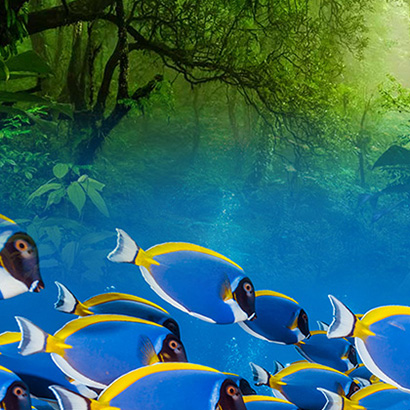

The Magnuson-Stevens Act (MSA) is our essential fisheries law, vital for ensuring healthy fisheries and abundant waters for future generations. Efforts to weaken the MSA are shortsighted and threaten our fisheries. Fishermen nationwide urge decision-makers to keep this law strong, ensuring our oceans remain full of fish.
Custom music by Adam Lindquist. Music Track "Positive Outcome" by Paul Mottram, via AudioNetwork.com.

Poke, a popular raw tuna dish, raises significant sustainability concerns. Tracking the origin of yellowfin or bigeye tuna used in poke is often difficult, highlighting broader issues in the seafood supply chain.
This lack of transparency is common across the seafood industry, leaving consumers with little information about what they eat. To combat seafood fraud and promote sustainable practices, Oceana is actively working on solutions. Learn more about their efforts: https://bit.ly/2FvJLZo
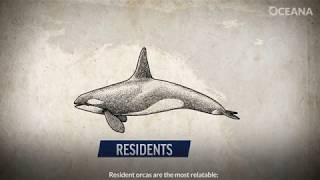
Southern Resident Orcas, iconic to the Pacific Northwest and frequenting Washington's Salish Sea, face a critical struggle for survival.
This endangered population made national headlines this summer after a newborn calf died, with its mother carrying the body for 17 days in apparent grief. A month later, a young female disappeared and is now presumed dead, further reducing the population to a mere 74 whales.

Efforts to sustainably manage Brazil's gray mullet fishery are underway. This initiative aims to ensure the long-term health and viability of the fishery.
An unexpected benefit of these conservation efforts could be the safeguarding of one of the world's most unusual partnerships, a unique ecological collaboration vital to the region.

Seamounts, or submarine mountains, are vital habitats supporting unique species and migratory animals like tuna and whales.
Historically, these little-studied ecosystems lacked adequate protection. However, this oversight is now beginning to change, leading to increased conservation efforts.
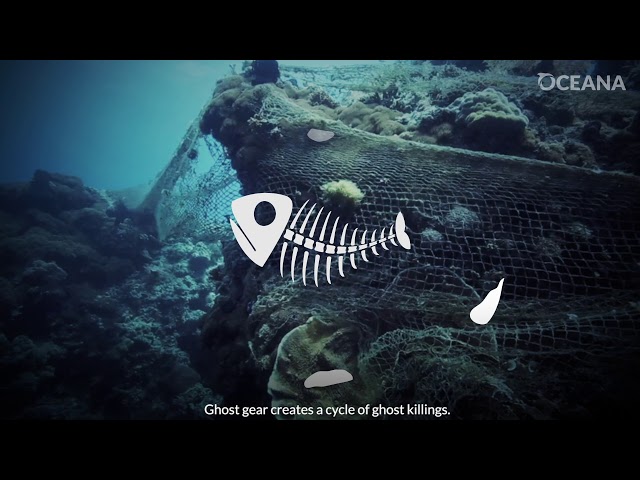
Ghost gear—lost or abandoned fishing nets, lines, and traps—is a silent threat in our oceans.
This derelict equipment continues to entangle and kill marine life, posing a long-term danger even after it's forgotten.

Marine National Monuments in the U.S. face a critical threat. The Trump administration is considering allowing commercial fishing in three of these vital protected areas, potentially weakening their long-standing protections.
We need your help to stop this. Add your name now to tell President Trump not to compromise our Marine National Monuments: https://bit.ly/2PTgTeC

The leatherback sea turtle, the largest living turtle at up to 2,200 pounds, urgently needs our help. These magnificent creatures, along with other at-risk species, face increasing peril.
Recent proposals by the Interior and Commerce Departments aim to fundamentally change Endangered Species Act regulations. If implemented, these changes would significantly weaken vital protections for vulnerable wildlife.
Act now: Tell President Trump not to weaken protections for threatened and endangered species. Sign the petition today.

Marine biologist Patricia Majluf initially focused on studying seals. Following a massive seal die-off, her research expanded to explore the intricate links between seals, fish, and the climate.
Majluf now explains the critical need for changes in Peru's fisheries management. She emphasizes adapting to ever-fiercer and increasingly unpredictable weather and ocean conditions.

Protecting sharks is crucial in the fight against climate change.
The international fin trade impacts up to 73 million sharks annually. You can help end this by adding your name to support a #FinBanNow.
Take action now: Support a #FinBanNow.

Ocean acidification, a dangerous consequence of climate change, occurs when the ocean absorbs excess atmospheric carbon. This carbon reacts with seawater, forming acid.
Acidified water erodes the hard body parts of marine life, including coral, bivalves, and plankton, threatening these vital ecosystems.

Humpback whales are charismatic large whales found globally, from Antarctica to the Arctic, inhabiting both coastal and open ocean waters.
To learn more about these lovable marine mammals, explore Oceana's marine encyclopedia: Oceana's marine encyclopedia.

Symbiotic relationships are prevalent throughout the world's oceans.
To understand these fascinating interactions and learn about the amazing ocean animals featured, explore Oceana's marine encyclopedia: Oceana Marine Encyclopedia.

At Talks at Google, Peter Kohler (The Plastic Tide) and Dr. Stefan Leutenegger (Imperial College London) discuss the escalating ocean plastic crisis. They highlight how plastic threatens a vital $5 trillion economic resource and humanity's life support.
The Plastic Tide initiative quantifies this problem using drone imagery and machine learning. Their work involves a vast drone imagery database and a deep-learning algorithm for plastic detection and geo-referenced mapping.
The speakers will present early results, related research, and future strategies to limit ocean plastic. Learn more about their efforts at The Plastic Tide.

The Magnuson-Stevens Act, our vital fisheries management law, faces a significant threat. Proposed congressional changes could prioritize short-term profits, potentially leading to the overexploitation of our oceans. Urge lawmakers to protect this crucial act.
Music for this message was provided by Spearfisher, and the cello performance by Cicely Parnas.

Artist Dianna Cohen reveals the harsh truths of plastic pollution, impacting our oceans and daily lives. She also offers insights on how to break free from the plastic gyre.
Learn more at the Plastic Pollution Coalition.

Van Jones presents a compelling social justice case against plastic pollution. He argues that plastic waste disproportionately harms impoverished communities and nations "first and worst," with far-reaching consequences for everyone, regardless of location or income.
In this powerful TEDxGreatPacificGarbagePatch [TEDxGP2] talk, filmed in 2010, Jones offers actionable ideas to reclaim our "throwaway planet." The event was produced by the Plastic Pollution Coalition at the Annenberg Community Beach House in Santa Monica, California.
Learn more at www.plasticpollutioncoalition.org

Oceans cover 71% of Earth, sustaining over a billion people. Yet, overfishing is rapidly depleting this vital resource, threatening life and protein for a hungry planet.
Fortunately, oceans are remarkably resilient. Ten countries manage most wild seafood, and Oceana has achieved critical policy victories in many, safeguarding over a million square miles.
We can reverse this decline by ending overfishing, controlling bycatch, and protecting ocean nurseries. Join Oceana today to help ensure bountiful oceans for generations to come.

On April 20, 2010, the Deepwater Horizon explosion killed 11 crew members and caused America's worst oil spill. For 87 days, over 200 million gallons of oil flooded the Gulf of Mexico. This disaster killed hundreds of thousands of birds, endangered sea turtles, and exposed 50,000 cleanup volunteers to harmful chemicals. We cannot afford another Deepwater Horizon. Urge President Obama to protect the Arctic and Atlantic from new oil drilling and seismic airgun blasting.

Knowing where your seafood comes from is crucial. An opaque supply chain enables illegal fishing, fraud, health risks, and human trafficking, threatening oceans and consumers. Traceability, by tracking fish from boat to plate, ensures transparency and accountability, making seafood safe, legal, and honestly labeled.
Learn more about seafood traceability at oceana.org/FishStories.
Music by Adam Lindquist: adamlindquist.com. Sounds via Freesound.org, by various users.
Environmental Scientist and Advocate
What EarthSayers stands for
Discover Diverse Voices on EarthSayers
Unlike algorithm-driven platforms that push you into a content bubble, we ensure you hear a variety of perspectives from scientists, activists, Indigenous leaders, business innovators, and everyday citizens working toward sustainability.
EarthSayers CINEMA
Watch, learn and lead—sustainability starts with you.
How to Live on Earth | Feature Documentary | Presented by Benedict Cumberbatch
What if the solutions to building a better future already exist? How to Live on Earth is an ambitious documentary that explores how humanity can create a thriving future by collaborating with nature. Presented by Benedict Cumberbatch, the film reveals the potential of teaming up with nature to address our greatest challenges.
Heartwarming and energizing, it offers a hopeful vision for a future where both nature and humanity can thrive. How to Live on Earth is produced by Open Planet Studios in association with Villars Institute Foundation and Silvania. Join the conversation by downloading film assets and sharing your reaction at howtoliveonearth.net/social-toolkit. Explore educational resources from the Villars Institute at YouTube.


