



Special Collections:
The Economy
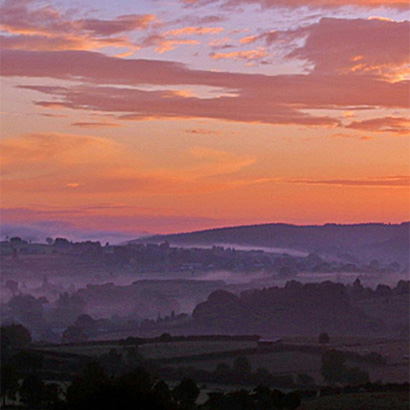

Sabbath Economics is an economic practice rooted in the belief that there are sufficient resources for all. It recognizes our fundamental role as economic beings interacting with creation's resources for survival and flourishing.
A key tenet is debt forgiveness, viewed as biblical, just, and healing. This approach aims to narrow the divide between the wealthy and the poor.
Explore Sabbath Economics further at sabbatheconomics.org. Additional insights are available in these clips: Clip 2 and Clip 3.

Streamed live on May 19, 2016, Rachel Botsman visited the RSA to discuss the rapidly growing sharing economy, popularized by platforms like Airbnb and Uber. She addressed its "growing pains," exploring how to unlock its full social potential and ensure it empowers, not exploits. Botsman examined the sector's future, including new ventures, the importance of diversity, and critical issues such as monopolization, provider power, and the future of work.
A six-minute version of this discussion is available here. Follow RSA Events on Twitter, Facebook, SoundCloud for podcasts, and Instagram for behind-the-scenes.

Capitalism is often seen as a dual force: a driver of prosperity that has lifted billions from poverty, yet also a system that can foster greed. Both views contain truth.
While free enterprise promotes global prosperity, we must guard against materialism, remembering that money serves as a means to greater ends. Join Arthur Brooks—New York Times columnist, bestselling author, and president of the American Enterprise Institute—for this thought-provoking discussion.

Sam Pizzigati, an Associate Fellow at the Institute for Policy Studies, discusses his new book, "The Rich Don't Always Win: The Forgotten Triumph Over Plutocracy That Created the American Middle Class, 1900-1970."
Pizzigati also edits the Too Much blog. Explore more content from the Institute for Policy Studies on their YouTube channel.
The book is available to order from Amazon or at your local bookstore.

Ellen MacArthur delivered a special presentation on the circular economy.
This occurred at the BSR Conference 2015, held in November 2015 in San Francisco, California.

Award-winning FT columnist and author Gillian Tett investigates the pervasive issue of organizational silos. She explores why we create them and how to break free.
At the RSA, Tett lays bare the perils of the "silo effect." She explains how individuals and institutions can overcome these barriers to foster more effective, productive, and creative thinking and action.

Raj Patel, author of *The Value of Nothing*, critiques the free market's impact on freedom and resource management. He argues that prices often mislead us, revealing "hidden costs" that distort true value. For instance, a hamburger's real price could be $200 when factoring in environmental and health expenses.
Patel, an activist and academic, suggests Nobel laureate Elinor Ostrom's concept of collaborative governance, known as "the commons," offers a better alternative for resource management than the current free market system. Visit Raj Patel's website: rajpatel.org.

Naomi Klein, author of "This Changes Everything: Capitalism vs. The Climate," spoke at The Nation LIVE!! event held at Town Hall Seattle on October 15, 2015.
Her acclaimed book delves into the critical relationship between capitalism and climate change. You can purchase "This Changes Everything" from Amazon or your local bookstore. Learn more about Naomi Klein at her official website: naomiklein.org.
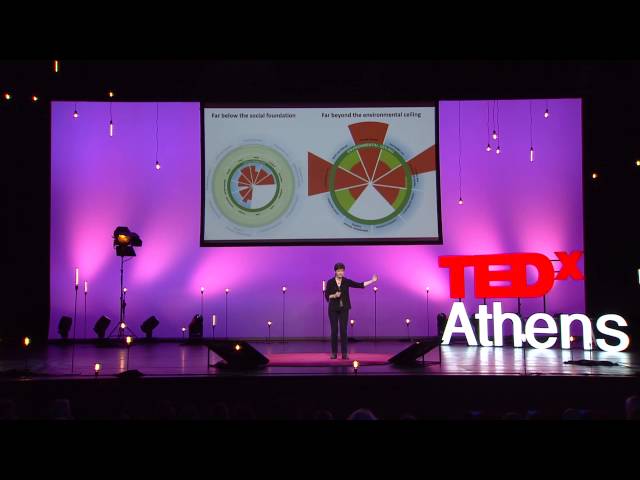
Economist Kate Raworth challenges traditional thinking with her "Doughnut Economics" concept. This framework, first published by Oxfam in 2012, outlines social and planetary boundaries for sustainable development. It has gained international recognition, influencing the UN’s Sustainable Development Goals.
Raworth is a senior visiting research associate at Oxford University and a senior associate at the Cambridge Institute for Sustainability Leadership. She has presented her ideas globally and is authoring *Doughnut Economics: seven ways to think like a 21st century economist*, due in Spring 2016.
Watch her video, "Introducing 'The Doughnut' of social and planetary boundaries for development," here. Learn more at www.kateraworth.com and follow her on Twitter @KateRaworth.

Gross Domestic Product (GDP) is the monetary value of all finished goods and services produced within a country's borders, typically calculated annually.
While GDP is often seen as the universal yardstick of progress, economic historian Dirk Philipsen argues that a finite planet cannot sustain its indefinite expansion. He proposes replacing the GDP regime with smarter goals that prioritize quality of life and ethical considerations for future generations.
Philipsen's book, *The Little Big Number*, explores this roadmap. Listen to a related podcast here.

This interview features Nobel Prize-winning economist Michael Spence discussing strategies for stronger global economic growth.
Spence is a senior fellow at the Hoover Institution and a professor emeritus at Stanford University's Graduate School of Business. He also chairs the Commission on Growth and Development, established in 2006 to focus on growth and poverty reduction in developing nations.
Published by McKinsey and Company on April 6, 2015.

Published on January 29, 2015, an article in The New York Times titled "Oil Prices and the 'Spectrum of Pain'" examines the global impact of plummeting crude oil prices.
The piece investigates why some nations are faring significantly better than others, despite crude oil falling over 50% since last summer.

Climate change and increasing raw material scarcity demand a radical shift from traditional business models. A circular economy is essential.
Businesses are uniquely positioned to lead this transformation by controlling waste, utilizing cleaner energy sources, and collaborating with NGOs and governments.
This concept was highlighted in an article published on May 14, 2013, by The Guardian.

This work offers a radical rethinking of our faulty assumptions about money and its proper use.
It is authored by David Korten, a prolific writer whose upcoming book, "Change the Story: Change the Future," is slated for publication in 2015.
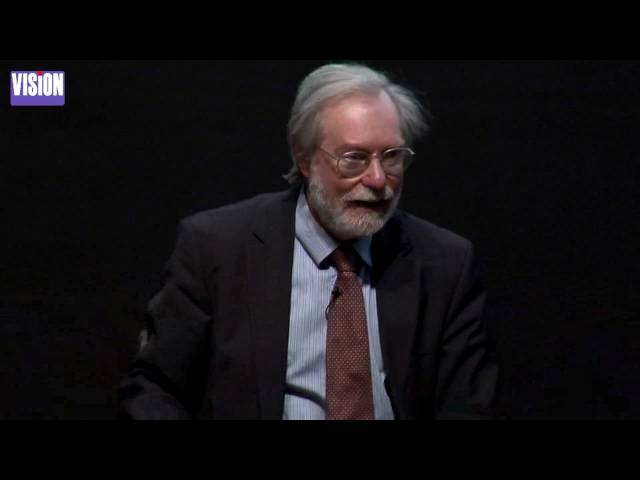
Award-winning economist Paul Collier explores how to reconcile economic growth with environmental sustainability. He argues against "plunder," where a few exploit many, taking resources that belong to future generations. Our obligation to the future is a fundamental principle.
His book, "The Plundered Planet," delves deeper into these ideas. Purchase it on Amazon or at your local bookstore. This content was produced by the RSA (Royal Society for the encouragement of Arts, Manufactures & Commerce).

Annie Leonard, Executive Director of Greenpeace U.S.A. and creator of the Story of Stuff Project, advocates for active citizen involvement. She urges individuals to exercise their "citizen muscle" and be passionate about their work, highlighting the numerous ways to contribute.
Leonard shared her insights during an interview at the 2014 Annual Conference of the Association for the Advancement of Sustainability in Higher Education (AASHE) in Portland, Oregon, on October 28, 2014. This interview, produced by Ruth Ann Barrett of EarthSayers.tv and Barry Heidt of GeoSpirit.tv, was published on November 6, 2014.
A special collection featuring Annie Leonard as a Sustainability Champion is available on EarthSayers.tv. View here.

Joss Tantram, co-founder and Partner at Terrafiniti/TOWARDS 9 BILLION, explains the critical importance of understanding ecosystem value and the significant cost of their destruction.
His insights were presented at the Salzburg Global session, "A Climate for Change: New Thinking on Governance for Sustainability," in June 2013. This discussion was originally published on September 17, 2013.

World Bank Group President Jim Yong Kim called for economic growth that creates more just societies, defining the institution's goal of boosting shared prosperity as its strategy to tackle global inequality.
Speaking at Howard University, Kim announced that for the first time in its history, the World Bank has set a specific goal to reduce global inequality.

Richard D. Wolff's YouTube channel features programs that begin with 30-minute updates on recent economic events. This is followed by Wolff's analysis of major economic issues.
Topics covered have included Americans' falling household wealth, the global debt bubble, large US companies evading taxes via offshore havens, and corporate scandals such as GM's vehicle recalls.
Explore more on Professor Wolff's website. His book, Democracy At Work, is available for purchase.
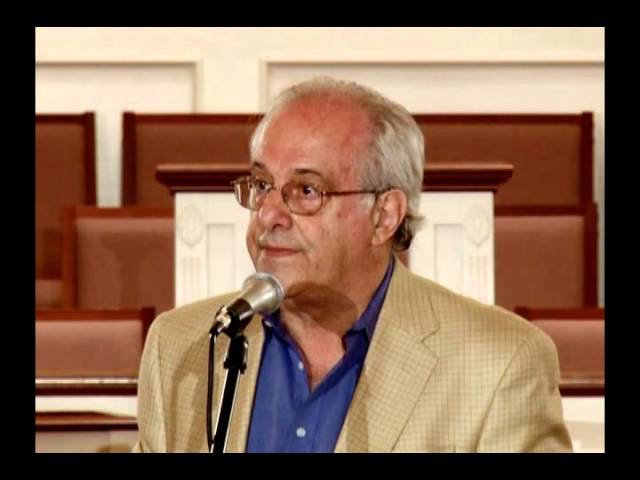
After years of economic crisis and failed solutions, many Americans believe the capitalist system no longer serves them. It's time for a bold new approach. Richard Wolff presented his proposed cure, explaining and justifying it, and urged people to build real, positive change instead of resigning to economic decline.
This presentation marked the launch of Wolff's latest book, *Democracy at Work: A Cure for Capitalism*, released September 1, 2012, by Haymarket Publishers. The event was filmed by LinkTV on September 6, 2012. This description was published on March 14, 2013.
Environmental Scientist and Advocate
What EarthSayers stands for
Discover Diverse Voices on EarthSayers
Unlike algorithm-driven platforms that push you into a content bubble, we ensure you hear a variety of perspectives from scientists, activists, Indigenous leaders, business innovators, and everyday citizens working toward sustainability.
EarthSayers CINEMA
Watch, learn and lead—sustainability starts with you.
How to Live on Earth | Feature Documentary | Presented by Benedict Cumberbatch
What if the solutions to building a better future already exist? How to Live on Earth is an ambitious documentary that explores how humanity can create a thriving future by collaborating with nature. Presented by Benedict Cumberbatch, the film reveals the potential of teaming up with nature to address our greatest challenges.
Heartwarming and energizing, it offers a hopeful vision for a future where both nature and humanity can thrive. How to Live on Earth is produced by Open Planet Studios in association with Villars Institute Foundation and Silvania. Join the conversation by downloading film assets and sharing your reaction at howtoliveonearth.net/social-toolkit. Explore educational resources from the Villars Institute at YouTube.


