




Special Collections:
The Economy


Dr. George Land spoke at TEDxTucson's December 2011 event, themed "Innovating Our Green Economy." In his talk, "The Failure Of Success," he explored human innovation and the importance of creativity.
Land, an author, speaker, consultant, and general systems scientist, developed his Transformation Theory. This theory, stemming from his research, integrates principles of creativity, growth, and change. Learn more about Dr. George Land.

Critics argue that economics lacks a cohesive theory of value, a challenge debated by economists from Smith to Marx. This fundamental issue extends to problems concerning money, long-term stability, and sustainability.
A Long Finance conference panel, held on March 15, 2012, addressed "How to Incentivise Sustainable Finance." The discussion featured Professor Michael Mainelli, Dr Matthew Kiernan, Valéry Lucas-Leclin, and Joss Tantram.

Lord Adair Turner, former Chairman of the UK Financial Services Authority and Senior Fellow at the Institute for New Economic Thinking, delivered a presentation titled "Money and Debt: Radical Solutions to the Challenge of Deleveraging."
Turner highlighted a fundamental insight: banks simultaneously create new credit and new money "ex nihilo." He stressed this as a crucial concept for economics undergraduates to understand about the monetary economy.
This presentation was given at the "Fix the Banking System for Good" conference at the Philadelphia Fed on April 17, 2013, and published on May 5, 2013.

Quants, the math and computer experts in finance, designed products that nearly crashed Wall Street. The credit crunch revealed our financial system's deep reliance on mathematical models attempting to quantify human economic behavior. Today, quants are at the forefront of another revolution: high-speed trading.
This raises crucial questions: What are the inherent risks of treating the economy as a complex machine? Can we truly control this model-based system, or have we created an uncontrollable entity?
This narrative delves into greed, fear, and randomness from the heart of Wall Street.

Activist and fundraiser Dan Pallotta critiques the double standard in how we perceive charities. He argues that nonprofits are often rewarded for minimal spending rather than their actual impact.
Pallotta challenges us to stop equating frugality with morality. Instead, he advocates rewarding charities for their ambitious goals and significant accomplishments, even if these involve substantial expenses. His bold talk urges a fundamental shift in how we approach changing the world.
Watch more TED talks here.

At the 2014 GreenBiz Forum, Nigel Topping of CDP and Joel Makower of GreenBiz held a keynote conversation. They explored "Beyond Carbon and Water," focusing on these elements as investment risks due to climate change and their impact on the investment community.
CDP is an international not-for-profit organization. It provides the sole global system for companies and cities to measure, disclose, manage, and share crucial environmental information. This content was published on March 20, 2014.
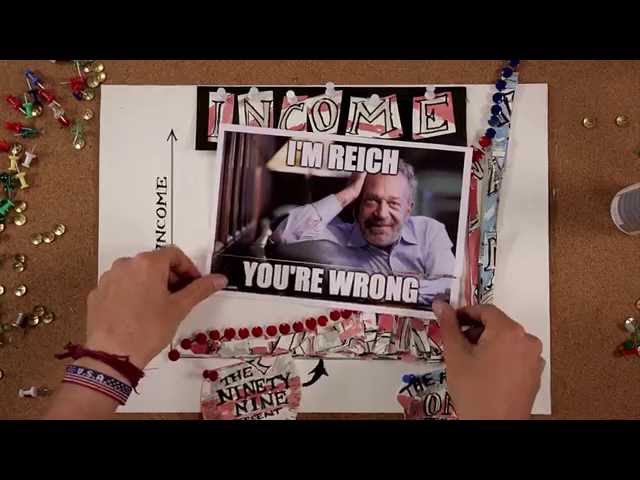
Robert Reich delivers a critical Tax Day message, highlighting a significant economic disparity. He explains why the wealthiest one percent often pay a substantially lower tax rate compared to the rest of the population.
Reich's message also explores potential solutions and actions that can be taken to address this imbalance and promote a more equitable tax system.

Speaking at the ECO:nomics conference on April 3, 2014, former Walmart CEO Michael T. Duke stated that sustainability for Walmart extends beyond profits. He highlighted that a smaller environmental footprint leads to greater long-term profit, stressing the social and prosperity elements where Walmart, as the largest private employer in the U.S. with 2.2 million global employees, has significant impact.
The conference, hosted by *The Wall Street Journal*, gathers leaders to discuss business and environmental issues. Yet, critics like Dr. Chet Bowers argue that genuine sustainability is hindered by "deep cultural assumptions" of an individualistic, consumer-dependent society, despite corporate efforts.

Elinor Ostrom's Stockholm whiteboard seminar explores sustainable natural resource management. She explains how diverse global contexts allow communities to effectively utilize resources without depletion.
This seminar was uploaded on April 3, 2009.

Hosted by Duncan Stewart, the 'Take, make, dispose' model describes our current linear economy: extracting raw materials, making products, then discarding them. This 20th-century consumerism has led to dwindling resources, overflowing waste, and significant environmental damage.
In contrast, the Circular Economy offers a progressive, efficient, and environmentally friendly alternative, mimicking nature by eliminating waste. The final Eco Eye series 12 program explores this model, showcasing Irish companies adopting it and featuring experts discussing its challenges and opportunities.

Episode #8 of Meeting of the Minds features futurists Gerd Leonhard and Ross Dawson. They discuss the future of sustainability, the circular economy, and the triple bottom line.
The conversation explores lateral growth as the sole viable option and the necessity of changing industrial-based metrics.
This episode was published on February 17, 2014.

The World Business Council for Sustainable Development (WBCSD) introduces its groundbreaking Action2020 plan. This science-based initiative sets a new agenda for business action on sustainable development, addressing the planet's most urgent needs.
Launched at the WBCSD's Council meeting in Istanbul in November 2013, the accompanying video features insights from prominent WBCSD members. These include CEOs like Mike Mack (Syngenta), Paul Polman (Unilever), Atsutoshi Nishida (Toshiba), John Alexander (ERM), and Henrik Madsen (DNV).

At the World Economic Forum in Davos, Dr. Jim Yong Kim, 12th President of the World Bank Group, highlighted income inequality and the urgent need to close the gap between rich and poor. He stressed that a serious plan is essential to address this global challenge.
The World Bank offers a smart plan of action. Watch their video from Davos, published on January 23, 2014, to hear their recommendations.
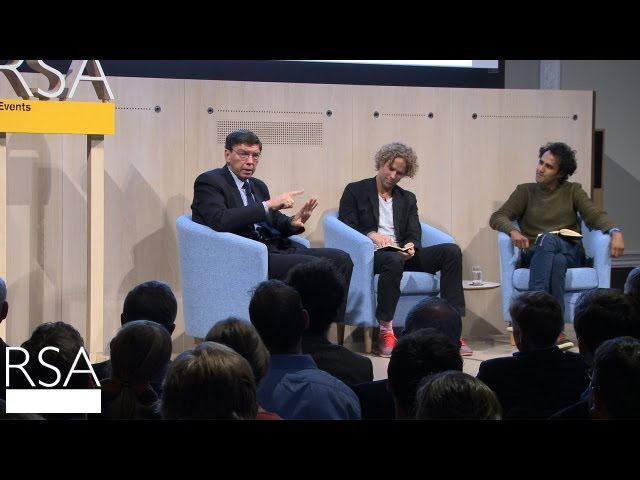
Published on September 25, 2013, this event emphasized how empowering innovation drives job creation. Professor Clayton Christensen of Harvard Business School, author of "The Innovator's Dilemma," visited the RSA to explain how countries and companies can foster successful innovation and robust growth.
He was joined by discussant Tom Hulme, Design Director at IDEO and Managing Director of OpenIDEO/OIEngine, and chaired by Rohan Silva, entrepreneur-in-residence at Index Ventures and former senior policy adviser to the Prime Minister. Christensen's book is available for purchase on Amazon.

Robert Reich and Mark Zandi debated Glenn Hubbard and Arthur Laffer on the topic: "The Rich Are Taxed Enough." Moderated by John Donvan, the discussion addressed how to fix the U.S. economy.
With a nearing trillion-dollar budget deficit and high unemployment, the expiring Bush-era tax cuts presented a critical economic challenge. President Obama advocated raising taxes on incomes over $250,000 to reduce the deficit. Conversely, others argued the wealthiest 1% already pay over a quarter of federal taxes, and higher taxes on "job creators" would hinder economic growth. The central question remained: should tax breaks be extended for everyone, or are the wealthy not paying their "fair share"?

INEQUALITY FOR ALL features Robert Reich—professor, best-selling author, and former Clinton cabinet member—who passionately argues how the widening income gap devastates the American economy.
The film also offers an intimate portrait of Reich, detailing his personal journey and lifelong commitment to protecting the vulnerable. Discover more about Robert Reich at robertreich.org.

Addressing the environmental crisis, *Wild Law – In Practice* aims to transition Earth Jurisprudence from theory into practice. The book argues that current legal frameworks perpetuate ecological issues and must be radically reconfigured to ensure a viable human presence on Earth.
Authored by Peter Burdon, a Senior Lecturer at Adelaide Law School, the work draws on his extensive expertise in ecological law. His PhD in this field earned him the Bonython Prize and a University of Adelaide Research Medal. Since 2005, Burdon has also actively contributed to Friends of the Earth Adelaide's Clean Futures Collective.

Dean Karlan, a Professor of Economics at Yale University and President of Innovations for Poverty Action, explores how understanding people and language can influence human behavior. His research has led to innovative mechanisms for increasing savings in developing world communities.
This discussion was published by TEDxMiddlebury on August 18, 2013.

Tim Jackson, the UK's first Professor of Sustainable Development, directs the Research group on Lifestyles, Values and Environment (RESOLVE) at the University of Surrey's Centre for Environmental Strategy.
This information was published on March 13, 2012.

Ken Webster, Head of Learning at The Ellen MacArthur Foundation (UK), introduces the concept of a circular economy. This model is crucial given the depletion of cheap fossil fuels and key materials, alongside rising populations and growing anxieties concerning water resources, food production, and harmful wastes.
These challenges demand a fundamental rethinking of our production and consumption systems, rather than just patching them up. We must actively rethink, redesign, and build a positive future.
Environmental Scientist and Advocate
What EarthSayers stands for
Discover Diverse Voices on EarthSayers
Unlike algorithm-driven platforms that push you into a content bubble, we ensure you hear a variety of perspectives from scientists, activists, Indigenous leaders, business innovators, and everyday citizens working toward sustainability.
EarthSayers CINEMA
Watch, learn and lead—sustainability starts with you.
How to Live on Earth | Feature Documentary | Presented by Benedict Cumberbatch
What if the solutions to building a better future already exist? How to Live on Earth is an ambitious documentary that explores how humanity can create a thriving future by collaborating with nature. Presented by Benedict Cumberbatch, the film reveals the potential of teaming up with nature to address our greatest challenges.
Heartwarming and energizing, it offers a hopeful vision for a future where both nature and humanity can thrive. How to Live on Earth is produced by Open Planet Studios in association with Villars Institute Foundation and Silvania. Join the conversation by downloading film assets and sharing your reaction at howtoliveonearth.net/social-toolkit. Explore educational resources from the Villars Institute at YouTube.


