




Special Collections:
The Economy

This session, live-streamed during the Ellen MacArthur Foundation’s Summit21 on June 10, 2021, explored systems-level change. Lucy Parker, Mariana Mazzucato, and James Quincey discussed implementation, followed by Jyrki Katainen highlighting ongoing market transformations. David Rotman, Alan Aspuru-Guzik, and Sheila Kennedy then examined how AI and advanced manufacturing can design ecosystem destruction out of all systems.
The Ellen MacArthur Foundation is a UK charity accelerating the transition to a circular economy. Watch more Summit21 episodes here. Subscribe to our YouTube channel here, and learn more about our work at ellenmacarthurfoundation.org. Follow us on Instagram, Facebook, Twitter, and LinkedIn.

Explore circular economy solutions for plastic packaging with the Ellen MacArthur Foundation's 30-minute crash course. This session covers upstream innovation, offering key insights from their guide and practical tips to kick-start your innovation process. Learn how to run an ideation workshop using their free online tools and resources.
The Ellen MacArthur Foundation is a UK charity dedicated to accelerating the transition to a circular economy. For more on upstream innovation, visit plastics.ellenmacarthurfoundation.org/upstream. Access the ideation workshop Miro template at miro.com/miroverse/upstream-innovation-packaging-solution-workshop/. Discover more about our work and connect with us at ellenmacarthurfoundation.org.
This session, part of the Ellen MacArthur Foundation’s Summit21 on June 9, 2021, explored the circular economy. Chile’s Minister Carolina Schmidt shared her experience, while Wolfgang Blau and Dame Ellen MacArthur discussed optimizing ecosystem value. A panel with Audrey Choi (Morgan Stanley) and Paul Bodnar (BlackRock) addressed investment, and industry leaders from PVH, IKEA, and H&M examined redesigning global supply chains for profit, social equity, and environmental benefits.
The Ellen MacArthur Foundation, a UK charity, accelerates the transition to a circular economy. Watch more Summit21 episodes here, learn more at www.ellenmacarthurfoundation.org, and subscribe to our YouTube channel here. Follow us online.

This session explores how the circular economy can tackle climate change, featuring Dame Ellen MacArthur and Christiana Figueres. Felipe Villela discusses connecting smallholder farms for biodiversity, with a film on regenerative farming in Kenya. A panel including Nestlé CEO Mark Schneider, Unilever President Hanneke Faber, and Erin Billman examines big business's role in food system transformation and data-driven environmental impact.
The Ellen MacArthur Foundation, a UK charity, accelerates the transition to a circular economy. Watch more Summit21 episodes [here](https://summit21.ellenmacarthurfoundation.org/watch) and explore our climate change work [here](https://climate.ellenmacarthurfoundation.org/). Subscribe for more videos [here](https://www.youtube.com/channel/UCQAC2otE5_agzHZPnk3mE5w?sub_confirmation=1) and find additional information at [ellenmacarthurfoundation.org](http://www.ellenmacarthurfoundation.org).

While renewable energy is crucial for climate action, it addresses only 55% of emissions from electricity, heat, and transport. The remaining 45% from industry, agriculture, and land use necessitates a transition to a circular economy. Discover more about the circular economy's role in tackling climate change: climate.ellenmacarthurfoundation.org
The Ellen MacArthur Foundation, a UK charity, accelerates this transition through business, learning, and insights. Explore our work at ellenmacarthurfoundation.org. Subscribe for more insights on YouTube, and follow us on Instagram, Facebook, Twitter, and LinkedIn.
Circular design leaders Fanny Eliaers, Phillipe Meunier, Chris Grantham, and Merjin Dols from Sid Lee, IDEO, and Danone, discuss the benefits of a circular economy.
The Ellen MacArthur Foundation, a UK charity, accelerates the transition to a circular economy through business, learning, and insights.
Subscribe for more videos on their YouTube channel. Explore their work at ellenmacarthurfoundation.org and follow them on Instagram, Facebook, Twitter, and LinkedIn.

Circular design is essential for a circular economy. In highlights from The Circular Economy Show, streamed May 25th, Anne Asensio (Head of Design, Dassault Systemes) and Sean Carney (Chief Design Officer, Philips) shared their expertise on rethinking product creation and system design.
For more, watch the full episode. You can also find more on Circular Design, explore other episodes of The Circular Economy Show, and learn more about our work.

Philips' Chief Design Officer, Sean Carney, discusses how circular design is transforming the company's healthcare product development.
The Ellen MacArthur Foundation, a UK charity, accelerates the transition to a circular economy through business, learning, and insights.
Subscribe to the Foundation for more videos: YouTube. Discover their work and connect online: Website | Instagram | Facebook | Twitter | LinkedIn.

Circular design is crucial for transitioning to a circular economy, offering a chance to rethink product creation and system design. This episode, powered by Restream, explores who is leading this vital shift.
Join Anne Ascensio, Head of Design at Dassault Systemes, and Sean Carney, Chief Design Officer at Philips. Anne will share lessons from large companies and advice for young designers, while Sean will define circular design and showcase Philips' journey to circularity.

At Summit 2019, IDEO CEO Tim Brown and Dezeen editor-in-chief Marcus Fairs discussed the circular economy's vital role in the design community. This video is brought to you by the Ellen MacArthur Foundation, a UK charity dedicated to accelerating the transition to a circular economy through business, learning, and communication.
Thank you for watching. Subscribe for more insightful videos from the Foundation: YouTube. Explore our work further at ellenmacarthurfoundation.org. Connect with us on Instagram, Facebook, Twitter, and LinkedIn. #CircularEconomy #Designers
James Lundstrom of Volvo Cars discusses the company's focus on climate change, the circular economy, and future sustainability goals.
The Ellen MacArthur Foundation, a UK charity, accelerates the transition to a circular economy through business, learning, and insights.
Learn more about their work at the Ellen MacArthur Foundation website. Subscribe to their YouTube channel for insightful videos, and connect on Instagram, Facebook, Twitter, and LinkedIn.

The fashion industry is one of the most polluting globally. Laura Vicaria discusses how MUD Jeans addresses climate change through its circular business model and strategies.
The Ellen MacArthur Foundation, a UK charity, accelerates the transition to a circular economy via business, learning, and insights. Subscribe for more videos on their YouTube channel. Learn more about their work and connect online: Website | Instagram | Facebook | Twitter | LinkedIn.

Ahead of COP 26, companies are increasingly focused on reducing emissions and environmental impact. Our May 11th "Circular Economy Show" episode explored how circular economy practices help meet climate targets, featuring insights from Project Drawdown, MUD Jeans, and Volvo Cars on climate change solutions.
Watch the [full episode here](https://www.youtube.com/watch?v=HF0eHPOWOS4&t=1219s) and explore more on [circular economy and climate change](https://www.ellenmacarthurfoundation.org/our-work/activities/climate-change). Find [more episodes](https://www.ellenmacarthurfoundation.org/our-work/activities/the-circular-economy-show) and [our work](https://www.ellenmacarthurfoundation.org/).
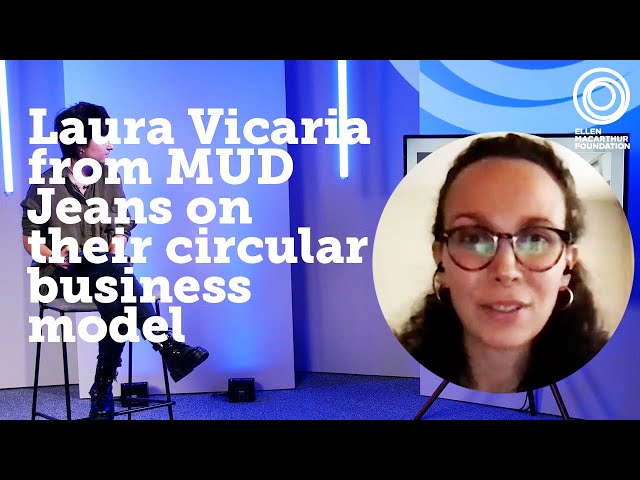
Laura Vicaria, CSR Manager at MUD Jeans, discusses their circular business model, highlighting how leasing jeans offers customers a new way to reduce environmental impact.
The Ellen MacArthur Foundation, a UK charity, accelerates the transition to a circular economy through business, learning, insights, and communications.
Subscribe for more videos on their YouTube channel. Learn more about their work and connect via their website, Instagram, Facebook, Twitter, and LinkedIn.

Dame Ellen MacArthur explains how a circular economy works and its role in tackling climate change. The Ellen MacArthur Foundation, a UK charity, accelerates this transition through business, learning, and insights.
For more insightful videos, subscribe to The Ellen MacArthur Foundation on YouTube. Explore our work and connect with us via our website or social media: Instagram, Facebook, Twitter, and LinkedIn. #CircularEconomy #EllenMacArthur
This episode of The Circular Economy Show explores how circular economy practices help companies achieve their climate targets. As organizations increasingly focus on reducing greenhouse gas emissions, understanding innovative solutions is crucial.
We feature Chad Frischmann from Project Drawdown, discussing climate solutions beyond renewable energy, encompassing broader social, technological, and economic transformations. Also joining us are Laura Vicaria from MUD Jeans, sharing their circular business model, and James Lundström from Volvo Cars, detailing the automotive manufacturer's circular economy approaches to climate impact. Powered by Restream.

The textiles industry remains anchored in a linear "take-make-waste" economy, ranking as the fourth most impactful sector on primary resources and water. The Ellen MacArthur Foundation has outlined five universal circular economy policy goals, including "make the economics work" by creating incentives and regulations that enable circular business models like resale, rental, and repair to become the norm.
This challenge was explored in a live episode on April 27th, featuring insights from the European Commission, European Environment Agency, and Swedish Environmental Protection Agency. They discussed policy's crucial role in accelerating the adoption of circular models within the fashion and textiles sector. Watch the [full episode](https://www.youtube.com/watch?v=Dq46r3zdJmA&t=3s) and learn more about the [Universal Policy Goals](https://policy.ellenmacarthurfoundation.org/universal-policy-goals).

This documentary explores the practical application of a circular food economy, set against the backdrop of São Paulo. It features various food sector actors collaborating to create an economic model focused on regenerative and local food cultivation.
The film highlights the importance of valuing organic waste, ensuring essential nutrients are returned to the soil. This approach completes the cycle, fostering a sustainable food system.

The textiles industry significantly impacts resources and water, perpetuating a linear "take-make-waste" economy. The Ellen MacArthur Foundation advocates for making circular economy models, such as resale and repair, the norm through economic incentives and regulations. How can this be achieved in the fashion and textiles sector?
This episode, powered by Restream, explores policy's enabling role in increasing circular business model adoption. We'll hear perspectives from the European Commission, the European Environment Agency, and the Swedish Environmental Protection Agency.
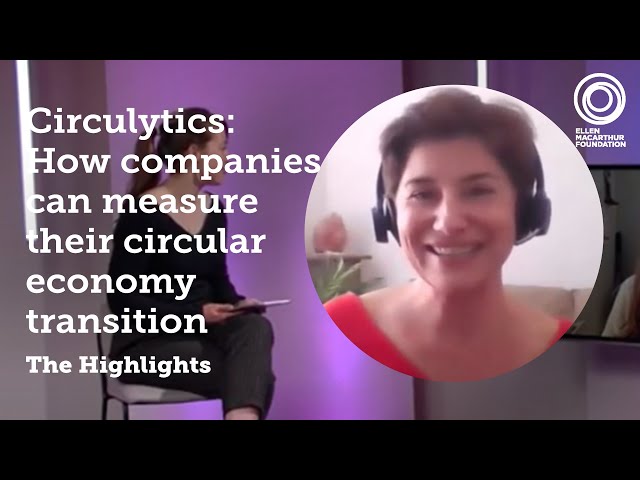
Measuring circular economy performance is vital as businesses worldwide adopt circular strategies for growth and environmental benefit. A recent episode, streamed live on April 13th, featured insights from Cecilia Brännsten (H&M Group), Marianne Richeux (Brambles), and Ellen Jackowski (HP Inc.).
For more, watch the [full episode](https://www.youtube.com/watch?v=uSwhuMbG_vc&t=1802s), learn about [Circulytics](https://www.ellenmacarthurfoundation.org/resources/apply/circulytics-measuring-circularity) for measuring circularity, and explore additional episodes of [The Circular Economy Show](https://www.ellenmacarthurfoundation.org/our-work/activities/the-circular-economy-show) and our [broader work](https://www.ellenmacarthurfoundation.org/).
Environmental Scientist and Advocate
What EarthSayers stands for
Discover Diverse Voices on EarthSayers
Unlike algorithm-driven platforms that push you into a content bubble, we ensure you hear a variety of perspectives from scientists, activists, Indigenous leaders, business innovators, and everyday citizens working toward sustainability.
EarthSayers CINEMA
Watch, learn and lead—sustainability starts with you.
How to Live on Earth | Feature Documentary | Presented by Benedict Cumberbatch
What if the solutions to building a better future already exist? How to Live on Earth is an ambitious documentary that explores how humanity can create a thriving future by collaborating with nature. Presented by Benedict Cumberbatch, the film reveals the potential of teaming up with nature to address our greatest challenges.
Heartwarming and energizing, it offers a hopeful vision for a future where both nature and humanity can thrive. How to Live on Earth is produced by Open Planet Studios in association with Villars Institute Foundation and Silvania. Join the conversation by downloading film assets and sharing your reaction at howtoliveonearth.net/social-toolkit. Explore educational resources from the Villars Institute at YouTube.


