




Special Collections:
Life on Earth

Watch a black bear cub's delightful first encounter with snow, captured on video with its mother during an urban stroll. This was likely the young bear’s first winter, a crucial period when cubs learn vital survival skills from their mother.
The Center for Biological Diversity, a 501c3 nonprofit, works to secure a future for all species by protecting the lands, waters, and climate they need to survive. We believe human welfare is deeply linked to nature's vast diversity.
Learn more at biologicaldiversity.org or contact us at center@biologicaldiversity.org.

This delightful video captures a bear cub's playful encounter with its first winter snow. Filmed with its mother during an urban stroll, the cub charmingly tries to catch falling snowflakes. (Video courtesy Ring.com, CC BY.)
The Center for Biological Diversity is a Tucson-based 501c3 nonprofit dedicated to protecting diverse wild species and their habitats. We believe human welfare is deeply linked to nature, working through science and law to secure a future for all species. Learn more at biologicaldiversity.org or contact us at center@biologicaldiversity.org.

Watch an interview with Jean Su, director of the Center's Energy Justice program, conducted during the COP27 summit in Egypt.
The Center for Biological Diversity is a Tucson-based 501c3 nonprofit. We work to secure a future for all species, believing human welfare is deeply linked to nature's vast diversity. Through science, law, and creative media, we protect the lands, waters, and climate essential for survival.
Learn more and take action at our website. Connect with us on Twitter, Facebook, Instagram, and TikTok. For inquiries, email center@biologicaldiversity.org.

Horseshoe crabs, ancient survivors for half a billion years, are crucial to our ecosystem. Their annual egg deposits along the Atlantic Coast provide vital food for endangered species like red knots, fueling their 9,500-mile migration. The Center for Biological Diversity secured protection for these shorebirds in 2014.
Now, a commission proposes increasing commercial horseshoe crab harvest limits, including females. We oppose this. These creatures support countless species; we cannot let them disappear. Read more: https://biodiv.us/3FWWrq1. The Center is a 501c3 nonprofit dedicated to protecting all species. Find us at biologicaldiversity.org or email center@biologicaldiversity.org.

The Endangered Species Mural project in Tulsa, by artist Roger Peet, features the American burying beetle. These unique insects are efficient recyclers, known for burying small animal carcasses to feed their larvae. Once common, they are now rare. The Center for Biological Diversity works to prevent their extinction. Learn more about American burying beetles here and the Mural Project here.
The Center for Biological Diversity is a 501c3 nonprofit securing a future for all species. Believing human welfare is linked to nature's diversity, we use science, law, and media to protect vital habitats. Visit our website or email center@biologicaldiversity.org for inquiries.

Five endangered red wolf pups underscore the urgent need to save this species from extinction. With fewer than 20 known in the wild, red wolves are among the world's most endangered carnivores. A new draft recovery plan, proposed by the Fish and Wildlife Service in September 2022, offers a crucial step forward after 32 years.
The Center for Biological Diversity, a 501c3 nonprofit, believes human welfare is deeply linked to nature and biodiversity. We work through science, law, and creative media to protect species on the brink of extinction, ensuring a future where the wild thrives. Learn more and take action at biologicaldiversity.org.

Washington's recovering wolf population faces flawed state management. Despite public support, the state wildlife agency, influenced by the livestock industry, continues lethal wolf management and defied Governor Inslee's reform orders. This approach lacks accountability, transparency, and science-based nonlethal strategies.
Learn from experts Amaroq Weiss, Claire Loebs Davis, and Samantha Bruegger how to transform Washington into a leader for wolf conservation. The Center for Biological Diversity, a 501c3 nonprofit, protects species through science and law.
Find us at biologicaldiversity.org, on Twitter @CenterForBioDiv, or email center@biologicaldiversity.org.

The Sonoran Desert National Monument, a biodiverse haven for endangered species, is severely damaged by target shooting. Despite the Bureau of Land Management's own findings of harm to wildlife, Indigenous sites, and human health, 90% of this precious area is now littered with toxic lead ammo and makeshift targets, destroying ancient saguaros and petroglyphs. The Center for Biological Diversity works to protect such vital lands and species from extinction.
As a 501c3 nonprofit, we believe human welfare is deeply linked to nature's diversity. Learn more, take action, and support our mission at biologicaldiversity.org. For inquiries, email center@biologicaldiversity.org.

Diamondback terrapins, keystone species of Atlantic and Gulf coasts, are wild treasures threatened by crab traps. The Center for Biological Diversity and allies secured Florida rules protecting them from collection and recreational blue crab traps.
The Center for Biological Diversity, a 501c3 nonprofit, works to secure a future for all species. Believing human welfare is deeply linked to nature's diversity, we use science, law, and creative media to protect the lands, waters, and climate essential for survival.
Connect with us for action or information: Website | Twitter | Facebook | Instagram | TikTok. Email questions to center@biologicaldiversity.org.

Polar bears typically prey on beluga whales near ice floes. However, recent fascinating footage from the Center’s Brett Hartl reveals a different interaction in open water, where belugas appear unafraid. This unusual encounter is incredible to witness.
The Center for Biological Diversity is a 501c3 nonprofit dedicated to securing a future for all species. We believe human welfare is linked to nature's diversity, working through science, law, and media to protect vital habitats. Learn more and take action at our website, or contact us at center@biologicaldiversity.org.
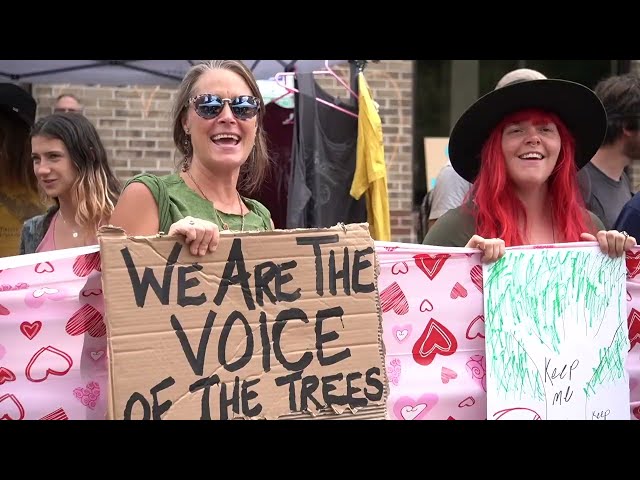
The Center for Biological Diversity recently rallied in Asheville, NC, advocating for stronger safeguards for the Pisgah-Nantahala National Forest, a biodiversity hotspot. Over 300 attendees submitted 34,000 public comments urging improved management, reflecting the message: "We love Pisgah, and we want to see more of it protected."
The Center for Biological Diversity is a 501c3 nonprofit protecting species and habitats, believing human welfare is linked to nature's diversity. We use science, law, and media to secure a future for all species. Learn more or take action via our website, Twitter, Facebook, or action alerts. For inquiries, email center@biologicaldiversity.org.

Brett Hartl, Government Affairs Director at the Center for Biological Diversity, built an artificial stream in his Arizona backyard. This vital watering hole supports wildlife like mountain lions, bobcats, bears, and deer, especially as drought and development reduce natural water sources. A video captures a mountain lion drinking from the stream.
The Center for Biological Diversity is a 501c3 nonprofit dedicated to protecting species and their habitats. Through science, law, and creative media, they work to secure a future where wild animals and plants thrive, recognizing the deep link between human welfare and nature's diversity.
Explore their work and take action: [Website](https://www.biologicaldiversity.org/), [Twitter](https://twitter.com/CenterForBioDiv), [Facebook](https://www.facebook.com/CenterforBioDiv/), [Instagram](https://www.instagram.com/centerforbiodiv/), [TikTok](https://www.tiktok.com/@centerforbiodiv/), [Action Alerts](https://www.biologicaldiversity.org/action/alerts/). For inquiries, email center@biologicaldiversity.org.

Increased human activity, urban sprawl, and development are pushing endangered species like mountain lions, panthers, and manatees to the brink. Recent incidents, including the death of California mountain lion P-78 from rat poison and vehicle impact, and 14 Florida panther fatalities this year due to collisions, underscore this critical threat.
The Center is a leader in establishing wildlife connectivity across the nation. Join our expert staff in California and Florida to discuss our vital work in protecting wildlife where they live.

The deaths of mountain lion P-78 from rat poison and a vehicle strike, alongside 14 Florida panthers killed by vehicles this year, underscore a critical threat. Endangered species like mountain lions, panthers, and manatees are pushed to the brink by increased human activity, habitat loss, urban sprawl, and a lack of wildlife corridors.
The Center for Biological Diversity leads efforts to establish vital wildlife connectivity across the nation. Join our expert staff in California and Florida to learn more about our work protecting wildlife where they live.

Our linear economic system drives biodiversity loss, yet a thriving biodiversity is crucial for a strong economy. The Ellen MacArthur Foundation's Cindy Venho and Maya Adams explain how the circular economy can protect and restore nature.
As a UK charity, the Ellen MacArthur Foundation promotes a circular economy model that eliminates waste and pollution, circulates products and materials, and regenerates nature.
For more insights, subscribe to their YouTube channel, visit their website, and follow them on Instagram, Facebook, Twitter, and LinkedIn.

Our webinar series examines the colonial legacies of introducing cows to the Americas, which profoundly altered human-land relationships. Cattle grazing fueled colonial projects and capitalist economies, leading to the loss of Native lives, livelihoods, and culture.
This panel will discuss these historical impacts and explore pathways forward, including regenerative practices, food justice, land equity, and restoring traditional knowledge for healthy communities and living landscapes. Experts like Dr. Linda Alvarez, Dr. Liz Carlisle (author of *Healing Grounds*), and Dr. Rosa Ficek (whose article inspired this panel) will lead the conversation.
For past webinars, visit [takeextinctionoffyourplate.com/webinars-%26-other-media](https://takeextinctionoffyourplate.com/webinars-%26-other-media). Check out our new website at [grazingfacts.com](https://grazingfacts.com/) and find Jennifer Molidor on Twitter: @JenniferMolidor.

Originating in the United States’ first federally protected wilderness, the Gila River stands as the Southwest’s last major free-flowing waterway. From New Mexico to the Gulf of California, it carves a vital green corridor through Arizona’s arid Sonoran Desert, sustaining endangered species like Chiricahua leopard frogs and yellow-billed cuckoos.
Watch this video to explore the Gila’s breathtaking beauty and rich history, featuring insights from Center for Biological Diversity cofounder Todd Schulke.
Learn more: Center for Biological Diversity | Wild Gila River | National Wild and Scenic Rivers

Birds offer a vital lesson: humans and nature are deeply connected. Learn more from renowned birders and authors J. Drew Lanham and David Lindo in a special webinar.
This event, cohosted by the Center for Biological Diversity, Thoreau Society, and College of Idaho, will explore what birds teach us about interconnectivity. A Q&A session will follow for participants.

April 20, 2022, marks 12 years since the BP Deepwater Horizon explosion, which killed 11 people and caused the worst oil spill in U.S. history. This tragedy devastated marine environments and coastal communities.
Since then, offshore drilling continues, harming human health, marine life, and our beaches. We must prevent further toxic oil spills in our oceans.
Help end new offshore drilling. Take action: https://biodiv.us/3Or4OMk
#WeChooseNow #ProtectOurCoast #TimeToTransition
Growing concern about beef's environmental impact faces political backlash, driving new climate commitments. Food and climate experts will discuss the climate science of beef, exploring effective solutions, regenerative practices, and emission reduction strategies. They will also examine carbon markets, consumer awareness, and how cultural factors influence the debate.
Renowned experts Dr. Jonathan Foley (Project Drawdown), Dr. Matthew Hayek (NYU), and Dr. Silvia Secchi (University of Iowa) will lead this discussion. Sign up for our Food X e-newsletter: https://www.biologicaldiversity.org/programs/population_and_sustainability/food-x/
Environmental Scientist and Advocate
What EarthSayers stands for
Discover Diverse Voices on EarthSayers
Unlike algorithm-driven platforms that push you into a content bubble, we ensure you hear a variety of perspectives from scientists, activists, Indigenous leaders, business innovators, and everyday citizens working toward sustainability.
EarthSayers CINEMA
Watch, learn and lead—sustainability starts with you.
How to Live on Earth | Feature Documentary | Presented by Benedict Cumberbatch
What if the solutions to building a better future already exist? How to Live on Earth is an ambitious documentary that explores how humanity can create a thriving future by collaborating with nature. Presented by Benedict Cumberbatch, the film reveals the potential of teaming up with nature to address our greatest challenges.
Heartwarming and energizing, it offers a hopeful vision for a future where both nature and humanity can thrive. How to Live on Earth is produced by Open Planet Studios in association with Villars Institute Foundation and Silvania. Join the conversation by downloading film assets and sharing your reaction at howtoliveonearth.net/social-toolkit. Explore educational resources from the Villars Institute at YouTube.


