




Special Collections:
Forests and Oceans
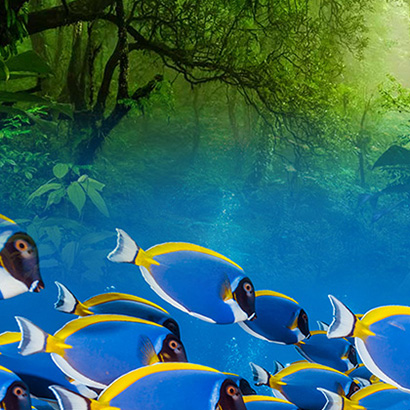

Whale sharks are the largest fish in the ocean, capable of reaching lengths of nearly 65 feet.
Explore more about these impressive creatures in our Marine Life Encyclopedia.

The Ocean Cleanup's Research team has reached a significant milestone, releasing 100 peer-reviewed scientific publications. Science is central to understanding ocean plastic pollution—its scale, sources, and behavior. This research has informed cleanup strategies, from mapping the Great Pacific Garbage Patch to identifying polluting rivers and understanding industrial fishing, helping trace pollution origins and guiding effective interventions.
As global cleanup efforts scale, our focus will shift from diagnosing the problem to measuring and demonstrating our impact. Committed to open science, all publications are publicly accessible on our website. Learn more about this achievement from Head of Research, Laurent Lebreton: https://visit.theoceancleanup.com/4mDjLML

Green turtles faced extinction due to heavy hunting until the Endangered Species Act (ESA) provided a lifeline in the 1970s.
Leading up to Endangered Species Day on May 15, we will highlight five marine animals protected by the U.S. ESA. Join us in defending this landmark law and these species.
Learn more and take action here: https://oceana.ly/ESA

Scientists recently captured rare underwater footage of a Greenland shark in Arctic Canadian waters, offering a unique glimpse into the world of this elusive species.
Belonging to the "sleeper shark" family due to their slow growth and low activity, Greenland sharks are remarkable for their extreme longevity. With some individuals estimated to live nearly 400 years, they are recognized as the longest-lived vertebrates on Earth.
Learn more: https://oceana.ly/3PVSOaT

Our work continues in Jamaica.
In Kingston, nine Interceptors prevent trash from flowing into the Caribbean Sea.
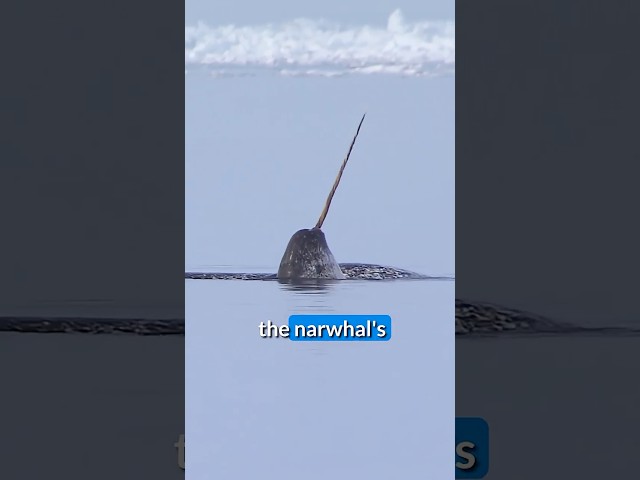
Narwhals, often called "unicorns of the sea," are known for their distinctive "horn," which is actually an elongated tooth. Learn more about these fascinating marine mammals in our Marine Life Encyclopedia: oceana.ly/narwhal
Footage is courtesy of O’Corry-Crowe G et al. (2025) Use of tusks by narwhals, Monodon monoceros, in foraging, exploratory, and play behavior. Front. Mar. Sci. 12:1518605. doi: 10.3389/fmars.2025.1518605


Sonia Kwami, Oceana's new leader in Ghana, is committed to protecting Ghana's fisheries. Raised in an ocean-dependent community, she understands how healthy waters sustain livelihoods and the impact of depletion.
At a crucial time for Ghana's coastal communities, Sonia spearheads Oceana's on-the-ground efforts, viewing her leadership as a continuation of a lifelong dedication to environmental justice.
Learn more about Oceana’s work in Ghana: ghana.oceana.org. Subscribe: oceana.ly/subscribe. Become a Wavemaker: oceana.ly/4rGhn8Z. Connect on Facebook, Instagram, X, and TikTok.
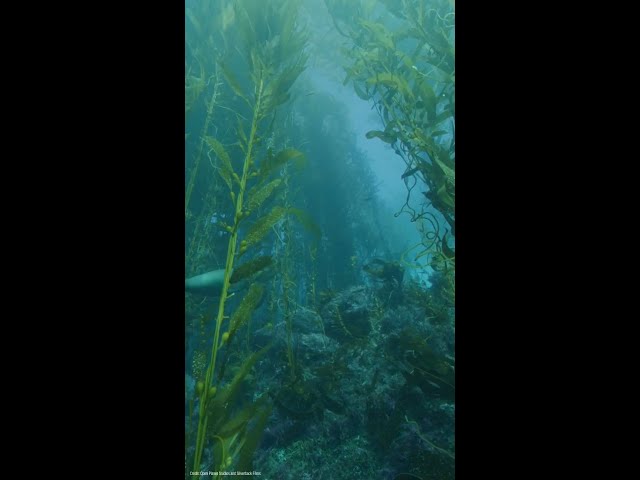
Kelp forests are towering underwater ecosystems, reaching heights of 175 feet. These vital environments provide food and shelter for thousands of marine species.
Beyond supporting diverse marine life, kelp and other marine algae actively capture and store carbon dioxide. This makes these ecosystems crucial in the fight against climate change.

On a remote North Pacific atoll, albatross chicks are dying, their bodies filled with plastic.
Chris Jordan's film, "Albatross," unflinchingly portrays this tragedy, while also inspiring a deep appreciation for life on Earth.

The Arctic tern holds the record for the longest migration of any animal on Earth.
To learn more about these incredible birds, explore our Marine Life Encyclopedia: oceana.ly/arctictern

Thank you for your engagement.
We are actively working on exciting new developments and look forward to sharing them with you.
Please continue to follow our updates for more information. p>

Ocean cleanup is achievable, and we are steadily progressing towards eliminating plastic pollution.
While not currently in the Great Pacific Garbage Patch (GPGP), our focus is on improving plastic hotspot prediction to enhance cleanup efficiency. This summer, we will return to the GPGP to test our advanced ocean models and drones.

We've reached a significant milestone, removing over 50,000,000 kg of trash from rivers and oceans globally.
Our Field Ocean Scientist, Peter Puskic, will help visualize the immense scale of this accomplishment.

Elephant seals are known for their distinctive large noses, resembling an elephant's trunk. p>
Discover more about southern elephant seals in our Marine Life Encyclopedia.

Interceptor 006 has achieved its first significant "catch" of the year. This successful operation took place in Rio las Vacas, Guatemala 🇬🇹, marking an important milestone for the unit.
This initial interception highlights ongoing efforts to combat illicit activities or environmental threats within the region. Further details are expected soon.

The North Atlantic right whale is one of the world's most critically endangered animals, yet many are unaware of its plight. Learn essential facts about these magnificent creatures from Oceana marine scientist Nora Ives.
Oceana actively campaigns to protect these whales from extinction. Discover more about our vital efforts and how you can contribute to their survival by visiting: oceana.org/rightwhaletosave.
Join our mission to save the oceans. Subscribe for updates: oceana.ly/subscribe, or become a Wavemaker and stand for marine life: oceana.ly/4rGhn8Z.
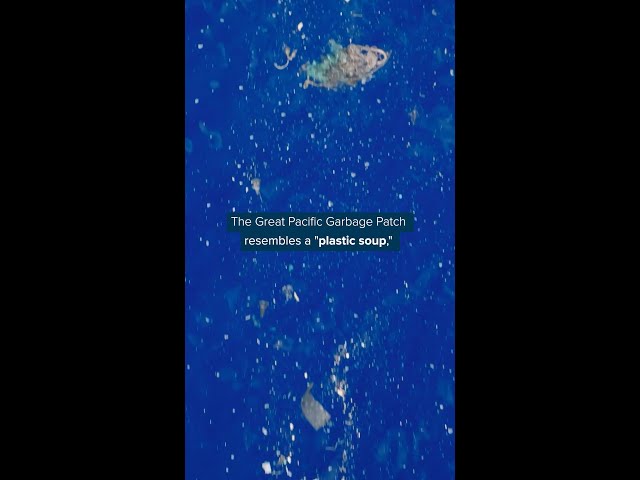
In 2026, we are scaling up river operations by launching our 30 Cities Program. This initiative aims to prevent up to one-third of river plastic from reaching the ocean.
To address the Great Pacific Garbage Patch, we are deploying more Interceptors and advancing AI, drone tests, and computational modeling. These efforts will efficiently locate and map plastic hotspots, optimizing our ocean cleanup operations. Stay tuned for further updates.

This year, we are significantly expanding our river operations. Concurrently, we are developing advanced drone and AI technologies to identify plastic hotspots within the Great Pacific Garbage Patch.
Our research continues into the pervasive problem of discarded fishing gear, aiming to pinpoint effective solutions. Furthermore, once our Interceptors are fully operational, we will focus on cleaning up legacy pollution from coastlines. This effort aims to restore these environments to their pristine state and prevent any stranded plastic from re-entering the ocean.

The Audacious Project has awarded The Ocean Cleanup a $121 million donation. This significant funding will accelerate the organization's scale-up efforts, enabling it to tackle up to a third of all plastic flowing from rivers into the ocean.
This initiative aims to deliver a crucial success story for global environmental efforts. Watch the full video detailing this project here.
Environmental Scientist and Advocate
What EarthSayers stands for
Discover Diverse Voices on EarthSayers
Unlike algorithm-driven platforms that push you into a content bubble, we ensure you hear a variety of perspectives from scientists, activists, Indigenous leaders, business innovators, and everyday citizens working toward sustainability.
EarthSayers CINEMA
Watch, learn and lead—sustainability starts with you.
How to Live on Earth | Feature Documentary | Presented by Benedict Cumberbatch
What if the solutions to building a better future already exist? How to Live on Earth is an ambitious documentary that explores how humanity can create a thriving future by collaborating with nature. Presented by Benedict Cumberbatch, the film reveals the potential of teaming up with nature to address our greatest challenges.
Heartwarming and energizing, it offers a hopeful vision for a future where both nature and humanity can thrive. How to Live on Earth is produced by Open Planet Studios in association with Villars Institute Foundation and Silvania. Join the conversation by downloading film assets and sharing your reaction at howtoliveonearth.net/social-toolkit. Explore educational resources from the Villars Institute at YouTube.


