



Special Collections:
Forests and Oceans
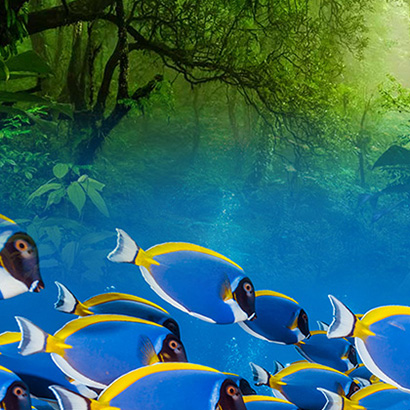

August brought significant positive developments for our oceans. Federal lawmakers took a stand against the Trump administration to protect endangered species.
Additionally, a brutal annual seabird hunt was canceled for the first time in over 400 years, marking a notable victory for marine conservation.

Cardinalfish fathers exhibit a unique parenting behavior by carrying their eggs in their mouths for protection.
Learn more about these fascinating creatures and their role in marine life.
Plastic pollution threatens the pristine natural beauty and biodiversity of U.S. national parks, from Glacier Bay's icebergs to Dry Tortugas' coral reefs.
This National Parks Week, join the effort to protect these vital habitats from plastic waste. Learn more at Oceana.

The Great Pacific Garbage Patch (GPGP) is the largest offshore plastic accumulation zone, located between Hawaii and California. Each year, an estimated 1.15 to 2.41 million tonnes of plastic enter the ocean from rivers, with over half of it being buoyant and unable to sink.
The GPGP spans approximately 1.6 million square kilometers, twice the size of Texas. Its location and shape fluctuate due to seasonal and interannual changes in winds and currents, with the patch generally orbiting around 32°N and 145°W. Researchers have noted significant variations in its position, influenced by ocean currents.

In the past year, scientists have uncovered some extraordinary species, including hairy fish and carnivorous "death-ball" sponges.
These discoveries highlight the incredible diversity of ocean wildlife and the ongoing importance of STEM research in understanding our planet's ecosystems.

We are expanding our operations to Santa Marta, Colombia, having signed a Memorandum of Understanding with the city to implement Interceptor solutions. These will capture plastic waste in the Río Manzanares and Río Gaira before it reaches the Caribbean Sea.
This partnership with the City of Santa Marta and Corapmag (Corporación Autónoma Regional del Magdalena) will also focus on downstream cleanups and responsible waste management, preventing collected plastic from re-entering the environment. Through collaboration with local stakeholders, we aim to protect marine ecosystems and support Santa Marta’s environmental stewardship as part of our 30 Cities Program to reduce global river plastic by 2030.

The ocean sunfish is among the heaviest bony fish, reaching weights of up to 4,900 pounds.
Discover more about sunfish in our Marine Life Encyclopedia.

Our Interceptors are designed to prevent plastic from entering the ocean, but they also capture biological waste like food scraps and plant materials. Much of this waste can be reused for composting or reclaimed materials.
In Indonesia, driftwood collected by Interceptor 020 is transformed into furniture, while in Guatemala, intercepted wood is supplied to local communities as firewood. However, invasive water hyacinth poses a significant challenge, as seen in the Dominican Republic and Vietnam, where it obstructs waterways and affects local ecosystems. Addressing these invasive species is crucial for restoring river health.

Interceptor upgrades are on the way in the Dominican Republic 🇩🇴. A new 400-meter barrier, our longest deployment yet, will effectively capture more plastic and invasive water hyacinths before they reach the river and ocean.
This upgrade aligns with the Government of the Dominican Republic's environmental initiatives and is expected to be completed by early 2027.

Dugongs and manatees are often confused, but they are distinct relatives. A simple way to differentiate them is by their tails: dugongs have fluke-shaped tails, while manatees have paddle-shaped tails.
To learn more about dugongs, visit our Marine Life Encyclopedia: https://oceana.ly/4zjglF2.


The ocean is teeming with incredible creatures that seem almost unbelievable! Discover some wild ocean animals that boast astonishing features.
Join us as we explore the fascinating world of marine life and its weird inhabitants.

Interceptor operations help prevent trash from entering the ocean by intercepting it in rivers. This initiative not only protects marine environments but also generates benefits for local communities.
By creating employment opportunities, these operations contribute to the economic well-being of the areas involved.

In October 2021, a damaged pipeline leaked nearly 25,000 gallons of oil off Huntington Beach, California, severely impacting people and wildlife.
We highlight five of the worst oil spills in U.S. history, demonstrating that where they drill, they spill, harming our oceans, marine life, and coastal communities. Say NO to the proposed expansion of offshore drilling by the U.S. government: Protect Our Coasts.

Some ocean moms face extreme physical challenges to raise their young. Discover how sea otter, blue whale, and octopus mothers make significant sacrifices for their offspring.
The last example might surprise you!

The Great Pacific Garbage Patch is the largest collection of floating ocean plastic, situated between Hawaii and California. It spans approximately 1.6 million square kilometers, which is twice the size of Texas or three times that of France.
Estimated to weigh around 100,000 tonnes, the plastic mass in the Great Pacific Garbage Patch is equivalent to over 740 Boeing 777s.

The peacock mantis shrimp boasts one of the fastest strikes in the animal kingdom!
Discover more about these fascinating crustaceans in our Marine Life Encyclopedia.


July was a month of significant achievements for ocean conservation! 🐚 ✨
From efforts to protect endangered species to new initiatives focused on restoring marine habitats, these actions are set to create positive change for our blue planet.
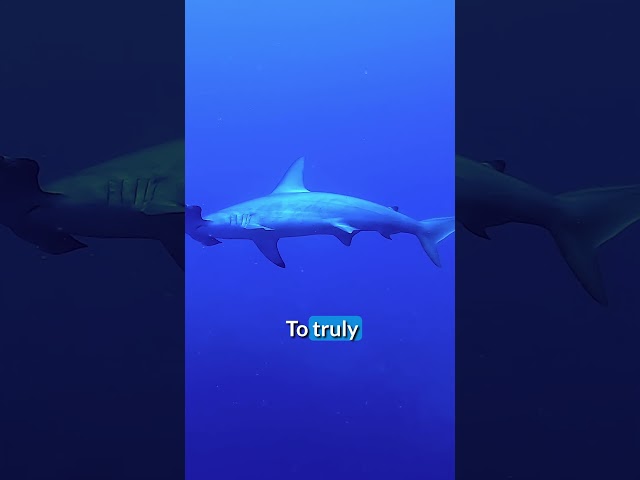
Sharks are facing significant challenges, but we can work together to protect these remarkable creatures.
It's #SharkWeek, an ideal opportunity to discover the importance of sharks and how we can safeguard them and their ocean habitat. Dive in at https://oceana.ly/4bkRc2m.
Environmental Scientist and Advocate
What EarthSayers stands for
Discover Diverse Voices on EarthSayers
Unlike algorithm-driven platforms that push you into a content bubble, we ensure you hear a variety of perspectives from scientists, activists, Indigenous leaders, business innovators, and everyday citizens working toward sustainability.
EarthSayers CINEMA
Watch, learn and lead—sustainability starts with you.
How to Live on Earth | Feature Documentary | Presented by Benedict Cumberbatch
What if the solutions to building a better future already exist? How to Live on Earth is an ambitious documentary that explores how humanity can create a thriving future by collaborating with nature. Presented by Benedict Cumberbatch, the film reveals the potential of teaming up with nature to address our greatest challenges.
Heartwarming and energizing, it offers a hopeful vision for a future where both nature and humanity can thrive. How to Live on Earth is produced by Open Planet Studios in association with Villars Institute Foundation and Silvania. Join the conversation by downloading film assets and sharing your reaction at howtoliveonearth.net/social-toolkit. Explore educational resources from the Villars Institute at YouTube.


