




Special Collections:
The Economy

The Ellen MacArthur Foundation (EMF) offers professional learning and opportunities to understand the circular economy. Launched in 2010, this UK charity accelerates the transition to a circular economy through business, learning, insight, and communications. EMF has emerged as a global thought leader, influencing decision-makers across business, government, and academia.
To learn more about their work, visit the Ellen MacArthur Foundation website. You can also subscribe to their YouTube channel and follow them on Instagram, Facebook, LinkedIn, Twitter, and Medium.

The Ellen MacArthur Foundation, a UK charity, actively engages with schools and universities worldwide to equip future innovators and leaders with circular economy thinking. Host Colin Webster discusses these vital programs with leaders Harrison Wavell (Schools & Colleges) and Reniera O'Donnell (Higher Education).
Launched in 2010 by world record-breaking sailor Ellen MacArthur, the Foundation accelerates the transition to a circular economy. It has become a global thought leader, influencing decision-makers across business, government, and academia with support from partners like SUN, MAVA, and Arup.
For more information, visit their website or follow them on YouTube, Instagram, Facebook, LinkedIn, Twitter, and Medium.


The Federal Reserve Bank of St. Louis plays a key role in economic education.
Specifically, it explains Gross Domestic Product (GDP) and actively promotes its understanding and significance as a vital economic indicator.

Takeaway paper coffee cup waste and recyclability, especially concerning ocean plastics, are prominent issues. Demand for better design, reuse, and recycling is high. This video features DS Smith's European Strategic Development Director Tom Campbell-White and Costa's Head of Environment Oliver Rosevear, offering industry perspectives on these topics.
Founded in 2010 by Ellen MacArthur, the UK-based Ellen MacArthur Foundation is a global thought leader accelerating the transition to a circular economy. It works across business, government, and academia to establish the circular economy on decision-makers' agendas. Learn more at ellenmacarthurfoundation.org and subscribe to their YouTube channel: youtube.com/user/made2bemedia.

Historically, Latin America primarily served as a resource supplier during the first three Industrial Revolutions. However, Petar Ostojic argues that the combination of the circular economy and the Fourth Industrial Revolution offers a unique opportunity for the region to achieve a new era of prosperity.
Ostojic, co-Founder and CEO of Neptuno Pumps and Executive Director of the Center for Innovation and Circular Economy (CIEC), is a recognized leader in this field. The World Economic Forum acknowledges him as the first promoter of the circular economy in Latin America, and he was Highly Commended for Circular Economy Leadership at The Circulars 2017 in Davos.

45% of global greenhouse gas emissions stem from how we produce and use everyday goods. Achieving Paris Agreement goals requires fundamentally rethinking these processes. The Ellen MacArthur Foundation, a UK charity, accelerates the transition to a circular economy by influencing business, government, and academia.
On November 7th, Ilma and Suki from the Foundation discussed why renewable energy alone is insufficient and shared key research findings. Learn more about our work and the circular economy at ellenmacarthurfoundation.org. You can also subscribe to our YouTube channel and follow us on social media for updates.

AgriProtein CEO Jason Drew, described by Forbes as 'Lord of the Flies', pioneers insect farming to reduce stress on global fish stocks. His company replicates natural processes to produce larvae, offering a sustainable alternative to traditional fishing and helping regenerate soils.
The Ellen MacArthur Foundation, a UK charity, accelerates the transition to a circular economy. Launched in 2010 by world record-breaking sailor Ellen MacArthur, the Foundation is a global thought leader in business, government, and academia. Learn more about our work at [ellenmacarthurfoundation.org](https://www.ellenmacarthurfoundation.org) and subscribe to our channel [here](https://www.youtube.com/user/made2bem).

The Foundation's annual DIF event series features a film by Creative Conscience, exploring how creativity, film, and gaming inspire action towards a circular economy. It highlights creativity's role in building a positive future, with insights from experts.
The Ellen MacArthur Foundation is a UK charity, launched in 2010, dedicated to accelerating the transition to a circular economy. It has emerged as a global thought leader, establishing the circular economy on the agenda of decision-makers.
Thank you for watching. Subscribe to our YouTube channel, learn more at ellenmacarthurfoundation.org, and follow us on Instagram, Facebook, LinkedIn, Twitter, and Medium.

Circular food systems are essential for a global transition towards a people, SDG, and planet-centered paradigm. This shift requires awareness, education, culture change, entrepreneurship, cooperation, and innovation, alongside crucial support for bottom-up projects from markets, the third sector, and individuals.
This session highlights the pioneering ideas and individuals shaping the future of our food systems. It will feature diverse global case studies from numerous countries across various continents, showcasing real-world initiatives.

Spending 90% of our time indoors negatively impacts health more than diet or exercise. Hexagro Urban Farming, an Italian startup, addresses this by creating a modular, nature-inspired system. Mimicking honeybee hives and tree structures, their solution transforms interior spaces into beautiful gardens, increasing access to healthy food.
Hexagro's automated indoor garden is modular, scalable, and utilizes high-pressure aeroponics, LED horticulture lighting, and environmental sensors. Join this session, streamed via Restream.io, to discover the first automated indoor garden designed to deliver abundance for everyone.

Preparing children for a sustainable future requires a collective effort from parents, teachers, and the wider community. It's not enough to simply help them understand environmental challenges; we must also take immediate action and lead by example, especially as young people like Greta Thunberg demand change.
We need to transform our own mindsets and behaviors to ensure a cleaner, greener planet for the next generation. By doing so, we empower children to become responsible stewards of our precious Earth.

Originally livestreamed via Restream.io, this session addresses the critical issue of clothing waste. Annually, New York landfills 200 million pounds of clothing. Globally, 73% of materials used for garments are landfilled or burned, with less than 1% recycled into new clothes.
To combat this, campaigns like Wear Next (New York) and Love Not Landfill (London) encourage diverting clothes from waste streams. They advocate for swapping, selling, donating, or recycling to prevent garments from ever becoming waste.
Join this session to understand why these initiatives were launched, their execution, and key learnings.

The circular economy is increasingly vital for addressing global challenges, yet the finance sector's engagement remains in early stages. While industry leaders recognize the power of circular solutions, accelerating and scaling these initiatives urgently requires capital and services from financial institutions.
This session highlights how Intesa Sanpaolo has integrated the circular economy into its core strategy. Learn how this financial services company supports businesses, especially SMEs, in making this crucial transition.

A new era of consumption is emerging, driven by increased consumer awareness of product origins and environmental impact. This shift is moving us towards innovative consumption models beyond traditional purchasing.
Within the circular economy, rental and subscription models are gaining prominence, as recycling alone has proven insufficient. The next generation will demand service-based solutions over one-time purchases, prioritizing both convenience and positive social-environmental impact.
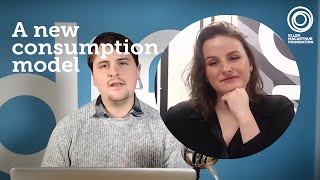
Fast fashion has drastically shortened clothing lifespans, increasing consumption while ~70% of closets go unworn. Extending garment life is crucial to reduce the industry's impact, cutting new production and textile waste.
The "Switching Gear" project, supported by C&A Foundation and Circle Economy, helps four apparel brands pilot rental and recommerce business models by 2021.
Join a session with innovators from the Switching Gear Enabling Network (SGEN), a global network of over 50 circular solution providers. Discover how pioneers like The Renewal Workshop and Stuffstr are disrupting norms with rental and recommerce, exploring their latest innovations, opportunities, and challenges.

Plastic pollution poses a severe environmental threat. Plastic packaging constitutes nearly half of global plastic waste, much of it single-use. This plastic can take up to a thousand years to decompose, entering our food systems and projected to outweigh fish in oceans by 2050.
Ecoware confronts this challenge by producing 100% biodegradable and compostable packaging. Made from agricultural waste, their affordable and sustainable tableware, packaging, and medical products offer an alternative to single-use plastics.
Learn how Ecoware achieved this and if their model can be replicated in a session.

The UK's oil platforms require decommissioning. A circular economy approach offers a significant opportunity to capture economic value by reusing the vast quantities of steel, rather than simply recycling it.
While the systemic benefits of this reuse strategy are clear, aligning incentives for all stakeholders presents a key challenge. The central question is how to effectively convince every actor to prioritize reuse.
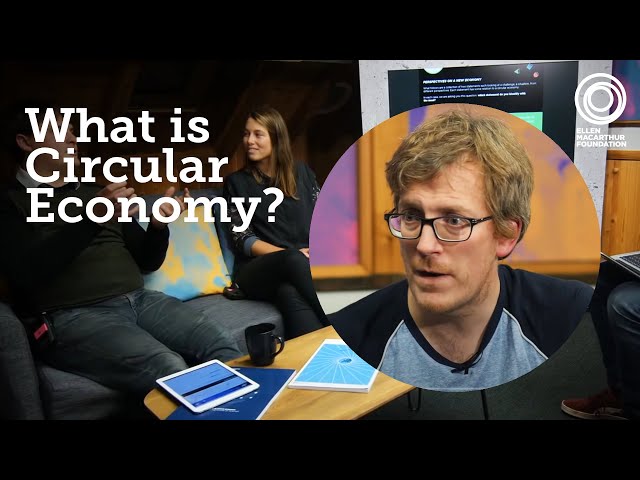
The DIF explores disruptive ideas, stories, and innovations related to the circular economy. But what exactly is the circular economy, and how does it impact you?
Join the Ellen MacArthur Foundation team for an interactive session delving into the circular economy's fundamentals and underlying value questions. Share your insights on the interactive red pen graphic before, during, and after the session.

The future of fashion and its transition to a circular economy rests with creatives across all roles, from designers to marketers and editors. Their diverse contributions are crucial in shaping this industry-wide shift.
This session explores how a new narrative can redirect customer desire from wanting more to prioritizing better, sustainable fashion. We will examine how industry creatives can apply circular principles to their storytelling, fostering a circular economy. Tune in to discover more.
Environmental Scientist and Advocate
What EarthSayers stands for
Discover Diverse Voices on EarthSayers
Unlike algorithm-driven platforms that push you into a content bubble, we ensure you hear a variety of perspectives from scientists, activists, Indigenous leaders, business innovators, and everyday citizens working toward sustainability.
EarthSayers CINEMA
Watch, learn and lead—sustainability starts with you.
How to Live on Earth | Feature Documentary | Presented by Benedict Cumberbatch
What if the solutions to building a better future already exist? How to Live on Earth is an ambitious documentary that explores how humanity can create a thriving future by collaborating with nature. Presented by Benedict Cumberbatch, the film reveals the potential of teaming up with nature to address our greatest challenges.
Heartwarming and energizing, it offers a hopeful vision for a future where both nature and humanity can thrive. How to Live on Earth is produced by Open Planet Studios in association with Villars Institute Foundation and Silvania. Join the conversation by downloading film assets and sharing your reaction at howtoliveonearth.net/social-toolkit. Explore educational resources from the Villars Institute at YouTube.


