



Special Collections:
Farming and Food Production

This video serves as a practical guide for hatchery operators on hatching Artemia cysts to produce high-quality instar I nauplii. It covers essential operational parameters that influence hatching success, such as cyst density, aeration, salinity, temperature, pH, illumination, and incubation duration. Additionally, it outlines necessary materials, recommended operating ranges, and critical monitoring points for optimal hatching performance.
Based on the fact sheet Artemia hatchery practices – Cyst hatching, this video is part of a series of practical hatchery management guides from the FAO. Subscribe to the FAO channel on YouTube and follow FAO on Facebook, Instagram, LinkedIn, TikTok, X, and Weibo.

This video serves as a practical guide for hatchery operators on disinfecting Artemia cysts before incubation. It outlines a step-by-step process that includes cyst selection, hydration, disinfection with sodium hypochlorite (NaOCl), washing, and applying treated cysts. Key safety precautions and necessary materials are also discussed to enhance biosecurity and ensure effective disinfection.
Based on the fact sheet "Artemia hatchery practices – Cyst disinfection," this video is part of a series of practical guides from the FAO. For more information, subscribe to the FAO YouTube channel at FAOoftheUN and follow FAO on social media: Facebook, Instagram, LinkedIn, TikTok, X, Weibo.

This video serves as a practical guide for hatchery operators on the optimal storage of Artemia cysts to ensure their hatching quality. It outlines essential storage practices such as maintaining low moisture content, using airtight packaging, storing at low temperatures, and protecting from light and humidity. Proper acclimatization before use is also emphasized to minimize quality losses.
Based on the fact sheet "Artemia hatchery practices – Cyst storage," this video is part of a series of hatchery management guides from the FAO. For more updates, subscribe to the FAO YouTube channel and follow FAO on Facebook, Instagram, LinkedIn, TikTok, X, and Weibo.

This video serves as a practical guide for hatchery operators on harvesting Artemia nauplii, detailing methods for separating them from unhatched cysts and empty shells. It covers essential procedures for harvest preparation, nauplii collection using concentrator-rinser or sieve methods, and handling options such as direct feeding, short-term storage, or enrichment.
Additionally, the video emphasizes operational considerations to enhance nauplii quality and purity while reducing larval mortality risks linked to cyst shells. It is based on the fact sheet Artemia hatchery practices – Harvesting nauplii, part of a series of practical hatchery management guides from the FAO Artemia Manual.

This video serves as a practical guide for hatchery operators on enriching Artemia nauplii to boost their nutritional value for fish and shrimp larvae. It outlines essential steps such as tank preparation, enrichment product application, harvesting, and storage of enriched nauplii. Key operational parameters like nauplii density, dissolved oxygen, temperature, and pH are also discussed to ensure effective enrichment and high-quality live feed production.
Based on the fact sheet "Artemia hatchery practices – Artemia enrichment," this video is part of a series of on-farm hatchery management guides from the FAO. For more updates, subscribe to the FAO YouTube channel at FAOoftheUN and follow them on social media: Facebook, Instagram, LinkedIn, TikTok, X, and Weibo.

This video serves as a practical guide for hatchery operators on the cold storage of Artemia nauplii, ensuring their nutritional quality for short-term use. It covers essential storage requirements, including nauplius stage selection, stocking density, temperature control, aeration, and oxygen management, along with maximum storage duration.
Additionally, the video emphasizes critical monitoring points to maintain nauplii quality and viability, ensuring a reliable supply of live feed for hatchery operations. It is based on the fact sheet Artemia hatchery practices – Nauplii cold storage, part of a series of practical hatchery management guides from the FAO Artemia Manual.


La Facultad de Agronomía de la Universidad de Buenos Aires (FAUBA) celebró un evento colorido con juegos, ferias, charlas y productos agroecológicos, en conmemoración de la FAO. Este año, bajo el lema "Innovar hoy para nutrir mañana", se enfatizó la importancia de la ciencia y la tecnología en la creación de sistemas agroalimentarios sostenibles y resilientes.
En colaboración con el Gobierno de la Ciudad de Buenos Aires, varios edificios icónicos de la ciudad fueron iluminados de azul como parte de una campaña de visibilización del DMA. Para más información, suscríbete a nuestro canal de YouTube: FAOoftheUN y síguenos en Facebook, Instagram, LinkedIn, TikTok, X, y Weibo.

The FAO-UNDP SCALA programme is enhancing the resilience and food security of women farmers in Côte d’Ivoire's cassava value chain. By adopting agroforestry practices, women like Florence can increase yields, produce byproducts such as attiéké (cassava couscous), strengthen social bonds, protect forest cover, and improve soil health.
For more information, visit the FAO SCALA website. Subscribe to our channel here and follow FAO on Facebook, Instagram, LinkedIn, TikTok, X, and Weibo.

The 2026 Pacific SIDS Solution Forum, co-hosted by FAO and the Government of Vanuatu, will unite various stakeholders, including governments, development partners, and private sectors, to enhance agrifood systems in the Pacific Islands. This Forum is a vital platform for knowledge sharing, investment mobilization, and partnership strengthening to promote sustainable development in Pacific SIDS.
For more information, visit the SIDS Solutions Forum. Subscribe to our channel here and follow FAO on Facebook, Instagram, LinkedIn, TikTok, X, and Weibo.

森林与景观恢复正在全球范围内改变退化土地,改善人们的生活。本视频展示了《2026年世界森林状况》(SOFO 2026)中的真实恢复实践,包括非洲的"绿色长城"、中国的"三北"工程、土耳其的穆拉特河流域、北美五大湖地区、南美洲的大西洋沿岸森林和印度尼西亚的红树林海岸线。
这些案例表明,恢复工作能够修复生态系统、增强生计、改善水土条件、保护生物多样性,并帮助社区增强韧性。部分影像素材由国家林业和草原局西北华北东北防护林建设局提供。
Subscribe! YouTube | Follow FAO on Facebook, Instagram, LinkedIn, TikTok, X, Weibo. © FAO: FAO #SDGs #Agenda2030 #GlobalGoals

The World Food Forum 2026 convened leaders, governments, organizations, and youth in Rome to promote efficient, inclusive, and sustainable agrifood systems. Latin America and the Caribbean showcased their diverse experiences and capabilities in tackling global food and rural development challenges.
Through dialogue and innovation, the region emphasized opportunities for partnerships, resource mobilization, and knowledge sharing. Highlights included youth leadership, sustainable water management, and women's contributions to community transformation, demonstrating the region's potential to drive significant change beyond its borders.
Subscribe! YouTube | Follow FAO on Facebook, Instagram, LinkedIn, TikTok, X, Weibo. © FAO: fao.org #SDGs #Agenda2030 #GlobalGoals

Subscribe to our channel: FAO of the UN. The Africa Science and Innovation Forum (ASIF 2026) commenced on 27 October in Addis Ababa, Ethiopia, focusing on advancing agricultural innovations.
This event unites policymakers, scientists, and development partners to explore strategies for scaling proven agricultural solutions to enhance productivity and resilience in Africa's agrifood systems. The Forum runs from 27 to 29 October 2026 at the United Nations Economic Commission for Africa (UNECA).
Follow FAO on social media: Facebook, Instagram, LinkedIn, TikTok, X, Weibo. © FAO: fao.org #SDGs #Agenda2030 #GlobalGoals
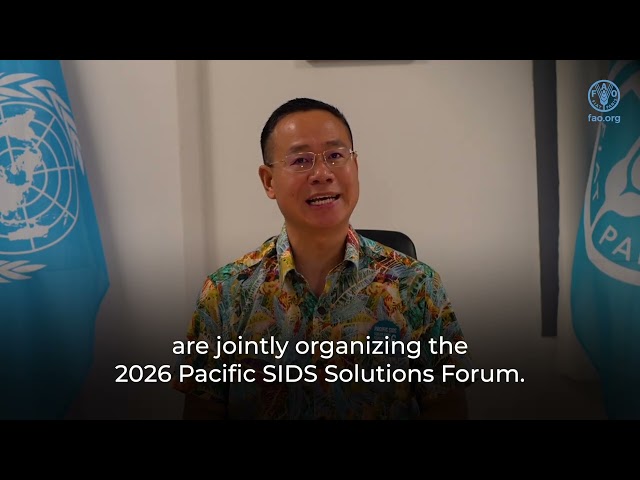
In this video, Guangzhou Qu, FAO Subregional Coordinator for the Pacific Islands, emphasizes the need for innovation, partnerships, and financing to transform agrifood systems in Pacific Small Island Developing States (SIDS). He advocates for enhanced collaboration among governments, development partners, the private sector, and local communities to create resilient and sustainable food systems.
As the 2026 Pacific SIDS Solutions Forum approaches, Qu highlights the importance of leveraging innovation and investment to tackle climate change, food security, and sustainable development challenges. For more information, visit the SIDS Solutions Forum.

Over the past decade, global cooperation has intensified to combat illegal, unreported, and unregulated (IUU) fishing. The FAO Agreement on Port State Measures (PSMA), effective since 2016, has become a vital tool in preventing IUU-caught fish from entering markets. With 86 Parties by 2026, the Agreement enhances port inspections, information sharing, and international collaboration.
As ocean governance progresses, the next decade will require broader participation and stronger implementation to protect marine resources and promote sustainable fisheries. Discover more about the PSMA at FAO.
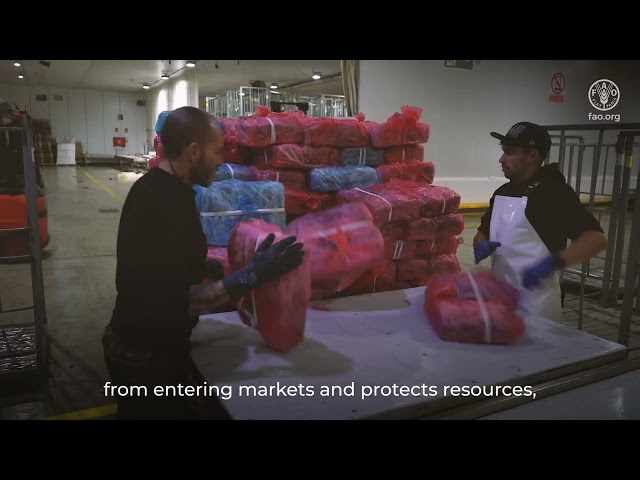
For ten years, global cooperation has been vital in combating illegal, unreported, and unregulated (IUU) fishing. The FAO Agreement on Port State Measures (PSMA), effective since 2016, has emerged as a crucial tool to prevent IUU-caught fish from entering markets. With 86 Parties by 2026, the Agreement enhances port inspections and international cooperation.
Explore a decade of advancements in implementation, information systems, and training for fisheries officials. As ocean governance progresses, the next decade demands broader participation and stronger collaboration to protect marine resources and promote sustainable fisheries. Learn more about the PSMA at FAO.

The Hand-in-Hand (HIH) Initiative aims to transform agrifood systems by eradicating poverty, ending hunger, and reducing inequalities. Utilizing geospatial analytics and economic modeling, it identifies key areas for impactful investment.
By aligning country priorities with investment opportunities, the Initiative involves countries, the FAO, international financial institutions, and private investors. The annual Hand-in-Hand Investment Forum facilitates partnerships and financing to turn these priorities into action. In this video, Gaëtan Ramindo, Madagascar's Minister of Agriculture, discusses targeted investment sectors and their potential benefits for farmers and rural communities.
Subscribe to the FAO on YouTube and follow them on Facebook, Instagram, LinkedIn, TikTok, X, and Weibo.

The Hand-in-Hand (HIH) Initiative aims to transform agrifood systems by eradicating poverty, ending hunger, and reducing inequalities. It utilizes geospatial analytics and economic modeling to identify key investment areas that can drive significant impact.
By aligning country priorities with investment opportunities, the Initiative engages countries, the FAO, international financial institutions, and private investors. The annual Hand-in-Hand Investment Forum facilitates partnerships and financing to implement these national priorities. In this video, Fiji's Minister of Agriculture, Tomasi Tunabuna, discusses targeted investment sectors and their potential benefits for farmers and rural communities.
Subscribe to the FAO on YouTube and follow them on Facebook, Instagram, LinkedIn, TikTok, X, and Weibo.

The Hand-in-Hand Initiative aims to transform agrifood systems by eradicating poverty, ending hunger, and reducing inequalities. Utilizing geospatial analytics and economic modeling, it identifies key areas for impactful investment.
The Initiative aligns country priorities with investment opportunities by collaborating with international financial institutions and private investors. The annual Hand-in-Hand Investment Forum facilitates partnerships and financing to implement these national priorities. In this video, Juan Carlos Sánchez discusses targeted investment sectors and their potential benefits for farmers and rural communities.
Subscribe to the FAO YouTube channel and follow FAO on Facebook, Instagram, LinkedIn, TikTok, X, and Weibo.

The Hand-in-Hand Initiative aims to transform agrifood systems by eradicating poverty, ending hunger, and reducing inequalities. Utilizing geospatial analytics and economic modeling, it identifies key areas for impactful investment.
The Initiative aligns country priorities with investment opportunities by collaborating with countries, providing data and expertise, engaging financial institutions, and attracting private investors. The annual Hand-in-Hand Investment Forum facilitates partnerships and financing to implement these national priorities.
In this video, Bruno Nabagné Koné, Minister for Agriculture of Côte d’Ivoire, discusses targeted investment sectors, their selection rationale, and the expected benefits for farmers and rural communities. Subscribe to the FAO YouTube channel for more updates.
Environmental Scientist and Advocate

