




Special Collections:
Forests and Oceans
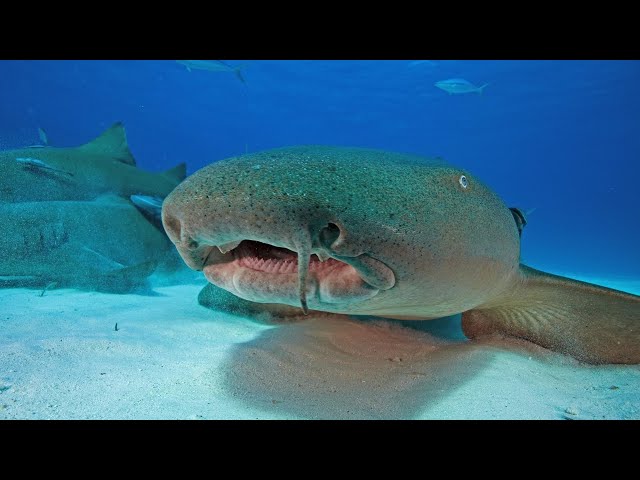
Nurse sharks are frequently observed on coral and rocky reefs throughout the eastern Pacific and Atlantic Oceans. Discover more about them in our Marine Life Encyclopedia.
Subscribe to our channel and join the Wavemakers community. You can also connect with us on social media:

Sea cucumbers are marine invertebrates, part of the echinoderm family alongside sea urchins and sea stars.
Often called "edible sea cucumbers," they are a fisheries species consumed globally, particularly in Asia.
Learn more in our Marine Life Encyclopedia: https://bit.ly/2DBKAQg


Oceana champions science-based policies, having protected nearly 4 million square miles of ocean. We fight to safeguard our oceans worldwide.
Join Oceana to support our work: https://bit.ly/39rh4sf. Subscribe to our channel and become a Wavemaker! p>

In July 2020, The Pew Charitable Trusts and SYSTEMIQ, with partners including the Ellen MacArthur Foundation, released "Breaking the Plastic Wave." This robust study on ocean plastic pollution revealed that without action, plastic volume will double, ocean entry will almost triple, and ocean stocks will quadruple by 2040. This aligns with the Ellen MacArthur Foundation's 2016 warning of more plastic than fish in the ocean by 2050.
The study emphasizes that a circular economy for plastic is the sole solution to tackle waste and pollution at its source. This vision already unites over 850 organizations through the New Plastics Economy Global Commitment and Plastics Pact network. Learn more about the study here.

Dame Ellen MacArthur urges "bold and urgent action" to address plastic pollution. A 2020 study, "Breaking the Plastic Wave," by The Pew Charitable Trusts and SYSTEMIQ, reveals a grim forecast: without intervention, by 2040, plastic on the market will double, annual ocean entry will almost triple, and ocean stocks will quadruple. This echoes the Ellen MacArthur Foundation's 2016 warning of more plastic than fish by 2050.
The study confirms a circular economy for plastic is the only way to tackle waste at its source. This vision already unites over 850 organizations. Find out more here.

The ocean sunfish is a large, oddly shaped fish named for its habit of floating on its side at the sea surface, warming itself in the sun. Lacking a tail, it swims with large dorsal and anal fins. As the world's heaviest bony fish, it can weigh up to 5,100 pounds. Learn more in our Marine Life Encyclopedia: https://bit.ly/2OJ9T51
Join our community of Wavemakers by subscribing to our channel! Stay connected on social media: Instagram: https://www.instagram.com/oceana/, Twitter: http://twitter.com/oceana, Facebook: https://www.facebook.com/oceana/

North Atlantic right whales are critically endangered, with only about 400 individuals remaining. Fatal ship strikes and fishing gear entanglements are primary threats, causing deaths to outnumber births. Oceana Canada advocates for mandatory speed limits in key passages like the Cabot Strait to prevent further fatalities.
Oceana's Ship Speed Watch is an innovative tool that monitors ship speeds and positions in whale habitats along the East Coast. Utilizing AIS data, it displays restriction zones, emphasizing how enforced speed limits can prevent deadly collisions—a leading cause of whale injury and death.
Access Oceana Canada's full report: oceana.ca/RightWhaletoSave. Learn more about Oceana's binational campaign: www.oceana.org/RightWhaletoSave.

The vampire squid, despite its name and appearance, is neither a squid nor an octopus, but a unique creature classified in its own order. It possesses eight arms and two tentacles. Its name derives not from blood-sucking, but from its dark coloration and the cape-like webbing between its arms. This species inhabits the dark mesopelagic zone. Learn more: https://bit.ly/2WqOUYZ
Join our community of Wavemakers! Subscribe to our channel and stay connected with us on social media. Follow Oceana on Instagram, Twitter, and Facebook. p>

Dumbo octopuses are the deepest-living known octopuses, inhabiting the open ocean down to at least 13,100 feet (4000 m). Life at these extreme depths requires adaptation to very cold water and complete darkness. Learn more in our Marine Life Encyclopedia.
Join our community of Wavemakers! Subscribe to our channel and stay connected with us on social media.

Oceana research shows Amazon customers, especially Prime members, are deeply concerned about plastic pollution and its impact on oceans. With increased online shopping, they overwhelmingly want Amazon and other major retailers to offer plastic-free packaging choices.
Amazon shipped an estimated 7 billion packages globally in 2019, often using plastic that contributes to the 17.6 billion pounds entering our oceans annually, devastating marine life. Amazon can significantly reduce this pollution by providing customers with plastic-free options.
Learn more about the campaign here. Tell Amazon to offer plastic-free packaging by signing the petition. Stay connected with Oceana: Instagram, Twitter, Facebook.

The flamboyant cuttlefish uses its two tentacles to quickly strike prey, bringing it to its beak. Discover more about marine life in our encyclopedia: https://bit.ly/2CvBKmi
Join our community of Wavemakers! Subscribe to our channel and stay connected on social media:
Instagram: https://www.instagram.com/oceana/ | Twitter: http://twitter.com/oceana | Facebook: https://www.facebook.com/oceana/

Actor and activist Sam Waterston warns that 17.6 billion pounds of plastic pollute our oceans annually. Support Oceana's vital work to combat this crisis by visiting OCEANA.ORG/GIVE.
Join our community of Wavemakers! Subscribe to our channel and stay connected with Oceana on social media: Instagram, Twitter, and Facebook.

The great white shark, one of the world's largest predatory fish, can consume marine mammals weighing hundreds of pounds. Learn more in our Marine Life Encyclopedia: https://bit.ly/3dwXNWH
Join our community of Wavemakers by subscribing to our channel. Stay connected with us on social media: Instagram: https://www.instagram.com/oceana/, Twitter: http://twitter.com/oceana, and Facebook: https://www.facebook.com/oceana/

Oceana recently participated in the Fashinnovation World Oceans Day Event.
The organization was represented by CEO Andy Sharpless, Ambassador Maya Gabeira, Board member Susan Rockefeller, and Chief Policy Officer Jackie Savitz.
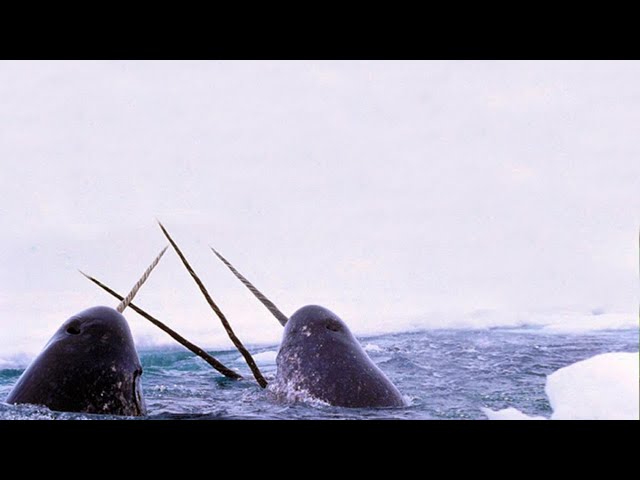
The adult male narwhal is unmistakable, known for its unique tusk. This tusk, actually an upper jaw tooth, can exceed six feet in length, making it unlike any other marine mammal. Discover more in our [Marine Life Encyclopedia](https://bit.ly/2X7E3np).
Subscribe to our channel to join our community. Stay connected with us on [Instagram](https://www.instagram.com/oceana/), [Twitter](http://twitter.com/oceana), and [Facebook](https://www.facebook.com/oceana/).

Comb jellies shine without bioluminescence. Their cilia, or "combs," reflect light, creating a vibrant rainbow of colors.
Learn more in Oceana's [Marine Life Encyclopedia](https://www.oceana.org/marine-life). Join our community of Wavemakers by subscribing to our channel! p>
Stay connected: [Instagram](https://www.instagram.com/oceana/), [Twitter](http://twitter.com/oceana), [Facebook](https://www.facebook.com/oceana/).

Green moray eels appear so due to yellow mucus on their brownish-grey skin. Discover more about them in our Marine Life Encyclopedia: https://bit.ly/361OV9a
Join our Wavemakers community! Subscribe to our channel and connect with us on social media: Instagram (https://www.instagram.com/oceana/), Twitter (http://twitter.com/oceana), and Facebook (https://www.facebook.com/oceana/).

The box jellyfish is one of the world's most venomous creatures, featuring tentacles that can reach up to three meters long. Learn more in our Marine Life Encyclopedia.
Subscribe to our channel and join our community of Wavemakers! p>
Stay connected: Follow us on Instagram, Twitter, and Facebook.

Research suggests our oceans can be restored by 2050, with many marine species already rebounding globally. Despite this progress, plastic pollution, climate change, and overfishing still pose significant threats to these vital ecosystems.
Join Oceana to help protect and restore our oceans: https://bit.ly/2WNmRm0. Become a Wavemaker and support our mission.
Environmental Scientist and Advocate
What EarthSayers stands for
Discover Diverse Voices on EarthSayers
Unlike algorithm-driven platforms that push you into a content bubble, we ensure you hear a variety of perspectives from scientists, activists, Indigenous leaders, business innovators, and everyday citizens working toward sustainability.
EarthSayers CINEMA
Watch, learn and lead—sustainability starts with you.
How to Live on Earth | Feature Documentary | Presented by Benedict Cumberbatch
What if the solutions to building a better future already exist? How to Live on Earth is an ambitious documentary that explores how humanity can create a thriving future by collaborating with nature. Presented by Benedict Cumberbatch, the film reveals the potential of teaming up with nature to address our greatest challenges.
Heartwarming and energizing, it offers a hopeful vision for a future where both nature and humanity can thrive. How to Live on Earth is produced by Open Planet Studios in association with Villars Institute Foundation and Silvania. Join the conversation by downloading film assets and sharing your reaction at howtoliveonearth.net/social-toolkit. Explore educational resources from the Villars Institute at YouTube.


