



Special Collections:
Plastic in Our Oceans
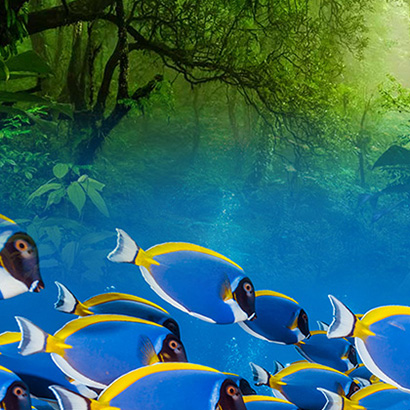
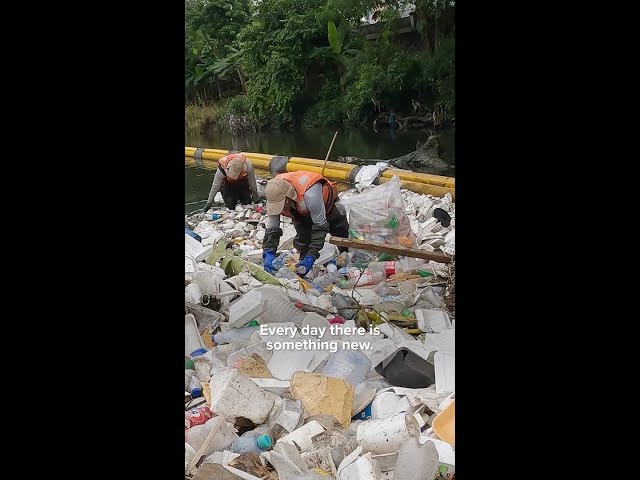
Addressing plastic pollution in rivers is a critical, collaborative effort. Our team works closely with partners and local communities to tackle this pervasive issue, which often presents unexpected challenges.
Watch the full story of our work in Panama City with Marea Verde Panamá: https://youtu.be/TCbfaxPAOVY?si=kbU8JHO-Xh-gPOP0


Ocean plastic pollution highlights a broader systemic issue.
Given its complex nature, we are addressing this problem through diverse approaches.

Rivers act as arteries, carrying land waste to the ocean. Our Interceptors are deployed to stop this flow.
After removing trash, we ensure it won't re-enter the water. We collaborate with local partners for responsible disposal, prioritizing recycling and strictly adhering to local regulations.
For more details, visit: https://bit.ly/4gIlEEP

Working with local partners, we are restoring the mangrove ecosystem in Cisadane.
Our strategy combines river interception and coastal sweeps to prevent further damage.


Our Interceptor solutions are always tailored to local realities, with deployment and operations driven by data. We continuously assess and adapt them, even after deployment, to ensure maximum efficiency and effectiveness.
For instance, Interceptor 004 has prevented over 300,000 kg of plastic from reaching the ocean and will now undergo upgrades based on evolving pollution and river conditions. Learn more about our adaptive strategy and its impact:

Discover the latest developments at The Ocean Cleanup during November.
For more details on our various projects, please visit our website.

With global support from our team, partners, and supporters, we've removed over 45 million kilograms of trash from the environment. Every piece of plastic no longer harming our planet is a victory, yet significant work remains.
Your contribution creates tangible impact. Based on last year's collections, we've calculated the environmental benefit of every dollar donated. Join the largest cleanup in history and choose your impact: https://bit.ly/4rogG58.

Addressing ocean plastic pollution has presented unexpected challenges. For instance, our Interceptor Trashfence failed in 2022, an event witnessed by Guillermo on site.
Following this setback, we deployed Interceptor 006 and 021. These systems are now successfully preventing trash from entering the Gulf of Honduras.
In 2025, we achieved record catches, made significant impact, and advanced towards our goal of clean oceans.
Watch the full video to learn more: 2025 Ocean Progress

In 2025, The Ocean Cleanup achieved a record-breaking year, removing over 25 million kilograms of waste from aquatic environments, bringing their total catch to 46 million kilograms. They also deployed two new Interceptors in Honduras and Panama.
Expanding their mission, the organization launched the 30 Cities Program to stop one-third of river plastic emissions into oceans, and introduced Coastal Sweeps for legacy plastic near shores. Developing new technologies further solidified 2025 as their most impactful year yet.
Watch their year-in-review video and subscribe to their YouTube channel. Learn more and support them at theoceancleanup.com. Follow them on Facebook, Instagram, TikTok, and X.

Our core mission is to achieve clean and healthy oceans for future generations. This commitment drives all our efforts.
To realize this vision, we employ a systematic approach: developing cutting-edge technology, rigorously testing its efficacy, and continuously iterating based on results. This ensures maximum impact in our fight for ocean preservation.

Artist and documentarian Chris Jordan premiered his film ALBATROSS in Charleston, SC, alongside his "Midway" exhibition at the Halsey Institute of Contemporary Art. Jordan aims to connect with and inspire audiences through his work.
The documentary explores Midway Atoll, an isolated Pacific island situated within the Great Pacific Garbage Patch. It offers an intimate look at native Laysan albatrosses, whose existence is gravely threatened by global plastic waste.

Rising chronic diseases are partly linked to hazardous chemicals leaching from plastic food packaging and utensils. While food packaging pollutants are a public health concern, research on a strong causal link between plastics and conditions like infertility or immune disorders is still developing. TEDx events are independently organized; guidelines are available here.
In her TEDx talk, Dr. Jane Muncke explains chemical migration from plastic food contact materials and discusses regulatory gaps. She advocates for inert materials like glass and stainless steel. As Managing Director of the Food Packaging Forum (FPF), Dr. Muncke co-founded the organization to share scientific information on food packaging’s health and environmental impacts. Learn more about TEDx at ted.com/tedx.

This clip, from *Advancing Australia* Season 1, Episode 1: "Sea of Plastic," highlights marine biologist Nicole Nash. Inspired by rampant plastic waste, Nash launched the 'Last Straw on the Great Barrier Reef' campaign, advocating for a ban on plastic straws from commercial boats operating in the region.

Addressing plastic pollution necessitates distinguishing between two fundamental challenges. The first is the inherent problem of plastic production itself, encompassing its scale and the materials utilized.
The second, separate challenge involves the effective management of plastic waste once it has been created and discarded. Recognizing these distinct issues is crucial for developing targeted and comprehensive solutions.

Ocean plastic pollution is a major global concern, with an estimated four million tons entering annually and projected to rise. This widespread issue poses significant threats to marine ecosystems.
Scientists recently discovered a massive load of microplastics, around 12,000 pieces per liter, frozen in Arctic ice. These tiny particles are easily ingested by sea animals, raising fears about harm to marine life and humans.
Tackling this urgent global challenge requires immediate and effective solutions.

A luxury boutique now offers fish infused with fashionable microplastic fibers from the hottest brands.
This stark reality is highlighted by Just One Ocean.

Rowan Byrne, a Marine Biologist and Fellow of the Royal Society of Biology, will discuss ocean plastics, explaining their impact on marine life and civilization. His extensive career includes shark research, sea turtle conservation, and pioneering satellite tracking of leatherback turtles from Dominica to Ireland.
As Marine Plastics Lead for Mott MacDonald, Rowan drives global research and solutions for marine plastic challenges. He champions collaboration with industry and governments to integrate environmental considerations. His work earned him the IEMA Sustainability Leader of the Year Award in 2020 and media recognition for installing Seabins at Howth Harbour.
This talk was given at a TEDx event. Learn more at ted.com/tedx.
Environmental Scientist and Advocate
What EarthSayers stands for
Discover Diverse Voices on EarthSayers
Unlike algorithm-driven platforms that push you into a content bubble, we ensure you hear a variety of perspectives from scientists, activists, Indigenous leaders, business innovators, and everyday citizens working toward sustainability.
EarthSayers CINEMA
Watch, learn and lead—sustainability starts with you.
How to Live on Earth | Feature Documentary | Presented by Benedict Cumberbatch
What if the solutions to building a better future already exist? How to Live on Earth is an ambitious documentary that explores how humanity can create a thriving future by collaborating with nature. Presented by Benedict Cumberbatch, the film reveals the potential of teaming up with nature to address our greatest challenges.
Heartwarming and energizing, it offers a hopeful vision for a future where both nature and humanity can thrive. How to Live on Earth is produced by Open Planet Studios in association with Villars Institute Foundation and Silvania. Join the conversation by downloading film assets and sharing your reaction at howtoliveonearth.net/social-toolkit. Explore educational resources from the Villars Institute at YouTube.


