




Special Collections:
Climate Change


Precipitation, encompassing rain, snow, hail, and ice, affects everyone but varies significantly worldwide. NASA's new video, capturing every shower, snowstorm, and hurricane from August 4-14, 2014, vividly illustrates this global diversity.
This data originates from the GPM Core Observatory, a joint mission by NASA and the Japan Aerospace Exploration Agency (JAXA). Launched on February 27, 2014, GPM employs advanced instruments to observe rain and falling snow throughout the atmosphere. For more details, see: More information.

This second event in our creative series on climate change brought together leading experts to discuss the complex challenges of resolving the issue, including competing priorities, responsibility voids, and overlapping jurisdictions.
The distinguished panel featured Economist Lord Nicholas Stern, climate scientist Chris Rapley CBE, Green Party member Baroness Jenny Jones, and others. The event was streamed live on February 11, 2015.

RSA Spotlights highlights an extract from its "Question Time" event, featuring experts on the seven main dimensions of the climate problem: science, behaviour, democracy, law, technology, economy, and culture.
The panel provided expert insights into the competing priorities, responsibility voids, and jurisdictional overlaps that complicate climate change resolution. Panellists included Lord Nicholas Stern (LSE), Chris Rapley CBE (UCL), and other leading figures.

Naomi Klein's "This Changes Everything," a Guardian Docs feature published March 6, 2015, details her pivotal realization: climate change is inextricably linked to inequality. Initially not her primary focus, this connection transformed her perspective.
The film highlights examples like Alberta's tar sands, where Canadian government policies led to environmental destruction and a boom in Fort McMurray. Indigenous communities, alongside global activists, protested these impacts. This raises a crucial question: how can diverse movements worldwide unite to tackle both climate change and inequality?
The call to action is clear: build an organic network of resistance. Get involved and speak out to foster collective change.

CarbFix, a pilot program at Iceland's Hellisheidi Geothermal Power Station, addresses climate change by injecting greenhouse gases into the ground for permanent storage.
This initiative, highlighted as "Fixing Climate in Iceland," was published by The New York Times on February 12, 2015.
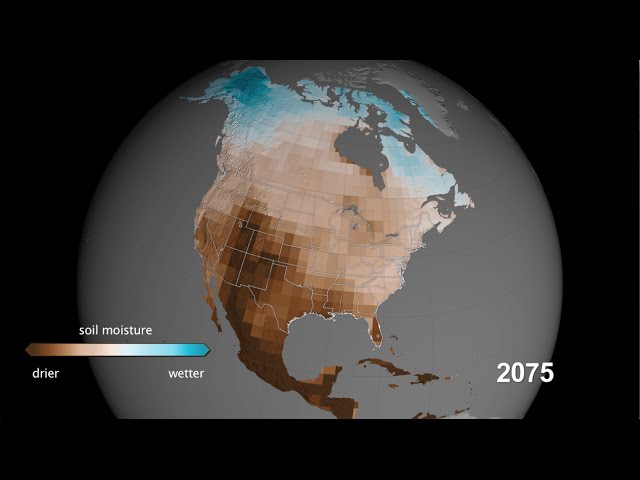
NASA climate scientist Ben Cook discusses his research on past and future drought risks. He and his colleagues used tree rings to understand historical droughts. For future projections in the 21st century, they incorporated soil moisture data into climate models.
This research was published on February 12, 2015.

This excerpt summarizes findings from the "What do Oregonians Value and Believe?" survey, presented by Adam Davis of DHM Research with Dave Miller at the City Club of Portland on October 4, 2013.
A key finding indicates Oregonians believe the nation must consume less to address climate change. This content was curated and annotated by Ruth Ann Barrett of EarthSayers.tv, Voices of Sustainability, and published on January 28, 2015.
Access the full interview here.

Comedian Marcus Brigstocke explores the role of humor in addressing climate change. While a serious issue, humor has long been a powerful tool for social change. The question is whether it can genuinely transform public perspective or merely serve as an evasion.
With the climate clock ticking, traditional talks and debates often reinforce existing knowledge and fears. To spark new dialogue and enduring change, the RSA is launching a series of unique climate events, beginning with a comedy night. This initiative aims to break through the static and foster fresh perspectives.

NASA and National Oceanic and Atmospheric Administration (NOAA) reports confirmed that last year was Earth's warmest on record. Their analysis also shows that, with the exception of 1998, the ten warmest years have all occurred since 2000.
Since record-keeping began in 1880, Earth's average surface temperature has risen by approximately 1.4 degrees Fahrenheit (0.8 degrees Celsius). This warming trend is primarily attributed to increased carbon dioxide and other human-caused emissions into the atmosphere.
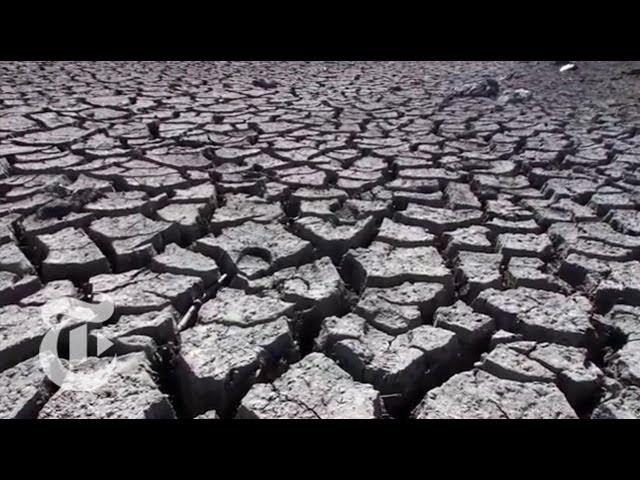
California is experiencing its worst drought on record. Learn about the crisis's severity and its impact on you.
Produced by Carrie Halperin and Sean Patrick Farrell, this story was originally published on July 7, 2014. Read the full article at the New York Times.

A 60-second animation by the Royal Society and the US National Academy of Sciences explains climate science.
Over the last 200 years, human activities, primarily fossil fuel burning, have increased atmospheric CO2 by 40%. If unchecked, these emissions could warm the planet by 2.6°C to 4.8°C this century, posing serious threats to societies and nature.
For more information, read the full document 'Climate Change: Evidence & Causes' on the Royal Society website: https://royalsociety.org/policy/projects/climate-evidence-causes/

The film "Arctic Emergency: Scientists Speak On Melting Ice and Global Impacts" by Max Wilbert features climate scientists discussing the critical state of the Arctic in their own words.
Rising Arctic temperatures are causing sea ice to melt and permafrost to thaw, destabilizing a system vital to global climate, often called "Earth's Air Conditioner." This directly contributes to global warming, impacting weather patterns, natural systems, and human life worldwide, with the Arctic at the center of these profound changes.
Published on August 1, 2014, the film includes insights from leading experts such as Jennifer Francis (Rutgers University), Ron Prinn (MIT), Natalia Shakhova (University of Alaska-Fairbanks), Kevin Schaefer (National Snow and Ice Data Center), and others from prominent research institutions.

Published on Nov 17, 2014, an ultra-high-resolution NASA computer model, GEOS-5, offers a stunning new look at global carbon dioxide movement. This "Nature Run" simulation visualizes CO2 plumes swirling with winds, their dispersion from sources, hemispheric differences, and seasonal swings in concentrations due to plant growth cycles.
Developed by scientists at NASA Goddard Space Flight Center's Global Modeling and Assimilation Office, the model ingests real data on atmospheric conditions and emissions. It then simulates Earth's atmosphere, specifically for 2006. An updated version of this simulation was released to the scientific community in fall 2014. The video is public domain and available for download here.

At the AASHE2011 Student Summit, Bill McKibben delivered a speech addressing the urgent question: "What else do we need to do?" He updated attendees on our planet's current state, reflecting on his seminal book, *The End of Nature*. This work was written 22 years before much of the recognized evidence for climate change emerged.
To purchase *The End of Nature*, order from Amazon or visit your local bookstore.
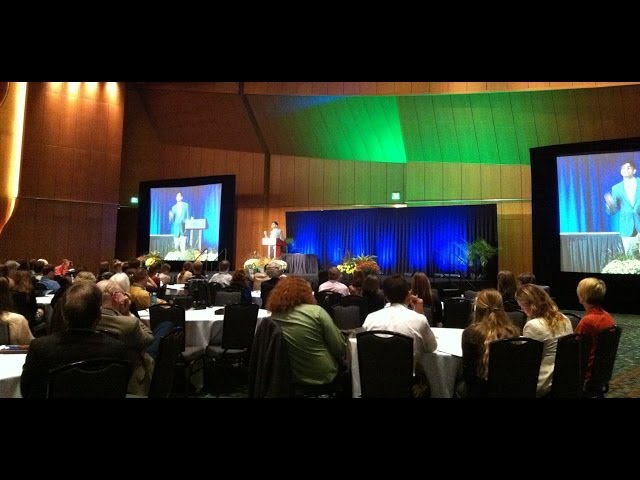
The AASHE 2013 Opening Ceremony featured Raj Patel as the keynote speaker.
Raj Patel is an award-winning writer, activist, and academic. He serves as a Research Professor in the Lyndon B. Johnson School of Public Affairs at the University of Texas, Austin. Additionally, he is a Senior Research Associate at the Unit for Humanities at Rhodes University (UHURU) in South Africa.
Join NASA scientists on a 40-minute visual tour of Earth from space, titled "Vital Signs: Taking the Pulse of Our Planet." This annual lecture, presented at the IMAX Theater at the National Air and Space Museum in Washington, D.C. on September 10, was sponsored by the Maryland Space Business Roundtable.
Published October 23, 2014, the video features scientists guiding viewers through Earth's water cycle, forests, and frozen regions, as seen through NASA's Earth observing satellite fleet. It emphasizes our planet as a complex, dynamic system.
NASA's Earth science program seeks to enhance understanding of Earth's system and its response to changes, improving predictions of climate, weather, and natural disasters to better life today and in the future.

Momentum for climate action is building, with many countries making significant progress in reducing carbon emissions.
This segment, "Hour 19," from the 24 Hours of Reality series, features a presentation by Al Gore. He discusses key nations actively leading the global effort against climate change.
Published on September 23, 2014.

Diana H. Wall, a Colorado State University professor, delivered the 2013 Tyler Prize Laureate Lecture at the American Association for the Advancement of Science.
Her lecture highlighted the critical role of soil ecosystems in understanding climate change and pressing environmental challenges, drawing on her extensive research in Antarctica.
Learn more about her work and the 2013 Tyler Prize for Environmental Achievement here.

Democracy Now reported on the People's Climate Movement, a historic march in New York City that gathered indigenous, labor, and faith groups. Expected to be the largest climate change protest in history, organizers anticipated over 100,000 participants.
This massive demonstration, part of 2,000 global solidarity events, occurred ahead of a United Nations climate summit. The broadcast featured discussions with key leaders from the labor, indigenous, faith, and climate justice communities. Watch the full segment on Democracy Now.

The 2014 Charles David Keeling Annual Lecture, "Getting Serious About Climate Change," featured Professor David Victor.
A political scientist from UCSD's School of International Relations and Pacific Studies, Professor Victor is a recognized leader in energy and climate change policy research. He directs the school's new Laboratory on International Law and Regulation and authored "Global Warming Gridlock: Creating More Effective Strategies for Protecting the Planet."
This lecture is part of the "Perspectives on Ocean Science" series. Visit UCTV.tv for more details.
Environmental Scientist and Advocate
What EarthSayers stands for
Discover Diverse Voices on EarthSayers
Unlike algorithm-driven platforms that push you into a content bubble, we ensure you hear a variety of perspectives from scientists, activists, Indigenous leaders, business innovators, and everyday citizens working toward sustainability.
EarthSayers CINEMA
Watch, learn and lead—sustainability starts with you.
How to Live on Earth | Feature Documentary | Presented by Benedict Cumberbatch
What if the solutions to building a better future already exist? How to Live on Earth is an ambitious documentary that explores how humanity can create a thriving future by collaborating with nature. Presented by Benedict Cumberbatch, the film reveals the potential of teaming up with nature to address our greatest challenges.
Heartwarming and energizing, it offers a hopeful vision for a future where both nature and humanity can thrive. How to Live on Earth is produced by Open Planet Studios in association with Villars Institute Foundation and Silvania. Join the conversation by downloading film assets and sharing your reaction at howtoliveonearth.net/social-toolkit. Explore educational resources from the Villars Institute at YouTube.


