




Special Collections:
Climate Change

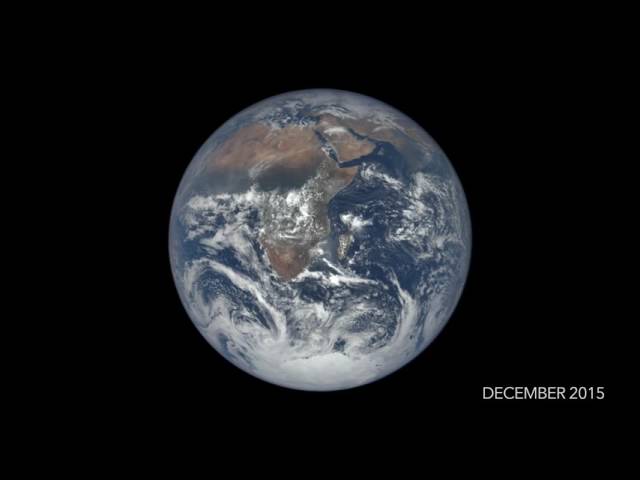
On July 20, 2015, NASA's EPIC camera on NOAA's DSCOVR satellite captured its first image of Earth's sunlit side. From its orbit one million miles away, EPIC has now completed a full year of observations, taking a new picture every two hours. These images reveal our planet's ever-changing clouds, weather systems, and fixed features like deserts, forests, and seas, while also allowing scientists to monitor atmospheric ozone, aerosols, and vegetation properties.
DSCOVR, a partnership between NASA, NOAA, and the U.S. Air Force, primarily maintains real-time solar wind monitoring capabilities. This is crucial for accurate space weather alerts and forecasts. For more information about DSCOVR, visit: http://www.nesdis.noaa.gov/DSCOVR/
Credit: NASA's Goddard Space Flight Center/Kayvon Sharghi

Many conservatives believe government's core purpose is to protect rights to life, liberty, and property. If greenhouse gas emissions threaten these fundamental rights, then government has a clear duty to act against such a threat.
Niskanen Center President Jerry Taylor will discuss the conservative and moral imperative for addressing climate change, outlining how effective solutions can be implemented.

Published May 4, 2016, this content provides a 30-second overview of publications essential for building a comprehensive business climate risk library.
The library was compiled by consultant and expert, Mark Trexler.

This video features Dr. Mark Trexler, an expert with over 30 years of regulatory and energy policy experience, discussing scenario planning, climate risk tools for businesses, and the interplay of risk and opportunity. He has advised clients globally on climate change risk management for over 25 years.
With attorney Laura H. Kosloff, Dr. Trexler co-created The Climate Web, a vital tool for finding "actionable climate knowledge" amidst overwhelming climate information.
This interview with Mark Trexler was conducted by Ruth Ann Barrett of EarthSayers.tv, Voices of Sustainability, and filmed in Portland, Oregon, on April 23, 2016.

Dr. Mark Trexler, a climate change expert, was interviewed on April 23, 2016, by Ruth Ann Barrett of EarthSayers.tv, Voices of Sustainability. Barry Heidt provided camera work for the interview, which was published on April 27, 2016.
Dr. Trexler, with business partner Laura Kosloff, co-founded The Climate Web™. This knowledge solution helps users identify and track critical climate risk issues by organizing thousands of reports, news stories, and other materials, often extracting and linking key information for easy access.

Dr. Mark C. Trexler, an expert with over 30 years in regulatory and energy policy and 25 years advising on global climate change risk, co-founded The Climate Web.
With attorney Laura H. Kosloff, Trexler developed The Climate Web to deliver "actionable climate knowledge," addressing the overwhelming volume of raw information related to climate change and risk.
This interview, conducted by Ruth Ann Barrett of EarthSayers.tv and filmed by Barry Heidt, occurred in Portland, Oregon, on April 23, 2016, and was published on April 27, 2016.

This interview, conducted on April 23, 2016, features climate change expert Dr. Mark Trexler. He discusses climate risk analysis, scenario planning, and introduces The Climate Web™.
The Climate Web™ is a knowledge solution developed by Dr. Trexler and Laura Kosloff. It helps users identify and track critical climate risk issues by organizing and linking thousands of reports, news stories, and other materials. Ruth Ann Barrett of EarthSayers.tv conducted the interview, with camera work by Barry Heidt. It was published on April 27, 2016.

Arctic sea ice has reached a record low wintertime maximum extent for the second consecutive year. Scientists from the National Snow and Ice Data Center and NASA reported this finding, noting the extent reached 5.607 million square miles on March 24. This represents the lowest maximum extent recorded in the satellite era.
An accompanying animation illustrates the Arctic sea ice freeze cycle, from its previous summertime minimum to this new wintertime maximum. (Credit: NASA Goddard's Scientific Visualization Studio/C. Starr)

Climate One interviewed Dr. Renee Lertzman on February 10, 2016, to discuss the presence of heroes and villains within the climate narrative.
Dr. Lertzman, whose work can be explored further at reneelertzman.com, is the author of *Environmental Melancholia: Psychoanalytic dimensions of engagement*. The book is available on Amazon and at local bookstores.

Hector De La Torre from the Air Resources Board discussed with Climate One how evolving generations are changing their vehicle use.
This discussion was published by Climate One on January 14, 2016.
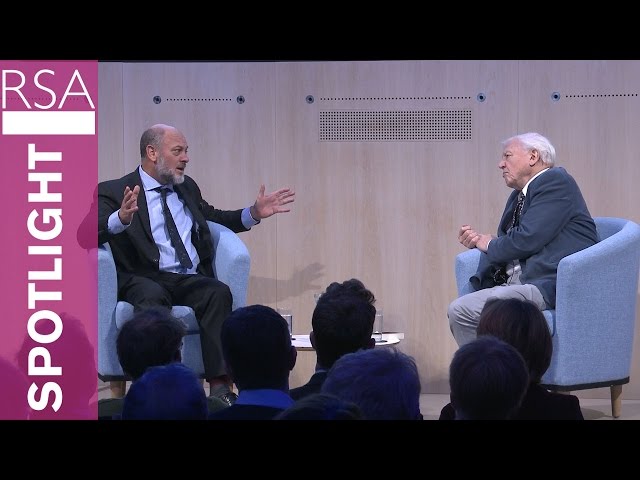
The RSA was thrilled to host Sir David Attenborough and explorer/conservationist Tim Flannery.
They spoke passionately about the era-defining issue of climate change.

We spoke with guest editors Stephan Lewandowsky, Chair in Cognitive Psychology at the University of Bristol, and Richard Pancost, Professor of Biochemistry. They discussed their contributions to *Philosophical Transactions*.
Their work explores the complex relationship between scientific uncertainty regarding climate change and knowledge drawn from physical, economic, and social perspectives. This interdisciplinary examination offers valuable insights into a critical global issue.

Shell is preparing another attempt to extract an estimated 400 billion barrels of oil and gas from the Arctic. However, drilling in this region is expensive and dangerous.
Falling oil prices and potential government action could jeopardize Shell's ambitions in the face of these significant challenges.
For further reading, see This Changes Everything by Naomi Klein here. Published by The Guardian on July 16, 2015.
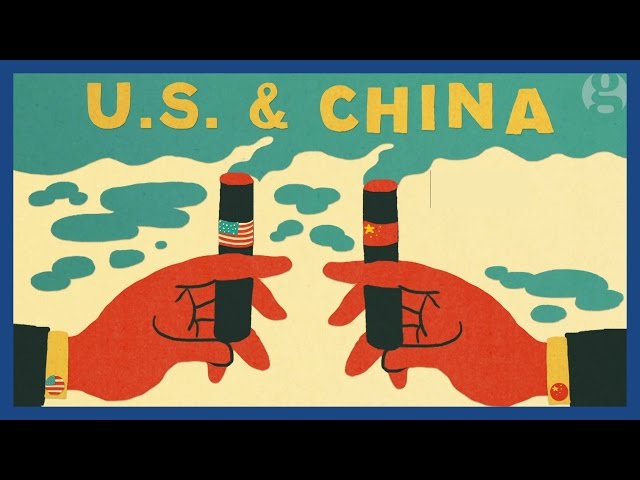
Governments from over 190 nations will convene at the UN 2015 Paris Climate Conference (November 30 – December 11) to forge a new global agreement on climate change.
This year's summit holds greater promise than the unsuccessful 2009 Copenhagen meeting. Optimism stems from the growth of renewable energy and evolving stances among major polluters, including the US.
For further reading, visit the Guardian website. Explore related videos: "Could Arctic oil drilling save the climate?" Watch here and "Naomi Klein: This Changes Everything" Watch here.

Climate One drives conversations on energy, economy, and the environment. Join us at The Commonwealth Club of California in San Francisco to be part of this vital dialogue.
As National Geographic Explorer Sylvia Earle wisely stated, "The most important person to contact on these issues is the person you see in the mirror."
Distinguished speakers have included David Crane (NRG CEO), Lisa Jackson (Apple VP), Ernest Moniz (former U.S. Secretary of Energy), and Gina McCarthy (EPA Administrator), among others.

For those new to climate change, a 2009 video series offers an insightful introduction. It features citizens from diverse countries sharing firsthand accounts of climate change impacts on their communities.
This valuable resource was published by goodplanet.org.

This video, a gift to humanity, was produced by Sustainable Human.
Visit their website to discover how you can support and create impactful videos, like "How Whales Change Climate," in collaboration with a global team of volunteers. Together, we can change the story of the world.
Published on November 30, 2014.

Dr. Steven Chu, William R. Kenan, Jr. Professor at Stanford University, discusses climate change, new pathways to renewable energy, and the challenges the country faces.
Previously, Dr. Chu served as the 12th U.S. Secretary of Energy under President Barack Obama from 2009 to 2013. As the longest-serving Energy Secretary, he launched key initiatives like ARPA-E, Energy Innovation Hubs, and Clean Energy Ministerial meetings.
This discussion is part of the annual Conradin von Gugelberg Memorial Lecture on the Environment, hosted by the Stanford Center for Social Innovation. Established by the Stanford MBA Class of 1987, the lecture honors their classmate's commitment to preserving Earth's resources.

The Greenpeace ship Esperanza is currently trailing Shell's drilling vessel, the Polar Pioneer, across the Pacific. Bosun Erick, a Filipino national, reflects on the severe impact of climate change on his home country.
This information was originally published on April 2, 2015.
For more details, visit Save the Arctic, a Greenpeace initiative.

Dr. Bryan N. Duncan serves as a deputy project scientist for the Aura Mission at NASA's Goddard Space Flight Center in Greenbelt, Maryland.
This content was published on March 31, 2015.
Environmental Scientist and Advocate
What EarthSayers stands for
Discover Diverse Voices on EarthSayers
Unlike algorithm-driven platforms that push you into a content bubble, we ensure you hear a variety of perspectives from scientists, activists, Indigenous leaders, business innovators, and everyday citizens working toward sustainability.
EarthSayers CINEMA
Watch, learn and lead—sustainability starts with you.
How to Live on Earth | Feature Documentary | Presented by Benedict Cumberbatch
What if the solutions to building a better future already exist? How to Live on Earth is an ambitious documentary that explores how humanity can create a thriving future by collaborating with nature. Presented by Benedict Cumberbatch, the film reveals the potential of teaming up with nature to address our greatest challenges.
Heartwarming and energizing, it offers a hopeful vision for a future where both nature and humanity can thrive. How to Live on Earth is produced by Open Planet Studios in association with Villars Institute Foundation and Silvania. Join the conversation by downloading film assets and sharing your reaction at howtoliveonearth.net/social-toolkit. Explore educational resources from the Villars Institute at YouTube.


