




Special Collections:
Transforming Our Economy


INEQUALITY FOR ALL features Robert Reich—professor, best-selling author, and former Clinton cabinet member—who passionately argues how the widening income gap devastates the American economy.
The film also offers an intimate portrait of Reich, detailing his personal journey and lifelong commitment to protecting the vulnerable. Discover more about Robert Reich at robertreich.org.

Addressing the environmental crisis, *Wild Law – In Practice* aims to transition Earth Jurisprudence from theory into practice. The book argues that current legal frameworks perpetuate ecological issues and must be radically reconfigured to ensure a viable human presence on Earth.
Authored by Peter Burdon, a Senior Lecturer at Adelaide Law School, the work draws on his extensive expertise in ecological law. His PhD in this field earned him the Bonython Prize and a University of Adelaide Research Medal. Since 2005, Burdon has also actively contributed to Friends of the Earth Adelaide's Clean Futures Collective.

Dean Karlan, a Professor of Economics at Yale University and President of Innovations for Poverty Action, explores how understanding people and language can influence human behavior. His research has led to innovative mechanisms for increasing savings in developing world communities.
This discussion was published by TEDxMiddlebury on August 18, 2013.

David Stevens, CEO of Affinity MacroFinance (AMF), introduces a new paradigm for development financing, advocating for more effective use of local currency. AMF is a mutual financial guarantee insurance company serving the developing world.
This information was published on December 13, 2012, on the Tallberg Foundation YouTube Channel.

On November 16, 2008, the Sanctuary for Independent Media welcomed Austin-based folk musician Eliza Gilkyson and activist Rob Jensen. Their evening featured an intertwining of songs and speeches, offering both beautiful music and radical discussion.
In this clip (Part 2 of 4), Gilkyson introduces Jensen, sharing how his perspective has influenced her beliefs and songwriting. Jensen then begins his presentation on justice, sustainability, and his concept of the "Three E's": empire, economics, and ecology.

Bill Moyers has tracked two Milwaukee families since 1991, documenting their struggles against a harsh economy and urban transformation. His reports highlight the devastating challenges and difficult choices they faced.
Moyers revisits these families' stories, exploring the human cost of inequality with journalists Barbara Miner and Barbara Garson. This report was published on July 4, 2013.

Money is an agreement, not inherently valuable. Charles Eisenstein explores this concept, arguing that money often fails to address fundamental human needs. His work, including the book Sacred Economics, offers specific recommendations for a different approach.
To learn more or purchase his book, visit Amazon or your local bookstore. This content, published on March 1, 2012, was directed by Ian MacKenzie and produced by Velcrow Ripper, Gregg Hill, and Ian MacKenzie.

This excerpt is from a panel presentation at the Business In The Community Ireland Summit on Corporate Responsibility, held in November 2010.
The panel featured experts including James Quincey (The Coca-Cola Company), Sir Stuart Rose (Marks & Spencer), and Gerard O'Neill of Amarach Research.
O'Neill highlighted how marketers' 'pricing trap' hinders sustainability initiatives. He argued that while price accounts for only 30% of a purchase decision, emotion and feelings drive 70%. Emphasizing trust and the social environment is crucial for consumers to move beyond price-driven choices.
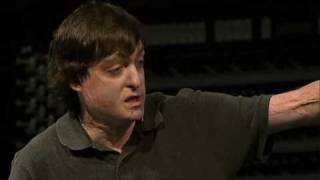
Behavioral economist Dan Ariely, author of "Predictably Irrational," reveals how our decisions are often irrational. Using classic visual illusions and surprising research, he demonstrates that we are not as logical as we believe.
Ariely's work highlights a fundamental flaw in traditional economics: its disconnect from actual human behavior. His insights explain why our choices are often predictable, yet irrational.

James Glattfelder, a complexity theorist, studies how interconnected systems, like a bird swarm, are more than the sum of their parts. He applies this theory to the global economy, offering insights into its intricate workings.
Glattfelder's groundbreaking study reveals how control is concentrated among a surprisingly small number of entities. This significant power concentration leaves the entire global economy vulnerable. His findings were presented at TEDxZurich and published on February 13, 2013.

This animation explores a post-consumer society, envisioning a future with fewer work hours, increased re-skilling, homesteading, and small-scale enterprises. These shifts aim to reduce the consumer economy's overall size and impact. It is narrated by economist and best-selling author Juliet Schor and produced by The Center for the New American Dream.
Dr. Schor's book, *Plenitude*, delves deeper into these concepts. You can order it from Amazon or find it at your local bookstore.

Discussions on the Green Economy often overlook its social dimensions. The UN Research Institute for Social Development (UNRISD) addresses this through its project on the Social Dimensions of Green Economy and Sustainable Development. Explore their work at UNRISD.
For broader information on the Green Economy, consult the United Nations Environment Programme (UNEP) at UNEP. Following both UNRISD and UNEP offers insight into how the UN integrates social, environmental, and economic aspects to advance sustainability.

Growth is an unsustainable, temporary state.
Dr. Susan Krumdieck, an Associate Professor at the University of Canterbury, researches this topic.
Her expertise spans fuel cells, alternative energy, energy conservation, energy systems engineering, and materials for energy systems.
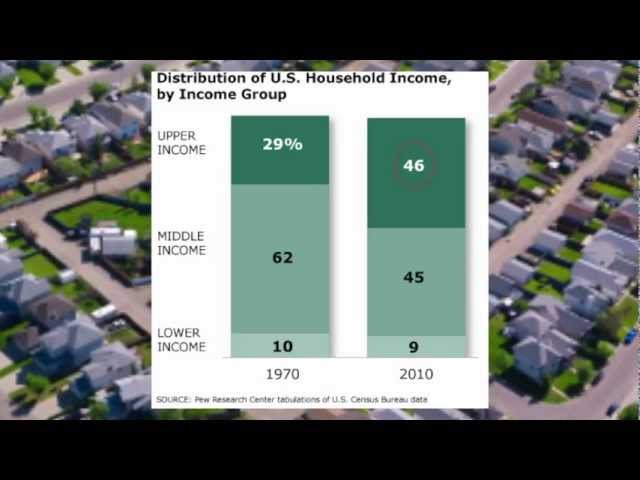
Since 2000, the middle class has declined in size, income, and wealth, also losing some faith in the future. A new report, released August 22, 2012, explores how middle-class Americans view themselves, their future, and presidential candidates.
Read the full report here.
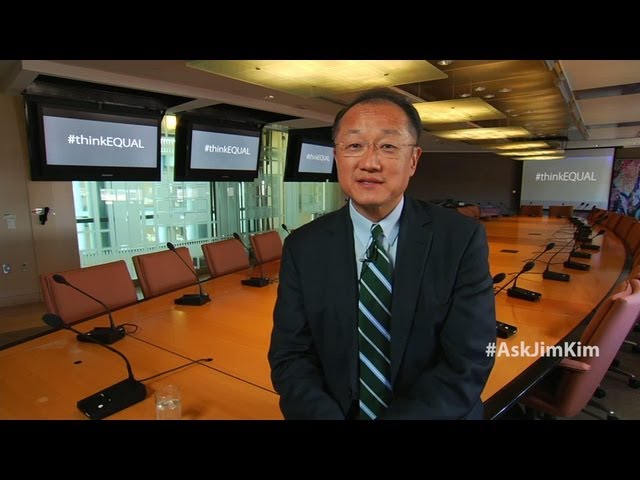
Dr. Jim Kim seeks public input on three vital questions:
What are the best ways to eradicate poverty? What innovations can bring prosperity to all? How can member countries' vast experience be harnessed?
Submit your questions and comments via the form below, or tweet using #AskJimKim. Follow @WorldBank on Twitter for updates.

Sir Partha DasGupta, Frank Ramsey Professor Emeritus of Economics at the University of Cambridge, discusses the economic significance of natural capital. He highlights how ecosystems, including farmland and forests, have historically been overlooked in economic considerations.
In his article, "Nature's Role in Sustainable Economic Development," published in Philosophical Transactions B for the Royal Society's 350th anniversary, Sir Partha advocates for integrating nature into economic development. Wendy Barnaby interviews him in a podcast about these crucial insights.

Author Charles Eisenstein addresses the future of our economy and money, questioning a return to "normal." His book, *Sacred Economics*, challenges established financial patterns and offers resolutions for the future.
Eisenstein recently spoke to a sell-out crowd in Portland, Oregon. The video of this enlightening talk is proudly presented by The Center for a Sustainable Today, Evolver, and Transition PDX.
Order *Sacred Economics* from Amazon or visit your local bookstore.

Many believe our economic model is broken. Pioneers like Maurice Strong, Bjorn Stigson, Matthew Kiernan, and Jonathon Porritt advocate challenging current orthodoxies. They envision a transition from an economically-driven framework to one founded on ecological infrastructure.
This perspective is featured in one of twenty Ray Anderson Memorial Interviews. These interviews are part of The Regeneration Project, a joint initiative by Sustainability and GlobeScan.
Sha Sukang delivered a speech at the High-Level Consultation on 'Realising Inclusive and Green Growth: Business & Industry Consultation with Government and Civil Society.' This event occurred at the World Forum in The Hague, Netherlands, on April 11, 2012.
Further information is available on the Rio+20 Summit.

Sir Mark Moody Stuart, a member of the Foundation for the Global Compact and the International Integrated Reporting Committee (IIRC), was interviewed in Beijing in January 2011.
He discussed the vital importance of Integrated Reporting in today's business environment. The interview also covered the crucial next steps required to ensure its continued success.
Environmental Scientist and Advocate
What EarthSayers stands for
Discover Diverse Voices on EarthSayers
Unlike algorithm-driven platforms that push you into a content bubble, we ensure you hear a variety of perspectives from scientists, activists, Indigenous leaders, business innovators, and everyday citizens working toward sustainability.
EarthSayers CINEMA
Watch, learn and lead—sustainability starts with you.
How to Live on Earth | Feature Documentary | Presented by Benedict Cumberbatch
What if the solutions to building a better future already exist? How to Live on Earth is an ambitious documentary that explores how humanity can create a thriving future by collaborating with nature. Presented by Benedict Cumberbatch, the film reveals the potential of teaming up with nature to address our greatest challenges.
Heartwarming and energizing, it offers a hopeful vision for a future where both nature and humanity can thrive. How to Live on Earth is produced by Open Planet Studios in association with Villars Institute Foundation and Silvania. Join the conversation by downloading film assets and sharing your reaction at howtoliveonearth.net/social-toolkit. Explore educational resources from the Villars Institute at YouTube.


