




Special Collections:
Oceans
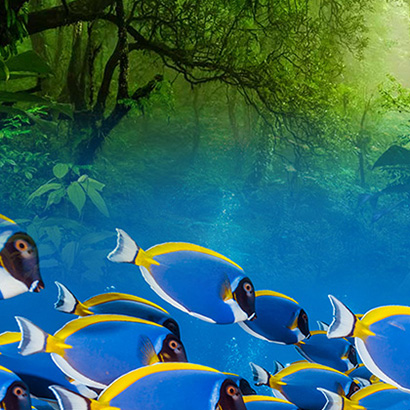

The Global Ocean Treaty has reached its 60th ratification, clearing the way for this historic agreement to enter into force. This landmark moment for ocean protection is the culmination of over two decades of advocacy by Greenpeace and its global supporters.
Despite claiming to be a leading ocean protector, Australia has not yet ratified the treaty. Given its significance, Australia should prioritize joining the 60 nations that have committed to this crucial protection agreement.

The ocean, our life support system, is facing a hidden crisis. Illegal, unreported, and unregulated (IUU) fishing threatens marine life, human rights, and food security. This illicit activity accounts for nearly one-fifth of all seafood, worth up to $23.5 billion annually, while 90% of fish stocks are already overexploited or fished to their limit.
We have solutions to scale transparency at sea. The Global Charter for Fisheries Transparency offers real, simple, and affordable ways to bring accountability. We urge governments to urgently implement this charter to deliver the transparency needed for a healthy ocean. Learn more: https://fisheriestransparency.net/

Whales, often called gentle giants, play a crucial role in maintaining the health of our oceans and the entire planet. Their significant contributions are essential for marine ecosystems.
To protect these magnificent creatures and all other marine animals, it's vital to support NOAA. This U.S. federal agency is dedicated to ensuring their safety and well-being. Speak up for marine life by defending NOAA: https://oceana.ly/4dyLVUD.
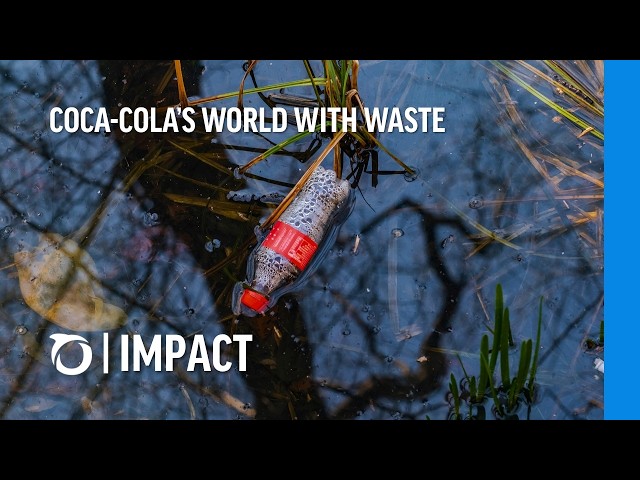
Oceana's new report reveals a concerning projection: The Coca-Cola Company's plastic use is set to exceed 9.1 billion pounds annually by 2030 if current practices remain unchanged.
This highlights an urgent need for Coca-Cola to implement significant changes and address its escalating plastic problem immediately.
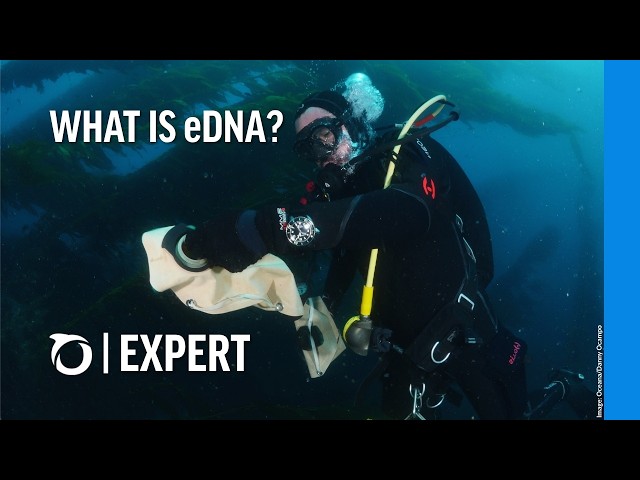
Oceana's expedition research with Blancpain has unveiled significant findings about marine biodiversity off Southern California.
The discoveries exceeded expectations, revealing a world of secrets within the ocean's depths.

The Atlantic Meridional Overturning Circulation (AMOC) comprises two limbs. Its upper limb transports warm, tropical waters northward, releasing heat influencing European weather. The lower limb carries cold, dense waters southward at depth.
Driven by solar radiation, the AMOC's upper limb features vigorous currents like the Gulf Stream, flowing north along the Atlantic's western boundary. These currents, forming eddies, carry heat towards higher latitudes, reaching the Nordic Seas to cool and densify.
In regions like the Labrador Sea, these cooled, dense waters plunge via convection to 1000-2000m. This forms the Deep Western Boundary Current, the AMOC's lower limb, flowing slowly southward along the continental slope. Further south, this deep flow is disrupted by topography and eddies, losing its structure.

Oceana, alongside actor Sam Waterston, invites you to champion our oceans.
Join them in taking action against the urgent plastic pollution crisis.

Can you identify the various ocean fish species presented?
Your expertise is requested to accurately name and categorize these marine creatures.

Identify the group to which each animal belongs.

Welcome to our identification quiz.
Test your knowledge: how many ocean animals can you recognize solely by their eyes?

Thanks to your invaluable support, Oceana secured significant victories for our oceans throughout 2024.
Your dedication as "Wavemakers" was absolutely critical in making these achievements possible.
Join us as we reflect on the collective impact we made this year.

Deep in the ocean, a variety of marine creatures are preparing for a substantial feast.
Driven by instinct, they await the perfect moment to satisfy their hunger with a significant meal.

Among various marine creatures often referred to as "jellys," a common misconception exists.
Can you identify which one, despite its appearance, is not truly a jellyfish?

Meet the "vampires" of the ocean! This intriguing moniker often refers to ancient, jawless fish like the lamprey, known for their unique and sometimes unsettling feeding habits.
These creatures attach themselves to other marine life, using their specialized mouths and sharp teeth to feed on blood and bodily fluids. Despite their parasitic nature, they hold a distinct and important place within aquatic ecosystems.

You wouldn't want to be a male anglerfish! Their existence is one of the most extreme examples of sexual parasitism in the animal kingdom.
Upon finding a female, the tiny male anglerfish bites into her, permanently fusing his body to hers. His circulatory system merges with hers, and he gradually degenerates, losing his eyes, fins, and most internal organs. He becomes little more than a sperm-producing appendage, sustained by the female, with his sole purpose being to fertilize her eggs when needed. It's a bizarre and ultimate sacrifice for reproduction.

Spooky season's festive spirit isn't confined to land. Its playful reach extends far beyond our shores.
Even the vast ocean embraces the Halloween fun, with its mysterious depths and unique, sometimes eerie, creatures.
From coastal waters to the deep blue, it seems everyone, and everything, gets into the spirit. p>

Moon jellies inhabit all oceans except the Arctic.
Subscribe to our channel and join our community of Wavemakers.
Connect with us on social media: [Instagram](https://www.instagram.com/oceana/), [Twitter](http://twitter.com/oceana), and [Facebook](https://www.facebook.com/oceana/).

Oceans profoundly impact our daily lives, and their health is vital for our planet and future.
Oceana campaigns globally to protect and restore these essential ecosystems.
Join us: OCEANA.ORG/JOIN

In June 2024, Amazon announced its commitment to fully remove plastic air pillows from delivery packaging in North America by the end of the year. This decision follows extensive campaigning by Oceana and its allies.
The company will replace these plastic fillers with 100% recycled paper, marking a significant step towards more sustainable packaging solutions.

Environmental Scientist and Advocate
What EarthSayers stands for
Discover Diverse Voices on EarthSayers
Unlike algorithm-driven platforms that push you into a content bubble, we ensure you hear a variety of perspectives from scientists, activists, Indigenous leaders, business innovators, and everyday citizens working toward sustainability.
EarthSayers CINEMA
Watch, learn and lead—sustainability starts with you.
How to Live on Earth | Feature Documentary | Presented by Benedict Cumberbatch
What if the solutions to building a better future already exist? How to Live on Earth is an ambitious documentary that explores how humanity can create a thriving future by collaborating with nature. Presented by Benedict Cumberbatch, the film reveals the potential of teaming up with nature to address our greatest challenges.
Heartwarming and energizing, it offers a hopeful vision for a future where both nature and humanity can thrive. How to Live on Earth is produced by Open Planet Studios in association with Villars Institute Foundation and Silvania. Join the conversation by downloading film assets and sharing your reaction at howtoliveonearth.net/social-toolkit. Explore educational resources from the Villars Institute at YouTube.


