



Special Collections:
Climate Change


TED unveils Countdown, a major global campaign to cut greenhouse gas emissions. Partnering with scientists, policymakers, and activists, this initiative invites everyone to participate. Learn how to get involved and help turn the tide on climate at countdown.ted.com.
Visit TED.com for our full library of talks, transcripts, and recommendations. Our channel features leading thinkers sharing ideas on Technology, Entertainment, Design, science, business, and global issues. Feel free to link, embed, or share these videos. For commercial use, submit a Media Request at media-requests.TED.com.

The circular economy is crucial for tackling climate change, as 45% of global greenhouse gas emissions stem from how we make and use products and produce food.
Per Klevnäs, a managing consultant and economist at Material Economics, brings extensive experience from over 100 international energy, resource, and climate projects since the early 2000s. He advises companies on resource and sustainability strategies, covering investment, low-carbon growth, and regulatory planning.

Paul Paz y Miño, associate director of Amazon Watch, argues that our current environmental stage stems from treating Earth as a resource to be exploited for profit.
The Amazon fires underscore an urgent need to radically re-evaluate nature's worth, moving beyond its economic value or carbon sequestration potential.

Eban Goodstein, director of the Bard Center for Environmental Policy, discusses the urgent need to transition to electric vehicles. He outlines why this shift is not only necessary but also achievable in the near future.
For the complete audio and transcript of his insights, visit the Carnegie Council website.

News media is ending its complacency on climate change. Over 150 outlets, led by Columbia Journalism Review and The Nation, committed to a week-long reporting initiative (September 16-23) highlighting humanity's devastating impact on the planet.
MSNBC's Chris Hayes shared his perspective as part of this effort. For the full series, visit CJR's website: cjr.org/covering_climate_now/
News media must end its complacency regarding climate change. Over 150 outlets, in partnership with Columbia Journalism Review and The Nation, committed to a week of intensive reporting from September 16-23. Their focus was on how human actions are devastating our planet.
Washington Post columnist Margaret Sullivan shared her insights on this initiative. Explore CJR's full series here: CJR's Covering Climate Now.

Côme Girschig, a French Youth Delegate for Climate, will discuss climate change solutions at international, local, and personal levels.
Since early 2018, Côme has represented youth within the French Delegation to the UN Climate Change Convention. He co-founded JAC, a nonprofit dedicated to spreading climate information, and uses his YouTube channel to address climate issues, including debating figures like French Minister of Ecology François de Rugy.
His talk will cover IPCC findings and legislative efforts, though the planned section on individual and corporate actions is unfortunately unavailable. Learn more at: http://jac-asso.fr/

Sea level rise has already claimed islands like Holland Island in the Chesapeake Bay. Experts predict at least two feet of rise by 2100, even in best-case scenarios. This raises critical questions about future displacement as flooding worsens and communities lose hope.
Journalist and historian Jon Gertner, a New York Times Magazine feature writer and author of The Ice at the End of the World, explores these pressing environmental and societal challenges.
For licensing Big Think clips, contact Executive Interviews. Read more at BigThink.com and follow Big Think on YouTube, Facebook, and Twitter.

Amory Lovins, RMI's chief scientist and cofounder, joined special guest Jeff Tannenbaum, founder of Titan Grove and Fir Tree Partners, for a discussion.
Moderated by RMI Principal Roy Torbert, they explored the global clean energy economy and strategies for scaling it up.

While climate change denial garners headlines, the true obstacle to climate action isn't public concern—a majority of Americans are worried. Instead, the real roadblock is our collective unwillingness to financially support solutions.
This insight comes from David Wallace-Wells, a national fellow at New America and columnist for New York magazine. His latest book is The Uninhabitable Earth: Life After Warming. Read more at BigThink.com.
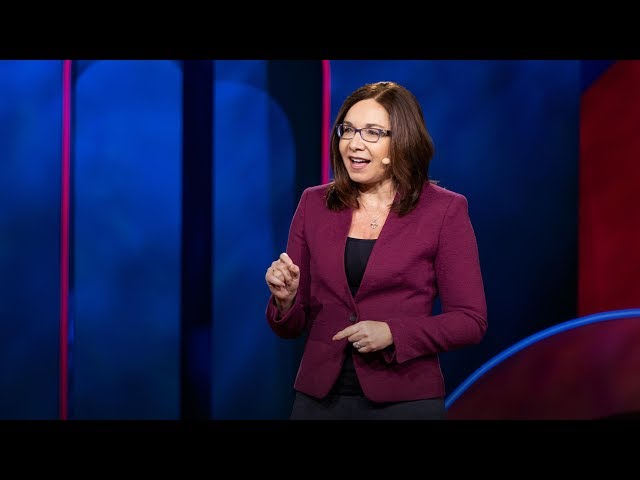
Climate scientist Katharine Hayhoe suggests a new approach to discussing climate change: connect through shared values like family and community, rather than rehashing data. In her inspiring TED Talk, Hayhoe emphasizes that hope begins with conversation, prompting people to realize they already care about a changing climate.
The TED Talks channel features leading thinkers sharing insights on Technology, Entertainment, Design, science, business, and global issues, all in 18 minutes or less.
Explore more at TED.com, or follow TED on Twitter, Facebook, and YouTube.
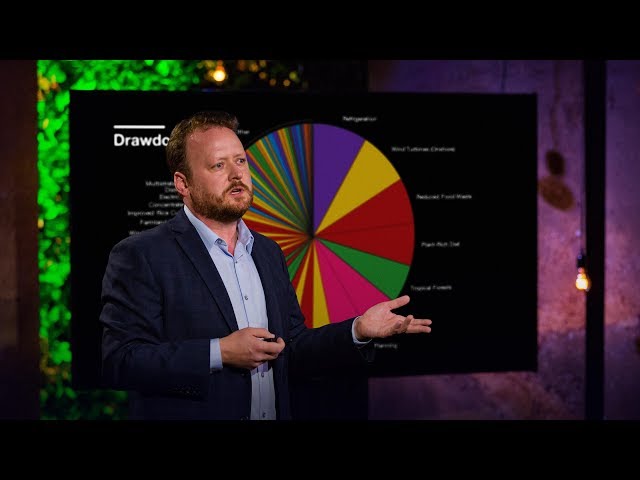
Strategist Chad Frischmann proposes "drawdown," a scenario where we remove more greenhouse gases than we emit, as our best hope to avert climate disaster. He highlights existing solutions, both conventional and innovative.
These include widely recognized tactics like renewable energy and improved land management. Frischmann also emphasizes less common but impactful approaches, such as changes in food production, better family planning, and the education of girls. Together, these strategies aim to reverse global warming and foster a regenerative world.

Jason Mark of Sierra Magazine emphasizes the critical need to address local climate risks. He argues that these dangers, often downplayed by insurance and real estate, will inevitably surface.
The true impact will become clear as 30-year mortgages mature, coinciding with significant increases in flooding and sea-level rise.

Despite pledges to limit global warming, climate change is a current reality, and success seems unlikely. This panel explores how to advance ethical leadership for climate justice globally, nationally, and locally. Key topics include the Paris Agreement, geoengineering governance, California's challenges, and the Seychelles' innovative coping strategies.
This roundtable, sponsored by Carnegie Council's "Ethics & International Affairs" journal, took place on April 5, 2018, at the International Studies Association (ISA) Annual Convention in San Francisco. For the full transcript and audio, visit: https://www.carnegiecouncil.org/studio/multimedia/20180405-climate-change-and-power-to-act-ethical-approach-for-practical-progress

Plastics are durable, light, and versatile, yet they take up to 400 years to decompose. This prolonged degradation will impact 16 future generations.
Our excessive plastic use severely threatens ocean health and biodiversity. Projections indicate that by 2050, oceans could contain more plastic than fish by weight.

Explore more climate change videos from Defenders of Wildlife. Watch them here: http://www.defenders.org/climate-change/video
These videos feature instruction by Noah Matson of Defenders of Wildlife.

The 8th daily COPpuccino featured Peter Seligmann, head of Conservation International.
Seligmann discussed the private sector's evolving role in sustainability, noting a significant shift as companies increasingly integrate environmental responsibility into their core operations.

Dozens of Tasmanian shy albatrosses have received artificial nests to combat declining breeding success, a consequence of warming air temperatures. Scientists placed aerated concrete and mudbrick nests on Bass Strait’s Albatross Island, where birds struggle to find enough natural nesting material. These artificial nests provide a stable environment, boosting breeding success by 20% compared to natural nests.
For more details on this conservation effort, read the National Geographic article: Shy Albatross Make Artificial Nests Their Own—Giving Scientists Hope for Their Species, and watch the video: Artificial Nests Helping the Shy Albatross Battle Climate Change.
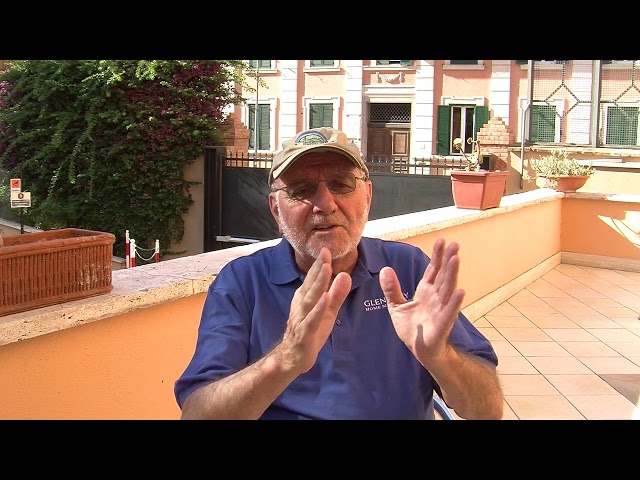
An interview with Father John Rausch of the Glenmary Home Missioners discusses Pope Francis' 2015 encyclical, Laudato Si': On Care for Our Common Home. Father Rausch asserts that the "care of creation" issue is spiritual, not economic or ecological, with profound consequences for the poor and all humanity. He emphasizes our interconnectedness, stating that saving Earth requires strong relationships and values that foster community and the global commons.
Acknowledging the reality of climate change, Father Rausch urges dialogue and lifestyle changes. As a Catholic Priest and environmental steward in US Southern Appalachia, he actively works to stop destructive mountain top mining, which devastates biodiversity and communities. This content is from Some Day Fire Productions (Ashley Young).

Pollution, overcrowding, and climate change have severely damaged the environment and threatened traditional livelihoods along Morocco's Mediterranean coast.
Through the World Bank's Integrated Coastal Zone Management (ICZM) project, communities are now generating new income sources via interconnected initiatives that simultaneously protect their fragile ecosystem. Learn more here.
Environmental Scientist and Advocate

