




Special Collections:
Oceans
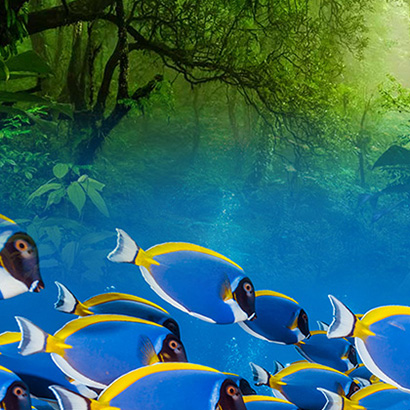

The U.S. Pacific coast seafloor teems with vital marine life, providing essential habitat for fish and other animals. However, these beautiful coral gardens and spongebeds face destruction from bottom trawl nets. Stronger government protections are crucial to safeguard this precious ecosystem.
To learn how you can help stop this destructive practice, visit Oceana.org.
Music by Adam Lindquist: fa-da-do.com.

Oceana Shark Scientist and Blogger Mariah Pfleger discusses philopatry in Bimini. Philopatry refers to the instinct of animals returning to their place of birth.
Music for this segment is by Patrick Mustain. Learn more at patrickmustain.com.

Before 2015, the Tañon seascape suffered from limited protections, drastically reducing fish populations and threatening its once vibrant ecosystem.
Today, Bloomberg Philanthropies' Vibrant Oceans Initiative collaborates with community members and political leaders to secure the future of these vital fisheries.

Up to 73 million shark fins enter the global trade annually. This devastating practice must end. Urge Congress to pass the Shark Fin Trade Elimination Act and support a #FinBanNow.
Learn more about this critical issue here. Music for this message is provided by Adam Lindquist fa-da-do.com.

Actor Josh Jackson highlights the critical connection between ocean health and human well-being. He emphasizes that restoring our oceans not only feeds hungry people but also supports vibrant ecosystems, underscoring our global interconnectedness.
Jackson's video PSA, filmed on San Juan Island in Washington's Salish Sea, promotes Oceana's "Save the Oceans, Feed the World" campaign.
Join Oceana and Josh Jackson's mission to restore the oceans: http://bit.ly/2jNfNV6

The ocean profoundly impacts everyone, even those far from the coast. It regulates our climate, stores carbon, and provides essential nutrients that sustain forests.
Oceana is dedicated to protecting these vital marine environments. Through efforts against offshore drilling, seafood fraud, and other threats, Oceana works to safeguard our oceans now and in the future.

In March 2016, the Obama administration removed the Atlantic from oil drilling plans for five years, a decision influenced by coastal residents. This marked a significant victory for Oceana and the people of the East Coast, demonstrating that their voices were heard in Washington.
Learn more about Oceana's campaigns: Oceana Climate & Energy Campaign
Music by Adam Lindquist: fa-da-do.com

Global Fishing Watch is an independent organization dedicated to advancing ocean transparency through cutting-edge technology.
It utilizes satellite data and machine learning to visualize, track, and analyze global commercial fishing activity. This platform helps combat illegal, unreported, and unregulated (IUU) fishing, promoting sustainable practices worldwide.
Their free, public platform provides critical data and tools for governments, researchers, and the public to better understand and manage marine resources.

Global Fishing Watch provides a powerful platform for monitoring global fishing activity. It leverages satellite technology and public data to visualize, track, and analyze vessel movements worldwide, promoting transparency in our oceans.
This initiative is crucial for combating illegal fishing, supporting marine conservation, and driving sustainable management of marine resources. Explore their work and data at globalfishingwatch.org.

Support marine life conservation by symbolically adopting a sea otter today.
Your adoption helps protect these vital creatures. Click here to make a difference.
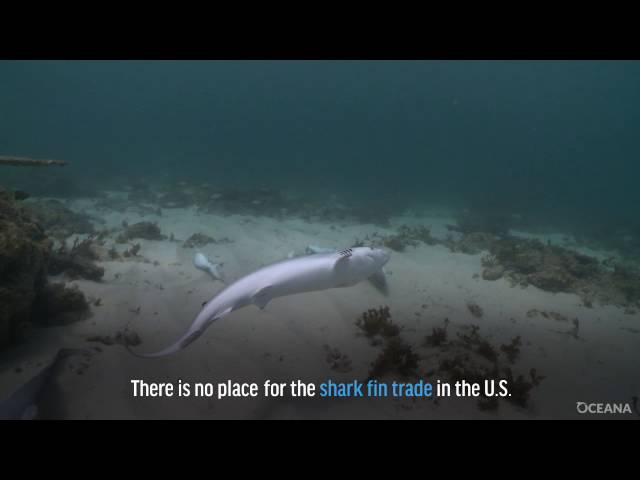
Shark finning is an inhumane and wasteful practice where fins are cut from sharks, whose bodies are then discarded at sea. Up to 73 million shark fins enter the global trade annually.
While illegal in American waters, shark fins are still bought and sold in the U.S. A nationwide ban on this trade is crucial to ensure the U.S. does not support finning and to protect sharks worldwide.
Add your name to our petition and tell Congress to prohibit the sale and trade of all shark fin products in the U.S.: http://bit.ly/2aZhHw0

Nearly 800 million people lack sufficient food, and two billion suffer from micronutrient deficiencies. As the global population grows, food production must dramatically increase. Our oceans offer a powerful solution: by restoring them, we can feed the world.
Fish are a "perfect protein"—nutritious, inexpensive to produce, and require no farmland or freshwater. A fully restored ocean could sustainably provide a healthy fish meal daily for over one billion people. We can achieve this by implementing three basic steps in just 25 countries: managing catch and protecting vital habitats.
To learn more, visit Oceana.org.

Global Fishing Watch (GFW), a free online tool from Oceana, SkyTruth, and Google, reveals the apparent fishing activity of over 35,000 commercial vessels globally. Regularly updated with data since 2012, GFW publicly shares vital information to enhance ocean health, support fishery management, and combat illegal fishing. This revolutionary tool empowers governments, journalists, and citizens to track vessels, enforce rules, and protect marine ecosystems.
GFW uses public Automatic Identification System (AIS) data, collected by satellite and terrestrial receivers. Over 20 million data points are added daily, enabling GFW to track vessel movement and classify it as "fishing" or "non-fishing" activity.

Global Fishing Watch is an international nonprofit dedicated to increasing transparency of human activity at sea. They leverage satellite technology, artificial intelligence, and data analysis to monitor and visualize global fishing efforts.
Their primary goal is to combat illegal, unreported, and unregulated (IUU) fishing, promote sustainable fisheries, and protect marine ecosystems. By making fishing activity visible, they empower governments, researchers, and the public to make informed decisions.
A key output is their free, public map, accessible at globalfishingwatch.org, which provides unprecedented insights into vessel movements worldwide.

Support ocean creatures, like killer whales, through a symbolic adoption.
Visit our store to find your adoption package and help protect marine life: Find them here.

Monitoring the vast amount of heat stored in Earth's warming oceans is challenging. Scientists at NASA's Goddard Space Flight Center are developing a novel satellite-based method using magnetic field observations to measure ocean heat content.
This technique leverages seawater's electrical conductivity, which changes with temperature. As conductive ocean water moves, it creates slight magnetic field fluctuations detectable by satellites. This approach promises the first global, all-depth ocean heat measurements from space.
Learn more: NASA Feature
Global sea levels are rising. NASA's Tom Wagner leads research, with scientists studying the Greenland Ice Sheet to understand this phenomenon. Explore NASA's sea level rise research here.
Thomas P. Wagner, NASA's Program Scientist for the Cryosphere, directs studies of Earth's polar regions, glaciers, sea ice, and their connection to climate change and sea level rise. Learn more about him here.

A new NASA study reveals significant global declines in microscopic ocean plant-life, or phytoplankton, which form the base of the marine food chain. This research is the first to analyze long-term phytoplankton community trends using NASA satellite data.
Diatoms, the largest type of phytoplankton, decreased over 1% annually from 1998 to 2012, particularly in the North Pacific, North Indian, and Equatorial Indian oceans. This reduction could impact the amount of atmospheric carbon dioxide absorbed and stored in the deep ocean. Dr. Cecile Rousseaux is featured.
This public domain video is available for download at http://svs.gsfc.nasa.gov/goto?12009.

Beyond terrestrial climate change, oceans face significant threats. They absorb a quarter of all greenhouse gases, fundamentally altering their chemistry. This causes severe problems for marine ecosystems.
Such changes ultimately jeopardize the billions who depend on oceans for food and livelihood, diminishing their vital beauty. This information was published on March 23, 2015, by Grist, described as "a Beacon in the smog."
Explore more from Grist on YouTube.

Conservation Talks feature short clips from leading minds in conservation. In this installment, Dr. Jane Lubchenco, the first female administrator of the National Oceanic and Atmospheric Administration (NOAA), discusses what she sees as the biggest challenge facing conservation science in a rapidly changing world.
Dr. Lubchenco's rare resumé includes serving as the first female president of the International Council for Science, president of the American Association for the Advancement of Science and the Ecological Society of America, and a member of the National Science Board. She is also a Distinguished Professor of Zoology at Oregon State University, with academic residencies at institutions like Stanford and Harvard.
Environmental Scientist and Advocate
What EarthSayers stands for
Discover Diverse Voices on EarthSayers
Unlike algorithm-driven platforms that push you into a content bubble, we ensure you hear a variety of perspectives from scientists, activists, Indigenous leaders, business innovators, and everyday citizens working toward sustainability.
EarthSayers CINEMA
Watch, learn and lead—sustainability starts with you.
How to Live on Earth | Feature Documentary | Presented by Benedict Cumberbatch
What if the solutions to building a better future already exist? How to Live on Earth is an ambitious documentary that explores how humanity can create a thriving future by collaborating with nature. Presented by Benedict Cumberbatch, the film reveals the potential of teaming up with nature to address our greatest challenges.
Heartwarming and energizing, it offers a hopeful vision for a future where both nature and humanity can thrive. How to Live on Earth is produced by Open Planet Studios in association with Villars Institute Foundation and Silvania. Join the conversation by downloading film assets and sharing your reaction at howtoliveonearth.net/social-toolkit. Explore educational resources from the Villars Institute at YouTube.


