




Special Collections:
Innovation and Sustainability


Puralytics, a Beaverton, Oregon startup, is developing a floating, solar-activated "nano lilly pad" for stormwater treatment. Supported by an Oregon BEST commercialization grant, this device can be deployed in ponds and ditches near roads and parking lots to prevent contaminants from entering streams.
Puralytics CEO Mark Owen praised partners Todd Jarvis and his Oregon State University (OSU) team for providing essential third-party testing and data.
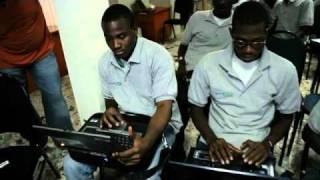
Global lack of adequate technology hinders business growth, slows disaster relief, and impedes communication. NetHope bridges this critical gap.
NetHope unites leading humanitarian organizations with high-tech companies, multiplying their collective power for greater impact. (Frank Schott, Global Program Director at NetHope)
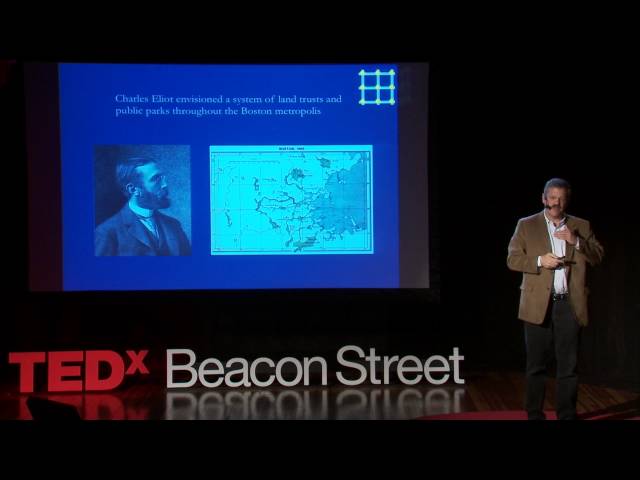
From 17th-century Boston Common to 21st-century large-landscape initiatives, innovators have tackled complex land, water, and biodiversity challenges. Addressing today's global conservation needs demands our best talent, technology, financial tools, and social innovation.
Innovation is characterized by five attributes: novel conception, strategic or cultural significance, measurable effectiveness, global transferability, and enduring impact for decades or centuries.
Jim Levitt directs the Program on Conservation Innovation at Harvard Forest, Harvard University, and is a fellow at the Lincoln Institute of Land Policy.

At TEDxBerlin 2012, Laurence Kemball-Cook presented "Turning Our Cities Into Human Power Plants." His talk introduced Pavegen, an innovative technology that embeds power-generating systems directly into pavement.
Pavegen harnesses the energy from human footsteps, converting it into usable power. This groundbreaking approach transforms walking into a viable alternative energy source, effectively turning urban environments into sustainable power generators.
Jeffrey Hollender, founder of Seventh Generation and co-chair of Greenpeace, will lead a panel discussion. The session will explore the challenges businesses face in achieving sustainability, balancing financial growth with environmental responsibility.
Panelists include Jeff Seabright of Coca-Cola, Michael Jacobson of Intel, and James Gowen of Verizon.

Corporate philanthropy is driving a fundamental business transformation, comparable to the Industrial Revolution. Co-creation and embedded creation are essential to this profound shift.
At the CECP Summit on June 2, Professor Stuart Hart, a leading authority on sustainable development, discussed how companies can move "beyond greening" toward transformational strategic change. He drew insights from his book, Capitalism at the Crossroads: The Unlimited Business Opportunities in Solving the World's Most Difficult Problems, and his article "The Fortune at the Bottom of the Pyramid," co-authored with C.K. Prahalad.
"Reinventing Fire: Bold Business Solutions for the New Energy Era" presents market-based, actionable solutions integrating transportation, buildings, industry, and electricity.
Built on Rocky Mountain Institute's 30 years of research, this roadmap offers an alternative to business-as-usual. It highlights the value of avoiding the significant, often uncounted, external costs of fossil fuels.

Switch Vehicles aims to build safe, simple, and durable electric vehicles affordable for all Americans. Their locally-built, basic EV will initially be sold as an owner-assembled kit. Learn more at www.switchvehicles.com.
James McGreen discussed this mission during an interview with Ruth Ann Barrett of EarthSayers.tv, voices of sustainability, at the Bioneers 2011 conference.
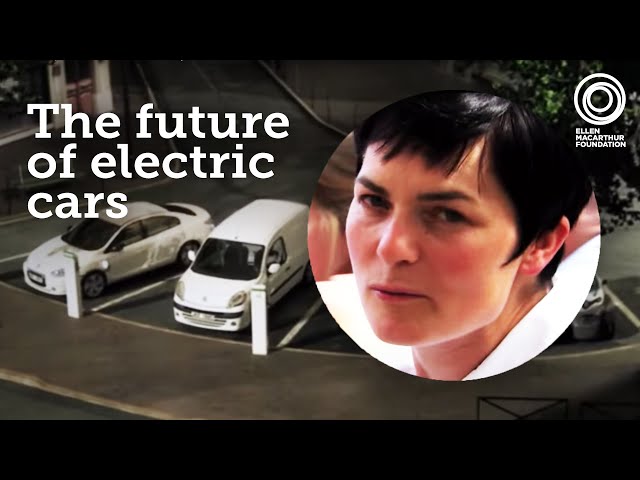
The final Project ReDesign workshop, held at Oxford's Examination Schools on March 25, 2011, challenged students to rethink waste as a materials opportunity. They explored systems-level redesign in a world of finite resources and rising energy costs.
Volunteers from the Foundation's Founding Partners – B&Q, BT & CISCO, Renault, and National Grid – provided expert industry support.
Learn more about the circular economy here.

In a 2009 CNBC interview, Danisco CEO Tom Knutzen discussed investment opportunities in technology solutions to combat climate change. Knutzen, leading a Danish company specializing in food ingredients, enzymes, and bio-based solutions, emphasized the need for solid business plans and political support, including extended time horizons and a carbon tax.
He highlighted a natural product designed to replace rubber from rainforests and fossil fuels. While acknowledging its current cost-competitiveness challenges, Knutzen noted that a carbon tax would significantly improve its viability.

John Doerr, a partner at Kleiner Perkins Caufield & Byers (KPCB), has a track record of backing leading entrepreneurs, including Google and Amazon. His venture capital focus centers on recruiting top talent and building effective teams.
Doerr distinguishes between the Internet and Energy markets. He notes that the energy sector involves higher costs, longer development cycles, and significantly more policy-intensive challenges.

Environmentalist David Suzuki recently criticized Canada's environmental leadership. In an interview with Corporate Knights near the Toronto Stock Exchange, he expressed strong views.
Suzuki discussed clean technology, the Copenhagen climate summit, and Canada's faltering reputation as a global environmental leader.

Chris Laszlo's new book, *Sustainable Value: How the World's Leading Companies Are Doing Well by Doing Good*, argues that sustainability presents a significant opportunity, rather than a cost. Learn more about Chris Laszlo.
Purchase *Sustainable Value* on Amazon or visit your local bookstore.

The TED (Technology, Entertainment, and Design) "Ideas Worth Spreading" collection highlights architect and designer William McDonough. He challenges us to envision buildings and products designed with "All children, all species, for all time" in mind. Explore more at TED.com.
Order his influential book, "Cradle to Cradle," from Amazon.
- 1
- 2
Environmental Scientist and Advocate
What EarthSayers stands for
Discover Diverse Voices on EarthSayers
Unlike algorithm-driven platforms that push you into a content bubble, we ensure you hear a variety of perspectives from scientists, activists, Indigenous leaders, business innovators, and everyday citizens working toward sustainability.
EarthSayers CINEMA
Watch, learn and lead—sustainability starts with you.
How to Live on Earth | Feature Documentary | Presented by Benedict Cumberbatch
What if the solutions to building a better future already exist? How to Live on Earth is an ambitious documentary that explores how humanity can create a thriving future by collaborating with nature. Presented by Benedict Cumberbatch, the film reveals the potential of teaming up with nature to address our greatest challenges.
Heartwarming and energizing, it offers a hopeful vision for a future where both nature and humanity can thrive. How to Live on Earth is produced by Open Planet Studios in association with Villars Institute Foundation and Silvania. Join the conversation by downloading film assets and sharing your reaction at howtoliveonearth.net/social-toolkit. Explore educational resources from the Villars Institute at YouTube.


