




Special Collections:
Biodiversity

Rare underground footage captures the elusive Mazama pocket gopher.
In 2014, the Center secured Endangered Species Act protection for these imperiled animals and over 1,500 acres of their prairie habitat in Washington state.

A remote camera in the Arizona borderlands captured javelinas foraging and snorting.
This footage was provided by Russ McSpadden for the Center for Biological Diversity.

Observe a red bat as it captures a moth during its nocturnal flight.
These bats are incredibly efficient predators, capable of consuming 500 to 1,000 insects in just one hour.

The Western Ghats of India are home to 24 species of "dancing frogs" from the Micrixalidae family. These amphibians earned their name because males perform a unique foot-waving display, known as foot-flagging, to attract females during the breeding season.
This distinctive gesture likely compensates for their quiet croaks. Their calls are often too faint to compete with the surrounding environmental noise, making the visual foot-flagging crucial for successful mating.

The endangered Sonoyta mud turtle, an aquatic species, thrives in one of the Sonoran Desert's driest regions. This unique adaptation allows it to survive in extreme conditions.
Its habitat is severely restricted: a single spring on the U.S.-Mexico border within Organ Pipe Cactus National Monument in southern Arizona, and a small section of Mexico's Rio Sonoyta.

This video showcases a unique bobcat "Valentine's Day" negotiation, where communication is key. Two bobcats engage in a date via head-bobbing yowls, rapid tail twitching, and awkward pauses. The gray cat is the female, and the red (rufus) one is the male.
We extend our thanks to Robyn Sloan for sharing this fascinating footage. Explore more of her wildlife videos here.

The proposed border wall poses a significant threat to the San Pedro River, a vital ecosystem.
Its construction risks triggering an extinction crisis, eliminating the diverse life that depends on the river for survival.

The question of how butterflies survive Australia's massive bushfires was answered in part by Julie Favell. Near Long Swamp in Lithgow, while putting out water for fire-affected wildlife, she witnessed common brown butterflies (Heteronympha merope) fluttering inside a moist wombat hole.
This observation suggests that natural underground shelters, offering damp and cooler conditions, provide vital refuge for some species during intense infernos.
Footage by Julie Favell.

Tardigrades are renowned for surviving space, but stunning new footage reveals these "water bears" in their earthly habitat. Witness them eating, mating, and hatching from eggs in remarkable detail.
This incredible footage is courtesy of James Weiss. Explore more of his work and follow him on social media: Facebook: @jamsgerms; Twitter and Instagram: @jam_and_germs. Discover more on his YouTube channel: https://biodiv.us/37LluYQ.

A timely panel discussion addressed the fossil fuel industry's shifting tactics to impede a just and equitable transition from dirty energy. The event featured renowned climate scientist Mike Mann, community organizer Andres Soto, investigative journalist Antonia Juhasz, and the Center's climate director Kassie Siegel.
This critical discussion, underscoring the #ClimateEmergency, was recorded on December 10th at the Children’s Creativity Museum Theater in San Francisco, California. We extend our gratitude to Jay Wilson for providing the footage.
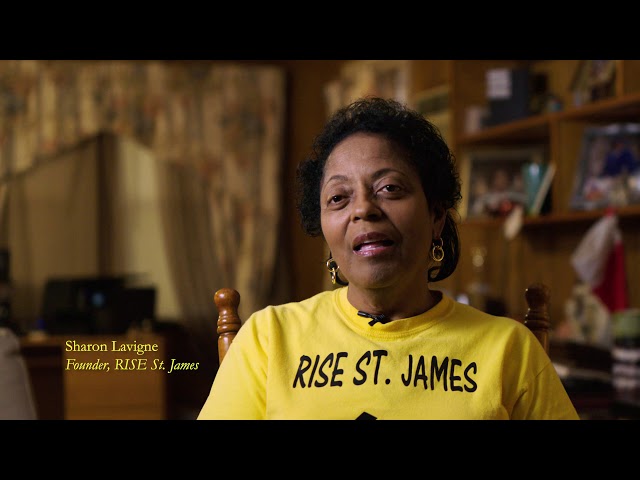
Learn about the urgent need to #StopFormosaWatch in a video featuring Lt. Gen. Russel Honore (Green ARMY), Sharon Lavigne (RISE ST. JAMES), and Norman Marmillion (Laura Plantation Company).
Take action: Call the Louisiana Department of Environmental Quality (LDEQ) and urge them to deny Formosa's permit application. Find the contact number and a call script here.
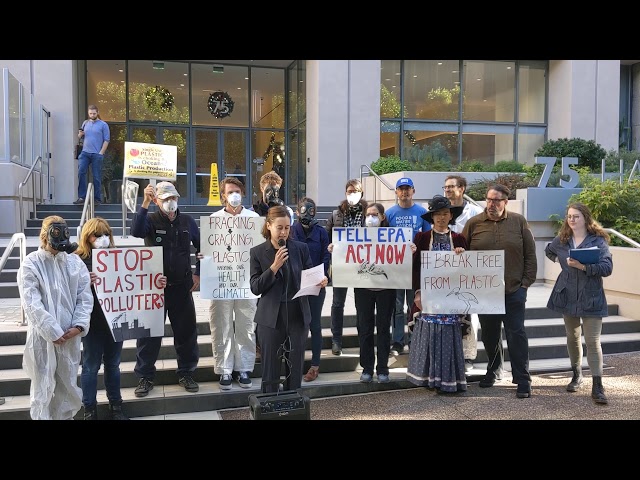
A growing movement is urging the federal government to enhance regulation of pollution from plastic manufacturing plants.
Public awareness of the dangers of plastics production is increasing, prompting calls for action. Learn more: https://biodiv.us/33Yx7Jz

Trump's border wall construction is desecrating indigenous lands. To expedite building, federal authorities have waived numerous laws, including the American Indian Religious Freedom Act, the Native American Graves Protection and Repatriation Act, and the Endangered Species Act.
Hia-Ced O’odham activist Nellie Jo David highlights the profound impact on the O’odham people. The new wall in southern Arizona affects communities on both sides of the U.S.-Mexico border, threatening their cultural heritage and sacred sites.

Quitobaquito pupfish, an ancient species on Earth for 1.6 million years, now survive only in Quitobaquito Spring within Organ Pipe Cactus National Monument, near the U.S.-Mexico border. These tiny, tenacious fish endure extreme temperatures and high salt levels, with males turning vibrant blue when defending territory or seeking a mate.
However, new border wall construction in Organ Pipe threatens this unique habitat. The Border Patrol is pumping thousands of gallons daily for concrete, heedlessly draining this precious desert waterway. With construction teams now just miles from Quitobaquito Spring, this essential water source and its endangered pupfish face imminent danger.

Filmed at the new border wall construction within Arizona's Organ Pipe Cactus National Monument, this poem addresses the complex struggles unfolding along the border.
It powerfully conveys the challenges faced by migrants seeking refuge, the fragmentation of wildlife populations and ecosystems, and the militarization impacting indigenous communities.

Border Patrol is consuming millions of gallons of groundwater for wall construction in southeastern Arizona. This practice imperils rare desert springs and the endangered species that depend on them.
We visited the San Bernardino National Wildlife Refuge on the border to observe the impact firsthand.

Our planet is currently experiencing its sixth mass extinction of plants and animals. Unlike previous extinctions caused by natural events such as asteroid strikes or volcanic eruptions, this crisis is almost entirely human-driven.
Human activities, primarily habitat loss, the introduction of exotic species, and climate change, threaten 99% of currently endangered species.
To learn more and take action to protect Earth's biodiversity, visit biodiv.us/extinction.

Palmyra Atoll, a U.S. National Wildlife Refuge, is one of the most remote locations under the U.S. Fish and Wildlife Service's care. Situated halfway between Hawaii and American Samoa, it offers unparalleled tranquility.
Experience this incredibly peaceful place through new footage, including unique scenes of underwater rain. Take a micro-vacation to discover its serene beauty.

In a BorderViews video, campaigner Laiken Jordahl highlights ongoing border wall construction at Organ Pipe Cactus National Monument.
This development immediately threatens endangered species, Native American sacred sites, and protected wilderness areas.

Watch our new time-lapse video showcasing the latest addition to the #EndangeredSpeciesMural project!
This 105-foot mural, located in Seward, Alaska, features the endangered North Pacific right whale and spectacled eider. We extend our thanks to artists Roger Peet and Tricia Tripp for their work.
Environmental Scientist and Advocate
What EarthSayers stands for
Discover Diverse Voices on EarthSayers
Unlike algorithm-driven platforms that push you into a content bubble, we ensure you hear a variety of perspectives from scientists, activists, Indigenous leaders, business innovators, and everyday citizens working toward sustainability.
EarthSayers CINEMA
Watch, learn and lead—sustainability starts with you.
How to Live on Earth | Feature Documentary | Presented by Benedict Cumberbatch
What if the solutions to building a better future already exist? How to Live on Earth is an ambitious documentary that explores how humanity can create a thriving future by collaborating with nature. Presented by Benedict Cumberbatch, the film reveals the potential of teaming up with nature to address our greatest challenges.
Heartwarming and energizing, it offers a hopeful vision for a future where both nature and humanity can thrive. How to Live on Earth is produced by Open Planet Studios in association with Villars Institute Foundation and Silvania. Join the conversation by downloading film assets and sharing your reaction at howtoliveonearth.net/social-toolkit. Explore educational resources from the Villars Institute at YouTube.


