




Special Collections:
Biodiversity
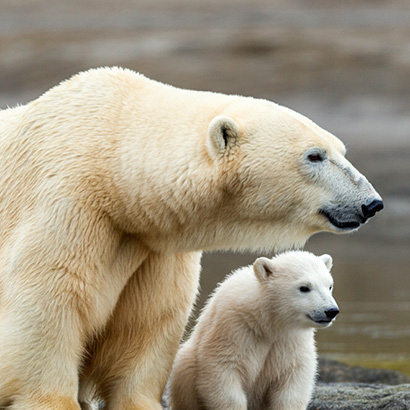

Plants are essential for life, yet their critical importance is often overlooked. Globally, nearly 16,000 plant species face extinction, with only 11% assessed. In the U.S. alone, over 900 plants are endangered, and 70 more await protection.
The Center actively works to protect imperiled plants across the country, from deserts to rainforests and swamps. Join our upcoming webinar to learn about our vital efforts to save endangered plants and discover how you can contribute.
The presentation will feature Hawaii Director Maxx Phillips and Senior Scientist Ileene Anderson. For more on Hawaii's plant extinction crisis, watch this Great Big Story video: https://youtu.be/XFAQeyUfiAc

Ancient sea turtles, known for their long lifespans and incredible migrations, face numerous modern threats. These include plastic and light pollution, fishing gear entanglement, sea-level rise, and ocean acidification. Our staff has worked for decades to protect these amazing reptiles.
We recently celebrated significant wins, securing new protections for leatherback sea turtles in California and critical habitat for green sea turtles on both coasts. These successes highlight our ongoing commitment to their survival.
Learn more about our sea turtle conservation efforts and how you can contribute. Our Florida director, Jaclyn Lopez, and senior Oceans program attorney, Catherine Kilduff, will lead the presentation.

Leopard slugs exhibit a beautifully bizarre mating ritual. Each hermaphroditic individual, preferring coupling over self-fertilization, climbs a tree or rock at night. They then lower themselves on a mucus tether, entwining their bodies. Gravity assists in deploying their oversized penises, which emerge from the right side of their heads.
Once coitus is complete, both slugs ascend the mucus tether, with the one bringing up the rear consuming it. Learn more about this fascinating process at the BBC. Footage for such observations is often provided by sources like Bernoid.com.
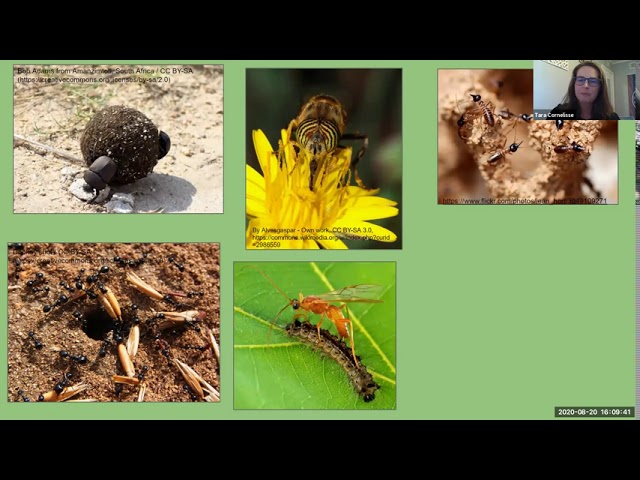
Insect populations, from monarchs to bumble bees, are rapidly declining worldwide due to pesticides, development, and other threats. These vital creatures are essential for healthy ecosystems and human well-being.
Join our upcoming "Saving Life on Earth" webinar to learn about the "Saving the Insects" campaign and how you can help. Center senior scientists Tara Cornelisse and Tierra Curry will present.

Gray foxes (Urocyon cinereoargenteus) in Arizona's borderlands are remarkable tree-climbing canids. They possess several unique adaptations for an arboreal lifestyle, unlike most other canids.
These adaptations include flexible, primate-like wrists and cat-like paws with long, curved claws. Such features equip them to hunt and play effectively within the forest canopy.

Over a billion pounds of pesticides are used in the U.S. annually, with a quarter banned in the EU due to safety concerns. Despite this, the EPA has for decades failed to assess their impacts on endangered species, human health, and pollinators, even permitting their use on public lands.
Join the Center for an hour to learn how we protect vulnerable people and wildlife from these dangerous chemicals, and discover how you can help. The presentation will feature environmental health director Lori Ann Burd and senior scientist Dr. Nate Donley.

The San Xavier talussnail, one of the world's rarest, lives exclusively on a single Sonoran Desert hill. These hermaphroditic snails can live up to 10 years, estivating for three and active only 3-4 days annually. Monsoon rains prompt their emergence from rock crevices to feed on lichen.
These unique snails are central to a major lawsuit filed by the Center against the Trump administration. The suit challenges the administration's failure to protect 241 endangered species, many facing imminent extinction.

Amidst the scorching Arizona summer, a California condor finds respite by bathing in a spring-fed creek in the Grand Canyon.
This remarkable bird is North America's largest flying species and one of the most endangered worldwide.

Endangered Blanding's turtle hatchlings begin their journey into the wild. These turtles can live 80 years, but their population is critically threatened by predation, disease, habitat destruction, and human collection.
In 2011, a Center petition secured CITES protection for Blanding's turtles. The Center, joined by renowned scientists like E.O. Wilson, further petitioned in 2012 for U.S. Endangered Species Act protection for the turtle and 52 other threatened amphibians and reptiles.
While not yet federally protected in the U.S., Blanding's turtles are safeguarded by state laws in several states.

Despite the pandemic, border wall construction persists. Crews are blasting mountains, destroying ancient cacti, sacred sites, and draining springs. These walls disrupt wildlife migrations and harm communities.
Over 650 miles of barriers already exist, cutting through sensitive ecosystems, disrupting animal migration, causing catastrophic flooding, and dividing communities and tribal nations. This unfolding tragedy impacts the region's diverse wildlife, people, and spectacular landscapes.
We are actively fighting this attack in courts, Congress, and communities. This presentation features the Center's Laiken Jordahl, borderlands campaigner, and Randy Serraglio, Southwest advocate.

Rapid human population growth and overconsumption drive critical environmental crises, including the wildlife extinction crisis, habitat loss, and climate change. The Center uniquely tackles these sensitive issues that many environmental groups often overlook.
Our common-sense solutions focus on empowering women and girls, ensuring universal access to reproductive healthcare and education, and developing healthy, secure food systems. We also engage the public through initiatives like distributing over 1 million Endangered Species Condoms with memorable slogans.
Timed with World Population Day on July 11, this presentation features Kelley Dennings, Population and Sustainability Campaigner, and Sarah Baillie, Endangered Species Condoms coordinator, to discuss our vital work.

In the 1990s, researchers in western Canada identified a new two-note song variant in white-throated sparrows, differing from the traditional three-note ending. While bird songs evolve, new dialects typically remain localized rather than replacing established ones.
However, a study found this once-rare two-note song spread "virally" across over 1,800 miles of Canada between 2000 and 2019, completely replacing the historic song. The reason for its widespread adoption is unknown. Senior author Ken Otter called this rapid, extensive cultural evolution of a song type "unprecedented." Learn more here.

Arizona's Santa Rita Mountains, ancestral land of the Tohono O'odham (who call it Ce: wi Duag, or "Long Mountain"), are renowned for their natural beauty and rare wildlife, including ocelots and jaguars. Despite this, a Canadian company seeks to blast a mile-wide, open-pit copper mine in this invaluable area.
For over a decade, a coalition of organizations and local governments has successfully resisted this project. A video, directed by Leslie Ann Epperson, features Austin Nuñez, Chairman of the San Xavier District of the Tohono O'odham Nation, and allies recounting their tale of resistance.

Spotted skunks often perform a defensive handstand to intimidate potential attackers before spraying. This unique behavior serves as a striking warning display.
An instance of this defensive posture was captured by a remote camera in Arizona, showcasing the skunk's distinctive threat display.

The Center for Biological Diversity promotes reproductive planning, including access to contraception and education, as a strategy to combat the wildlife extinction crisis. They recently interviewed Maxine Trump, director of the documentary "To Kid or Not to Kid," which explores her personal family planning story.
The film and interview foster discussions among couples about the child-free lifestyle, covering rationales like financial anxiety, disinterest in birthing, and environmental concerns. It also addresses challenges in contraceptive decisions.
Watch "To Kid or Not to Kid" on Amazon Prime or iTunes. Explore Maxine Trump’s PBS Spin-Off Series, "Should We Kid or Not?", on YouTube. Stay tuned for a panel discussion. Learn more at tokidornotokid.com.

May brought record heat and atmospheric carbon dioxide levels, underscoring the climate emergency. While the challenge is immense, solutions exist, and individuals can make a difference.
Our work focuses on saving climate-threatened species and campaigning for a just transition away from fossil fuels. We also advance climate justice through our new Energy Justice program, especially pertinent during current global health and racial justice movements.
The presentation will feature Kassie Siegel (Climate Law Institute director), Ben Goloff (climate campaigner), and Jean Su (Energy Justice program director).

Formosa Plastics' proposed complex in Louisiana threatens significant environmental and social harm. It would destroy 61 acres of wetlands and produce enough plastic for an estimated one trillion water bottles annually.
The project is also projected to dramatically increase air and water pollution, disproportionately impacting local communities of color. #StopFormosaPlastics

Over 8 million tons of plastic pollute our oceans annually, devastating wildlife, beaches, and ecosystems. The facilities producing this plastic, often in low-income areas, also poison local air and water.
This week's conversation will address fighting plastic pollution at its source. We'll discuss the industry's planned production increase, our strategies to stop it, and why recycling isn't a viable solution.
The presentation features Julie Teel Simmonds, Senior Attorney, and Delia Ridge Creamer, Oceans Campaigner, from the Center.

Giant water bugs are exceptional fathers. After mating, females of some species cement their eggs to the male's back, then depart, leaving him to parent alone.
For over two weeks, the male diligently cleans, aerates, and fiercely defends the eggs from predators until they hatch.
Research indicates that female giant water bugs prefer males already carrying eggs, suggesting that strong paternal care is a highly valued trait in sexual selection.
The killings of George Floyd, Breonna Taylor, and Ahmaud Arbery have sparked a crucial reckoning with systemic racism, police violence, and inequality in America. These racist ideologies fuel not only social injustices like income disparity, poor housing, and pollution in vulnerable communities, but also hinder the environmental movement by suppressing vital voices.
This "Saving Life on Earth" webinar will explore justice, police brutality, diversity, and biodiversity, emphasizing the critical need to align environmental efforts with the fight against racism. We all share a personal and institutional responsibility to drive lasting change.
Environmental Scientist and Advocate
What EarthSayers stands for
Discover Diverse Voices on EarthSayers
Unlike algorithm-driven platforms that push you into a content bubble, we ensure you hear a variety of perspectives from scientists, activists, Indigenous leaders, business innovators, and everyday citizens working toward sustainability.
EarthSayers CINEMA
Watch, learn and lead—sustainability starts with you.
How to Live on Earth | Feature Documentary | Presented by Benedict Cumberbatch
What if the solutions to building a better future already exist? How to Live on Earth is an ambitious documentary that explores how humanity can create a thriving future by collaborating with nature. Presented by Benedict Cumberbatch, the film reveals the potential of teaming up with nature to address our greatest challenges.
Heartwarming and energizing, it offers a hopeful vision for a future where both nature and humanity can thrive. How to Live on Earth is produced by Open Planet Studios in association with Villars Institute Foundation and Silvania. Join the conversation by downloading film assets and sharing your reaction at howtoliveonearth.net/social-toolkit. Explore educational resources from the Villars Institute at YouTube.


