




Special Collections:
Biodiversity

To address the extinction crisis, join us for a special screening and discussion of *The Condor & The Eagle*. This award-winning documentary highlights Indigenous leaders uniting across the Americas for climate justice, protecting land and water from the fossil fuel industry. It showcases their efforts in Canada's boreal forests, Texas and Oklahoma's frontline communities, and the Amazon.
The discussion will feature Jean Su, the Center’s Energy Justice Director, and Bryan Parras, cofounder of Texas Environmental Justice Advocacy Services and an organizer with the Sierra Club.
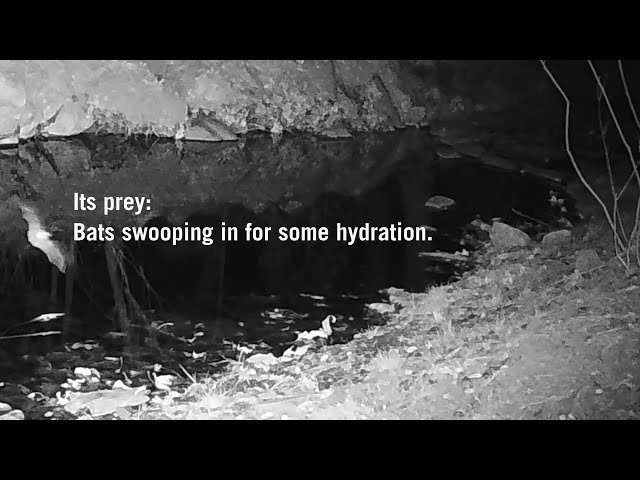
New footage from our remote cameras near the U.S.-Mexico border in Arizona reveals a rare Mexican spotted owl hunting bats. This behavior is likely a first-ever capture.
Witness the incredible challenge of an owl catching bats in flight. Watch the footage to see how it's done.
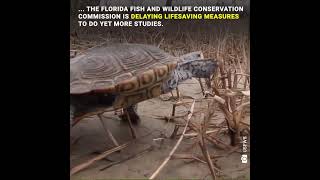
Florida's diamondback terrapins are needlessly drowning in blue crab traps. A simple, effective solution exists: "bycatch reduction devices" (BRDs).
These devices, attached to trap openings, prevent most terrapins from entering, significantly reducing accidental drownings. We are urging Florida to mandate BRDs on all blue crab traps statewide.
Learn more about this vital conservation effort: https://biodiv.us/3bSYlrR

American bumblebees, iconic for their fuzzy appearance, are experiencing rapid population declines.
The Center for Biological Diversity is working to secure protections for these vital pollinators under the Endangered Species Act.
You can help ensure #NoBeeLeftBeehind. Learn more and support their conservation efforts: biodiv.us/36OeFYu

Cattle are destroying critical habitat within Arizona's Agua Fria National Monument. This protected area was specifically designated to safeguard vital riparian forests and imperiled animal species.
The Bureau of Land Management and the Arizona Game and Fish Commission are responsible for addressing this ongoing environmental damage.

Education and voluntary family planning significantly benefit both people and the planet. The Center for Biological Diversity, in partnership with Mozambique’s Gorongosa National Park, will present the documentary 'Our Gorongosa'. This film highlights the park's innovative model for wildlife conservation and community development in Africa, emphasizing girls' education and women's empowerment.
A webinar will follow, featuring a discussion and Q&A with Larissa Sousa from Gorongosa National Park, Kelley Dennings from the Center’s Population and Sustainability Campaign, and Sara Inés Lara of Women for Conservation. Attendees will learn how to support women's empowerment through increased education, bodily autonomy, and economic opportunities.

The future of gray wolves is critically endangered. Their populations face numerous threats, including habitat loss, human conflict, and evolving conservation policies. Protecting these apex predators is vital for maintaining ecological balance across many ecosystems.
Ensuring their continued survival requires effective management strategies and broad public support. Collaborative efforts among conservationists, policymakers, and local communities are essential to secure a viable future for gray wolves throughout their natural range.

Join the Center and the Thoreau Society for a special Earth Day event exploring resistance and extinction. We'll discuss how 19th-century naturalist Henry David Thoreau's works relate to today's fight against the extinction crisis.
Speakers include Thoreau Society President Rochelle Johnson and Executive Director Michael Frederick; Laura Walls, author of *Henry David Thoreau: A Life*; and Center for Biological Diversity Founder Peter Galvin and Senior Scientist Tierra Curry.
The Thoreau Society preserves Thoreau's legacy, advocates for natural world preservation, and inspires a deliberate life.

Our economies currently exploit nature, despite our complete dependence on it, leading to accelerating environmental degradation. Sir Partha Dasgupta's Review on The Economics of Biodiversity proposes redefining the ecology-economy relationship by applying an economic lens to value the natural world.
This approach aims to transform our extractive relationship with nature into a sustainable one. An expert panel will discuss the Review's findings and recommendations, exploring how to rebuild our economic system with sustainable prosperity at its core.

The pandemic exposed severe flaws in the U.S. food system, from worker exploitation and food insecurity to environmental abuses. These issues were exacerbated by long-standing ties between industry and government, harming workers, animals, and biodiversity.
Join our webinar to discuss creating a more secure, just, and wildlife-friendly food system. Featuring Senior Food Campaigner Jennifer Molidor, Environmental Health Program Director Lori Ann Burd, and Senior Attorney Hannah Connor, we'll explore solutions. Positive changes are emerging, with reduced meat/dairy consumption, local governments embracing dietary shifts, and a more inclusive food movement.

The western monarch population faces a severe emergency, with a 99% decline in those overwintering in California. This crisis demands immediate action.
Tell Congress to act now: biodiv.us/3aeeCXn

Take action against mining giant Rio Tinto for its ongoing destruction of sacred Indigenous land. This critical issue demands your voice.
Join the call to stop their plundering. Demand accountability by tweeting at Rio Tinto. Learn more and participate here: Stop Plundering the Planet.

Automakers have a history of obstructing progress on clean vehicles, often through deceptive practices. They are now pressuring President Biden to weaken emissions standards.
These proposed changes would roll back commitments made over a decade ago. Take action to support stronger environmental protections:

Researchers have released stunning new footage of "El Bonito," a juvenile male jaguar, just three miles from the U.S.-Mexico border in Sonora, Mexico. This sighting suggests a female jaguar may live closer to the United States than previously believed, indicating potential breeding activity in the region.
El Bonito, like at least seven other male jaguars detected in the U.S. over the past 25 years, could eventually cross the border from Sonora. The last known female jaguar north of the border was killed in Arizona in 1963.
The video was captured by Ganesh Marin, a University of Arizona Ph.D. student and National Geographic Explorer, who leads this joint research project involving multiple institutions.

A remarkable sea slug possesses the extraordinary ability to detach its head from its body. Astonishingly, the disembodied head can continue to roam and function normally, despite lacking a heart or anus.
Even more incredibly, this detached head is capable of regenerating an entirely new body within just three weeks. Discover more about this fascinating biological phenomenon at the New York Times: http://biodiv.us/3clq6IS

Witness the courtship display of the endangered California condor. The female (tag 9) and her longtime mate (tag J3) share a high perch.
He then initiates a slow, wings-out dance around her, showcasing a romantic ritual.

Speak up for the largest U.S. river and salmon restoration project: breaching the Snake River dams. This initiative can save 1 million salmon and orcas, create jobs, build clean energy, support farmers, and uphold tribal treaty rights, reimagining a Northwest that works for all.
Join us to hear from speakers like Julian Matthews and Lucinda Simpson (Nimiipuu Protecting the Environment), orca scientist Dr. Deborah Giles, and Fred Heutte (Northwest Energy Coalition). Enjoy live music from singer-songwriter Casey Neill.

Deciding when and whether to have children is increasingly complex. A new survey reveals that one-third of Americans believe climate change may lead to fewer births, and 73% link population growth to wildlife extinction.
The Center for Biological Diversity has partnered with filmmaker Maxine Trump to present her documentary, "To Kid or Not to Kid." This film explores family planning, the choice to be child-free, and their environmental connections. A webinar will feature Trump, the Center's Kelley Dennings, and Kristie Duff from Women Deliver, discussing how to support family planning decisions and advocate for universal contraception access.

President Biden directed the U.S. Fish and Wildlife Service to review the Trump administration's decision to remove federal protections for wolves.
However, after only five days and without an official review, the Service stated in a letter that the delisting was appropriate.
For more information, visit this link: http://biodiv.us/3pf2cmZ

This is what a snow day looks like for wolves in Yellowstone National Park. They navigate the deep, pristine snow, their thick coats providing essential insulation against the biting cold.
Despite the challenging conditions, these resilient predators continue their hunt, their tracks a testament to their enduring presence in the winter landscape.
Environmental Scientist and Advocate
What EarthSayers stands for
Discover Diverse Voices on EarthSayers
Unlike algorithm-driven platforms that push you into a content bubble, we ensure you hear a variety of perspectives from scientists, activists, Indigenous leaders, business innovators, and everyday citizens working toward sustainability.
EarthSayers CINEMA
Watch, learn and lead—sustainability starts with you.
How to Live on Earth | Feature Documentary | Presented by Benedict Cumberbatch
What if the solutions to building a better future already exist? How to Live on Earth is an ambitious documentary that explores how humanity can create a thriving future by collaborating with nature. Presented by Benedict Cumberbatch, the film reveals the potential of teaming up with nature to address our greatest challenges.
Heartwarming and energizing, it offers a hopeful vision for a future where both nature and humanity can thrive. How to Live on Earth is produced by Open Planet Studios in association with Villars Institute Foundation and Silvania. Join the conversation by downloading film assets and sharing your reaction at howtoliveonearth.net/social-toolkit. Explore educational resources from the Villars Institute at YouTube.


