




Special Collections:
Oceans


Amazon, the world's largest retailer, generated an estimated 709 million pounds of plastic packaging waste last year from its e-commerce operations. This represents an 18% increase from 2020, equating to enough plastic to circle the Earth over 800 times in the form of air pillows.
Oceana reports that up to 26 million pounds of this plastic, primarily damaging plastic film, is projected to pollute the world's waterways and seas, posing a significant threat to marine life.
View the full report here: The Cost of Amazon's Plastic Denial

Thanks to your support, Oceana achieved significant ocean victories in 2022.
Together, we can save our oceans and help feed the world.

Watch Oceana's "Keep Oceans Fishy" series, featuring "Women in Fisheries Science & Ocean Conservation." This episode highlights incredible women dedicated to protecting ocean resources.
The panel includes Cirse Gonzalez (Virginia Institute of Marine Science), Dr. Lyda Harris (The Boeing Company), Emily Selinger (Emily's Oysters), and Suraida Nañez-James (Gulf Reach and NOAA Ocean Exploration). They share insights on conservation through science, policy, business, education, and advocacy.
Their work aims to inspire the next generation to use ocean science and keep our oceans fishy.

Oceana celebrated Hispanic Heritage Month with a bilingual, bicoastal #KeepOceansFishy event. Held in Southern California, New York, and Florida, it highlighted Hispanic and Latinx leaders in fisheries and marine conservation.
Guests included Tatiana Castro (Billion Oyster Project), Carlos Callado (WILDCOAST), and Reinaldo Diaz (Lake Worth Waterkeeper). They shared insights from their careers, covering marine protected areas, watershed protection, and oyster reef restoration.
Watch the conversation and take action here: www.oceana.org/keepoceansfishy.
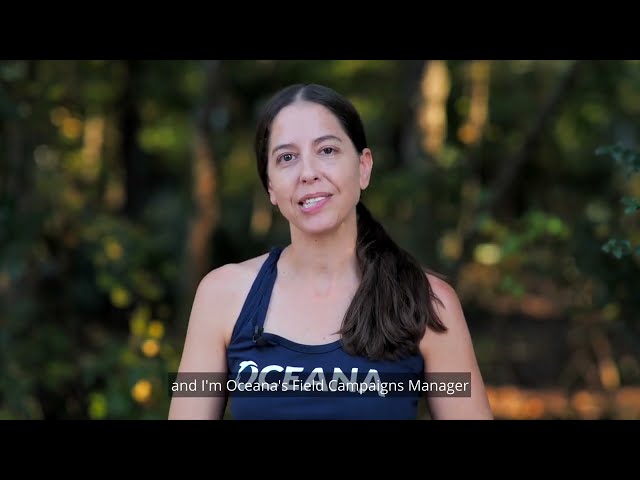
The #KeepOceansFishy event recently highlighted the Gullah/Geechee Seafood Festival, held last month on Hunting Island, SC. This initiative draws attention to the remarkable history and heritage of the Gullah/Geechee people.
Residing on the Sea Islands of the Southeast coast, the Gullah/Geechee have sustained treasured West African traditions and a unique way of life since European colonization. Their profound cultural impact on our coast is undeniable.
Learn how to help protect Gullah/Geechee seafood traditions and ensure our oceans remain vibrant and fishy.

In this Ocean Steward Spotlight, we feature Manjula Tiwari, President of the Ocean Ecology Network. Her nonprofit organization is dedicated to science-based conservation and management strategies for global projects.
Manjula's work focuses on sea turtles, addressing nesting beach ecology, the impact of fisheries, and developing holistic conservation strategies across Africa, the Middle East, Asia, and the South Pacific. Support her vital work at oceanecology.org.


Oceana actively combats destructive fishing practices and ocean pollution. These efforts create a significant ripple effect.
By addressing these threats, we protect and restore vital marine habitats. This work is essential for ensuring the health and abundance of our oceans.


Gregor, a boat builder in Homer, Alaska, expresses deep concern about oil drilling, stating, "where they drill, they spill." He fears potential devastation to local industries.
He warns that if President Biden fails to uphold his promise of #NoNewLeases, the region's economy and environment will suffer significantly.
Interview by Rafael Delauz. Music: Artlist. B-roll: Shutterstock. Photos: NOAA.

The climate crisis is real, urgent, and affects everyone. Ocean-based solutions are vital, offering nearly 40% of the emissions reductions needed by 2050 to limit global warming to a devastating 2 degrees Celsius. Immediate action is critical.
At #COP27, Oceana is calling on governments to tackle fossil fuels by stopping new offshore drilling and transitioning to clean, renewable energy like offshore wind. Learn more about these solutions: Ocean Solutions to Prevent Climate Catastrophe

The climate crisis is a present reality impacting us all. Ocean-based solutions offer a significant path forward, capable of delivering nearly 40% of the emissions reductions required by 2050 to prevent a devastating 2-degree Celsius warming. Immediate action is crucial.
Oceana urges governments at COP27 to address fossil fuels by halting new offshore drilling and transitioning to clean, renewable energy sources like offshore wind.
For more details, read Oceana's report: https://oceana.org/reports/beyond-expectations-ocean-solutions-to-prevent-climate-catastrophe/

Our latest #OceanStewardSpotlight featured Marilyn Hemingway and Sandra Bundy, two leaders from Stop Offshore Drilling in the Atlantic (SODA). Marilyn is CEO/President and Founder of the Gullah Geechee Chamber of Commerce, and Sandra is a board member of the Business Alliance for Protecting the Atlantic Coast.
Support their important work by visiting: Gullah Geechee Chamber of Commerce Gullah Geechee Foundation Business Alliance for Protecting the Atlantic Coast

Josh, whose livelihood depends on Cook Inlet's pristine waters, advocates for their continued protection. He urges President Biden to honor his commitment against new drilling in the region.
Learn more about this vital conservation effort at Oceana.org/ProtectAlaska.
Interview by Rafael Delauz. Additional photos and video courtesy of Marissa Wilson, Pond5, and Shutterstock.

Join us for an #OceanStewardSpotlight with Risa Bell, founder of Paddle for Peace. This nonprofit brings inner-city and BIPOC communities to coastal spaces for recreation, surfing, and ocean conservation education. A biracial surfer from Guam, Risa aims to diversify the sport, sharing her passion for the ocean with more people of color.
Catch the spotlight on September 15th at 12pm PST/3pm EST. Support Paddle for Peace and its mission here: paddleforpeace.org.

A 2021 Oceana report revealed Amazon generated 599 million pounds of plastic packaging waste in 2020. This colossal plastic problem prompted our visit to their Seattle HQ.
There, we campaigned for Amazon shareholders to pass Item 8, a resolution designed to finally address the company's significant plastic waste issue.

Alfredo Giron-Nava, an André Hoffmann Fellow with the Stanford Center for Ocean Solutions and the World Economic Forum, is a co-founder of dataMares.
Drawing on his expertise in science, communication, and data visualization, Alfredo helps dataMares advance sustainable fisheries management and reduce illegal, unregulated, and unreported (IUU) global catch.
Support this crucial work at dataMares.org.

Join us for a conversation with Patt Gunn, a Gullah Geechee historian, performer, and advocate from Underground TOURS of Savannah. She will discuss her work reconnecting her community with the water.
Support Patt's efforts by visiting her Facebook page: SLAVES IN THE CITY.
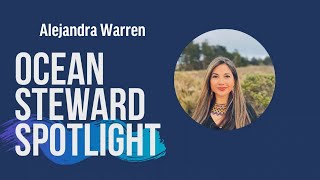
Alejandra Warren, a San Francisco-based sustainability consultant and intersectional environmentalist, co-founded Plastic Free Future in 2020. This non-profit organization is dedicated to reducing and eliminating plastic pollution.
Plastic Free Future achieves its mission by promoting reusable alternatives and focusing on education for systematically excluded communities. Support Alejandra's vital work at plastic-free-future.org.
Environmental Scientist and Advocate
What EarthSayers stands for
Discover Diverse Voices on EarthSayers
Unlike algorithm-driven platforms that push you into a content bubble, we ensure you hear a variety of perspectives from scientists, activists, Indigenous leaders, business innovators, and everyday citizens working toward sustainability.
EarthSayers CINEMA
Watch, learn and lead—sustainability starts with you.
How to Live on Earth | Feature Documentary | Presented by Benedict Cumberbatch
What if the solutions to building a better future already exist? How to Live on Earth is an ambitious documentary that explores how humanity can create a thriving future by collaborating with nature. Presented by Benedict Cumberbatch, the film reveals the potential of teaming up with nature to address our greatest challenges.
Heartwarming and energizing, it offers a hopeful vision for a future where both nature and humanity can thrive. How to Live on Earth is produced by Open Planet Studios in association with Villars Institute Foundation and Silvania. Join the conversation by downloading film assets and sharing your reaction at howtoliveonearth.net/social-toolkit. Explore educational resources from the Villars Institute at YouTube.


