




Special Collections:
Our Youth Speak Up

Shannon Lisa delivered a speech at the 2019 Brower Youth Awards.
The event took place on October 15 at the Herbst Theatre in San Francisco.

The 2019 Brower Youth Awards were held on October 15 at the Herbst Theatre in San Francisco. This annual event recognizes outstanding young environmental leaders.
A key moment of the ceremony was a powerful speech delivered by Lia Harel. Her address highlighted critical environmental issues and the vital role of youth in driving change.

Mackenzie Feldman delivered a speech at the 2019 Brower Youth Awards. This significant event, recognizing emerging environmental leaders, took place in San Francisco.
Her address was given on October 15 at the Herbst Theatre, a prominent venue for the awards ceremony.
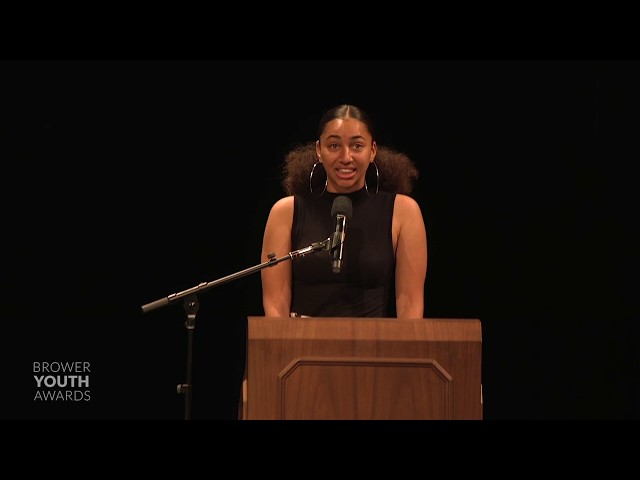
Isha Clarke delivered a compelling speech at the 2019 Brower Youth Awards.
The prestigious event was held on October 15 at the Herbst Theatre in San Francisco.
Her address captivated the audience, highlighting important themes relevant to youth activism.

Tammy Ramos delivered a speech at the 2019 Brower Youth Awards.
The event took place on October 15 at the Herbst Theatre in San Francisco.

Isra Hirsi delivered a significant speech at the 2019 Brower Youth Awards. The event took place on October 15 at the Herbst Theatre in San Francisco.
Hirsi, a recognized youth climate activist, addressed attendees during the awards ceremony, which celebrates young environmental leaders.

Isha Clarke, a 16-year-old Oakland activist, co-founded Youth vs. Apocalypse to protest a controversial coal terminal planned for an underserved community. Her early activism highlighted environmental racism and the critical need for environmental justice.
Now a leader, Isha and Youth vs. Apocalypse gained national attention confronting Senator Dianne Feinstein about the Green New Deal in a viral video. They continue advocating for radical climate action centered on frontline communities, organizing major events like the Bay Area Youth Climate Strike and actions at the California Democratic Convention. Isha champions a movement that amplifies the voices of youth and marginalized communities.
Learn more: Brower Youth Awards
Film by Storyline Media

Isra Hirsi, 16, from Minneapolis, co-founded and co-directs the US Youth Climate Strike. This organization combats the climate crisis through strikes and policy advocacy.
Witnessing environmental injustices like pipelines and the Flint water crisis spurred Isra to action. She launched the US Youth Climate Strike in March 2019. With numerous organizers and partners, the group has led multiple strikes and a petition for a climate debate. Isra prioritizes accessible, visible action, focusing on climate change's disproportionate impact on Black and Brown communities and amplifying frontline voices.
Inspired by her sister, who graduates in 2030—a critical climate year—Isra champions diverse youth voices in the fight for climate justice. Learn more at Brower Youth Awards.

Lia Harel, 18, co-founded and organizes Minnesota Can’t Wait, a youth-led movement pushing for bold climate action. She became an organizer three years ago, recognizing climate change's broad societal impacts.
Frustrated, she joined other youth activists in summer 2018 to demand Minnesota lead on climate policies, forming Minnesota Can’t Wait, reflecting their urgency. The movement united diverse groups—including Indigenous communities and business leaders—around three core demands: no new fossil fuel infrastructure, statewide greenhouse gas regulation, and supporting the Minnesota Green New Deal Bill. They organized rallies, testified, and helped draft legislation, aiming to shift conversations and elevate expectations for a just, sustainable economy.
Film by Storyline Media

Mackenzie Feldman, 23, from Honolulu, Hawaii, founded Herbicide-Free Campus to ban herbicides at schools nationwide. Her campaign began at UC Berkeley, inspired by Hawaii's industrial agriculture and its impact on land and people. After an herbicide spraying incident at UC Berkeley's volleyball courts, she successfully initiated a campus-wide ban.
A major achievement was the temporary ban of glyphosate across all University of California campuses. Mackenzie has since expanded her efforts nationally, mentoring students, providing resources, and training them in campaign strategy and alternative maintenance methods. She aims for a toxic-free world, protecting communities and ecosystems from harmful pesticides.
For more information, visit broweryouthawards.org. Film by Storyline Media.
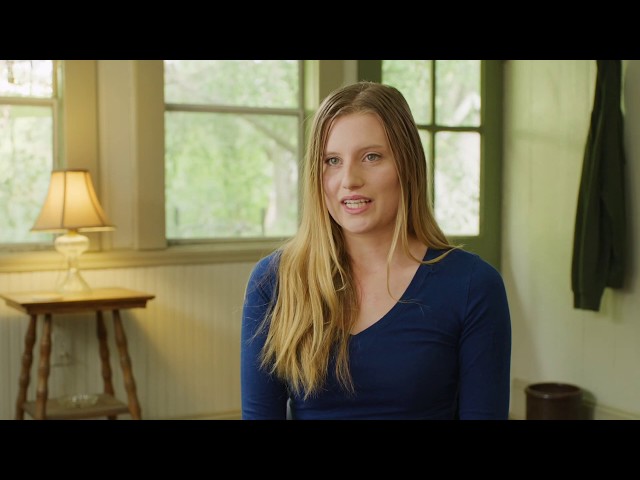
Shannon Lisa, Program Director for the Edison Wetlands Association, investigates chemical contaminant dumping. Motivated by growing up in a contaminated state, she protects human health and the environment through "environmental detective work."
In Franklin, Indiana, Shannon uncovered a decades-old toxic cold case. After children fell ill, she analyzed over 40,000 hidden EPA documents, revealing a mismanaged industrial site and homes potentially invaded by poison gases like TCE. She coordinated residential air testing, finding toxins 18x over state thresholds, prompting a reopened EPA investigation.
Shannon continues to advocate for permanent cleanup in Franklin and national change against industrial pollution. broweryouthawards.org. Film by Storyline Media.
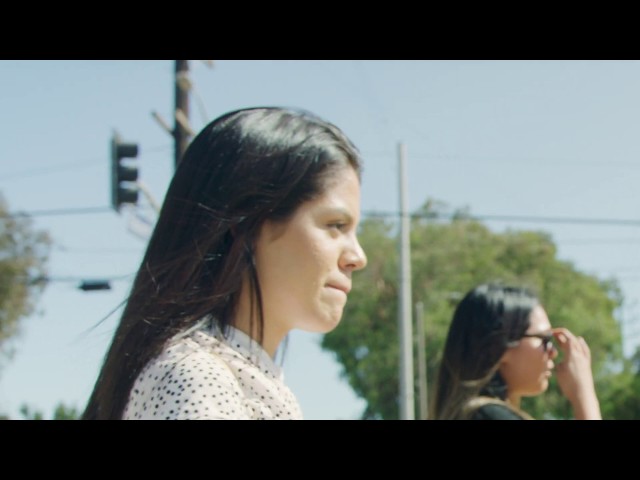
Tammy Ramos, a youth organizer with Communities for a Better Environment (CBE), led a lawsuit against the city of Los Angeles. Living in Wilmington, home to extensive oil operations, Tammy and other youth plaintiffs challenged the city's approval of oil drilling without proper environmental review, a violation of state law.
Despite intervention from the California Independent Petroleum Association (CIPA), whose claims were dismissed by appellate and Supreme Courts, the youth prevailed. This victory prompted Los Angeles to implement stronger environmental reviews for drilling projects. Tammy continues to fight environmental racism, inspiring fellow youth leaders to drive change in their communities.
Learn more: Brower Youth Awards
Film by Storyline Media

Climate activist Luisa Neubauer, co-founder of "Fridays For Future," envisions a future where humanity has overcome the climate crisis. She emphasizes that addressing this challenge is a collective responsibility, not limited to one generation, and offers four initial steps for anyone to become an activist.
TED Talks feature leading thinkers sharing insights on technology, science, global issues, and more, in 18 minutes or less. These talks can be freely shared. For commercial use, submit a Media Request. Follow TED on Twitter, Facebook, and subscribe to their channel.

News media must end complacency regarding climate change. Over 150 outlets, led by Columbia Journalism Review and The Nation, committed to a week of intensive reporting from September 16-23. Their focus is the devastating impact of human actions on our planet.
Teenage climate activist Alexandria Villaseñor shares her perspective as part of this effort. Explore CJR's complete series here: https://www.cjr.org/covering_climate_now/

This video is part of "Seeding the Field: 30 Years of Transformative Solutions," celebrating three decades of Bioneers conference highlights. Founders Kenny Ausubel and Nina Simons curated the keynotes. We extend our gratitude to the Bioneers organization, its staff, partners, and community. Learn more about Youth Leadership here.
Video Credits: Directed by Maximilian DeArmon, Edited by Brandon Pinard, Sound Mix by Stephanie Welch. Produced by Maximilian DeArmon and Theo Badashi for Cosmogenesis Media Group. Photo Credits: "Greta Thunberg" by Anders Hellberg of Effekt magazine.

In this powerful talk, 16-year-old climate activist Greta Thunberg details why she began her 2018 school strike, protesting outside the Swedish parliament to raise global warming awareness. She asserts the climate crisis is "solved" with existing facts and solutions, urging us to "wake up and change."
TED Talks showcase leading thinkers and doers presenting ideas in 18 minutes or less, covering topics from technology and science to global issues and the arts. Explore more at TED.com. Connect with TED on Twitter, Facebook, and subscribe to their YouTube channel.

The Brower Youth Awards celebrate outstanding young environmental leaders. These awards recognize individuals making significant contributions to environmental protection and advocacy.
Highlights from the 2018 ceremony were held at the Herbst Theatre in San Francisco, CA, on October 16, 2018.

Tina Oh, a 21-year-old from rural New Brunswick, Canada, was recognized for her work at the 2018 Brower Youth Awards. She is a key divestment organizer in a nationally-recognized, student-led fossil fuel divestment campaign at Mount Allison University.
Additionally, Tina serves on the steering committee for RISE 2019, a national climate convergence in Ottawa. This event aims to gather, skill-share, and train young people in direct action, movement building, and anti-oppressive organizing.

This is Mishka Banuri's 2018 Brower Youth Awards Speech.
Mishka, a 17-year-old from Utah, was instrumental in crafting and passing the Utah Climate Resolution. This landmark achievement marked the first such resolution in a traditionally conservative state.
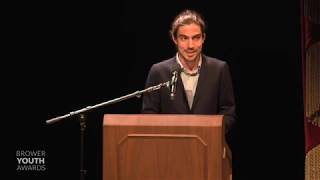
Stephen O'Hanlon, a 22-year-old from Pennsylvania, delivered his Brower Youth Awards Speech in 2018.
He is the co-founder and National Field Director of Sunrise Movement. This organization mobilizes a grassroots army of young people nationwide to combat the corrupting influence of fossil fuel executives and lobbyists.
Environmental Scientist and Advocate
What EarthSayers stands for
Discover Diverse Voices on EarthSayers
Unlike algorithm-driven platforms that push you into a content bubble, we ensure you hear a variety of perspectives from scientists, activists, Indigenous leaders, business innovators, and everyday citizens working toward sustainability.
EarthSayers CINEMA
Watch, learn and lead—sustainability starts with you.
How to Live on Earth | Feature Documentary | Presented by Benedict Cumberbatch
What if the solutions to building a better future already exist? How to Live on Earth is an ambitious documentary that explores how humanity can create a thriving future by collaborating with nature. Presented by Benedict Cumberbatch, the film reveals the potential of teaming up with nature to address our greatest challenges.
Heartwarming and energizing, it offers a hopeful vision for a future where both nature and humanity can thrive. How to Live on Earth is produced by Open Planet Studios in association with Villars Institute Foundation and Silvania. Join the conversation by downloading film assets and sharing your reaction at howtoliveonearth.net/social-toolkit. Explore educational resources from the Villars Institute at YouTube.


