



Special Collections:
Wisdom Keepers


For thousands of years, Makah Tribal fishermen like Robert Moss have relied on the waters of Washington's Neah Bay for traditional foods. Today, however, the tribe faces a significant threat from marine debris, including a massive 3,000-ton abandoned highway bridge, which jeopardizes their ancestral waters and the health of their fishing community.
In a story of resilience, Tribal leaders and organizations are collaborating to remove and recycle this decaying infrastructure and other abandoned vessels. Their efforts aim to restore the waters and ensure the continuation of traditional food sources for the Makah community.
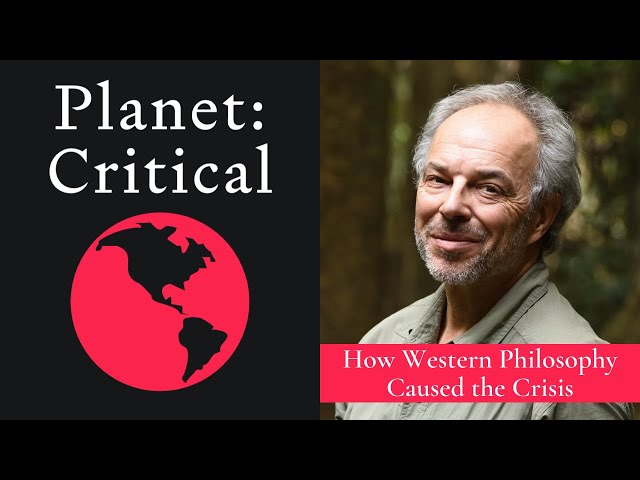
In this episode, ecologist and author Carl Safina discusses his new book, linking Plato's ideas to the environmental crisis. He argues that Plato's concept of profanity influenced Judeo-Christian monotheism, fostering a Western culture that neglects the natural world.
Safina emphasizes the need to learn from Indigenous cultures that honor their place within the ecosystem. His passion for nature and insightful perspectives make for an engaging interview.
Support the channel on Patreon and explore Carl's work at Carl Safina's website. Watch the bonus episode for more insights.

Carl Safina explores the inner lives of animals, revealing their capacity for perception, thought, and emotion. He challenges us to reconsider how we refer to them, emphasizing their individuality and the urgent need to protect them as we face a crisis of extinction. He poses a critical question: Do we have the will to ensure the survival of life on Earth?
Safina, a recipient of multiple prestigious fellowships and awards, holds a PhD in ecology and serves as the inaugural endowed professor for nature and humanity at Stony Brook University. He has contributed to various publications, including The New York Times and National Geographic. This talk was part of a TEDx event, independently organized by a local community. Learn more at ted.com/tedx.

In this episode, Dr. Carl Safina and I delve into animal minds, consciousness, and humanity's connection to nature. We discuss how various species, from insects to dolphins, may experience the world and what differentiates humans from them. Dr. Safina shares insights on animal culture, emotion, and the challenges of understanding consciousness in living beings.
We also examine the disconnect many feel from nature, influenced by Western consumer culture, and the need for both personal responsibility and public policy to combat environmental destruction. Topics include food ethics, animal farming, and how we can foster a more respectful relationship with animals and the environment. For more information, visit Dr. Safina's website at carlsafina.org.

Paul Hawken, a renowned environmentalist and author, discusses his latest book, Carbon: The Book of Life, which critiques conventional climate solutions and advocates for a deeper connection with nature's intelligence. Discover more about this thought-provoking conversation here.
This episode is sponsored by Eight Sleep, Pique, and Momentous, offering exclusive discounts. For more details on these offers, visit this link. To listen to the podcast, subscribe on Apple Podcasts, Spotify, or Google Podcasts.

In his new book Carbon: The Book of Life, Paul Hawken explores the essential role of carbon in our lives and its connection to climate change. As a seasoned environmentalist, Hawken offers a hopeful perspective on carbon, encouraging readers to embrace their relationship with the planet and seek climate solutions.
Join us as we discuss Hawken's insights on environmental sustainability and his other works, including Regeneration and Drawdown. Support for Forum is provided by the Osher Production Fund. Subscribe to watch new episodes weekly on YouTube and follow us on Instagram, Facebook, and Discord.

In this enlightening discussion, Rainn Wilson and environmentalist Paul Hawken explore the idea that climate change is not just an environmental or economic issue, but a spiritual one. They delve into the philosophy of regeneration, emphasizing the importance of reconnecting with nature and community to foster sustainability and meaning in our lives.
Paul shares insights on why fear-based activism is ineffective and how indigenous wisdom can guide us toward a more sustainable future. They also discuss practical steps for individuals, including what a 23-year-old in Tulsa can do to make a difference. For more, check out Paul's new book Carbon: The Book of Life and visit Soul Boom's store.

Join the Iliff School of Theology for the Winter 2025 Everding Lectureship featuring Rev. Dr. Randy Woodley, a distinguished professor and Cherokee descendant. With over three decades of experience, Dr. Woodley is passionate about Indigenous spirituality, justice, and ecological sustainability. He has authored numerous books, including Becoming Rooted and Indigenous Theology and the Western Worldview, and has been recognized by various media outlets.
Together with his wife, Edith, he co-founded the Eloheh Indigenous Center for Earth Justice and Eloheh Farm & Seeds, focusing on equity and justice for Indigenous peoples. The Woodleys engage in activism, storytelling, and creative pursuits to inspire change and understanding. Learn more about their work at eloheh.org and Sho-Kee.com.

Ecological futurist Tariq Al-Olaimy highlights "spiritual infrastructure" as a key, often-overlooked resilient system. He's observed how faith networks—like church basements and mosque yards—sustain disaster-stricken communities long before formal aid arrives.
Drawing on a decade with global faith coalitions, Al-Olaimy explores why spiritual traditions are uniquely equipped to navigate moments of collapse. He suggests aligning our inner values, economies, and ecosystems is essential for restoring life on a changing planet. (Recorded at TED Countdown Summit 2025 on June 18, 2025)

Author Carl Safina presented his book, "Beyond Words: What Animals Think and Feel," at Talks at Google on September 18, 2015.
Hailed by Discover magazine, Safina's book draws from decades of observing elephants, wolves, and killer whales. He explores the astonishing similarities between animal and human minds, highlighting capacities for self-awareness, empathy, and grief, while also examining what makes us human.
For more information, visit carlsafina.org.

“Dodging Bullets—Stories from Survivors of Historical Trauma” is a new film exploring the profound impact of generational oppression and trauma on Native Americans. It examines the loss and remarkable resilience of Indigenous communities.
The film reveals how historical trauma, stemming from first contact with Europeans, contributes to disproportionately high health and social issues among Indigenous populations. It features cross-generational perspectives from Native people, researchers, and politicians, highlighting the unique challenges resilient communities continue to face.
Watch “Dodging Bullets” on AppleTV and Prime Video.

Barbara McClintock (1902-1992), an American geneticist, received the 1983 Nobel Prize for discovering genetic transposition. Her extensive papers (1927-1991), comprising notes, correspondence, and photographs, are preserved at the American Philosophical Society.
The National Library of Medicine, in collaboration with the APS, offers a digitized selection of McClintock's papers online through its Profiles in Science project. This site also includes related correspondence from other collections and provides an introduction to McClintock's scientific career. For access to the full collection, researchers should contact the American Philosophical Society.

In her 2021 TEDxSeattle talk, K. Killian Noe discusses the power of authentic community, defining it as being deeply known and deeply loved. Her life's work focuses on equipping individuals to emerge from trauma and its symptoms, including homelessness, addiction, and depression.
Killian emphasizes that community provides the tools for healing, teaching us to embrace love instead of fear. She is a cofounder of the Recovery Network, an author, and a mental healthcare advocate.

Join New York Times bestselling author Paul Hawken live on March 19, 2025, for an insightful journey into carbon, the planet's most versatile element. Often maligned as a climate change driver, carbon is, in fact, essential for all life, animating the entire living world. Lesley McClurg, Science Reporter for KQED, will also speak.
In his new book, *Carbon: The Book of Life*, Hawken explores this ubiquitous element's omnipresence, charting its role across planetary history, plants, animals, and food systems. He offers a new narrative, inviting us to embrace carbon's life-giving power and its possibilities for the future, seeing nature, carbon, and ourselves as inseparably intertwined. Follow Paul Hawken on [X](https://twitter.com/PaulHawken).

Our world faces a crisis, with life on the planet under attack. Beyond false solutions, critical questions emerge regarding food systems, economic models, and halting fossil fuel expansion. Climate justice groups are actively challenging dominant patriarchal cultures that exploit nature, other cultures, and women, advocating for biodiversity, ecosystem health, and the Rights of Nature.
Osprey Orielle Lake, founder of the Women's Earth and Climate Action Network, discusses her new book, The Story is in Our Bones: How Worldviews and Climate Justice Can Remake a World in Crisis, with host Dale Walkonen. Her work explores how climate justice can address these global challenges.

TED Fellow and third-generation captain Lehua Kamalu discusses the transformative power of ocean voyages. Sharing ancient Hawaiian voyaging knowledge, she highlights how these journeys compel us to unplug and travel mindfully.
Kamalu's insights, recorded at TED Fellows Films 2024, explore the deeper meaning of mindful travel, applicable whether at sea or on land.

WECAN Executive Director Osprey Orielle Lake addressed world governments at the UN ahead of COP26, declaring a refusal to sacrifice future generations for corporate greed and political power. She urged leaders to fight for social, racial, economic justice, and Indigenous and human rights, emphasizing that communities need climate justice now.
Lake demanded an end to "sacrifice people" and "sacrifice zones," challenging governments to confront the fossil fuel industry and deliver the promised $100 billion for a just transition. Highlighting that current commitments fall short of the 1.5°C target, she presented a "Call to Action" from the Global Women’s Assembly for Climate Justice, outlining existing frameworks.
Read the Call to Action Statement here and the Framework Recommendations here.

Chief Arvol Looking Horse delivered a lecture on October 17, 2016, addressing the water crisis, environmental justice, and unity. His talk highlighted the numerous, long-unrecognized issues affecting the Native American community.
As the 19th Keeper of the Sacred White Buffalo Calf Pipe and Bundle and spiritual leader of the Lakota Nation, Chief Looking Horse advocates for religious freedom and cultural survival. He has lectured at prestigious universities, authored "White Buffalo Teachings," and founded the Big Foot Riders. His dedication to his people's heritage has earned him multiple awards, including the Juliet Hollister Award.

The Linus Pauling Memorial Lecture Series was held in Portland, Oregon, on October 24, 2019. This event has accumulated 6,001 views.
The lecture series covers various subjects, including "Gaia," an ancient term for the Earth.

James Lovelock, renowned for his Gaia theory, views Earth as a complex, interacting system akin to a single organism. His latest book warns of the planet's current distress.
In a recent interview, Lovelock delivered a final warning for Earth's future, yet also shared his excitement about an upcoming space trip.
Environmental Scientist and Advocate

