




Special Collections:
The Future: Our Kids
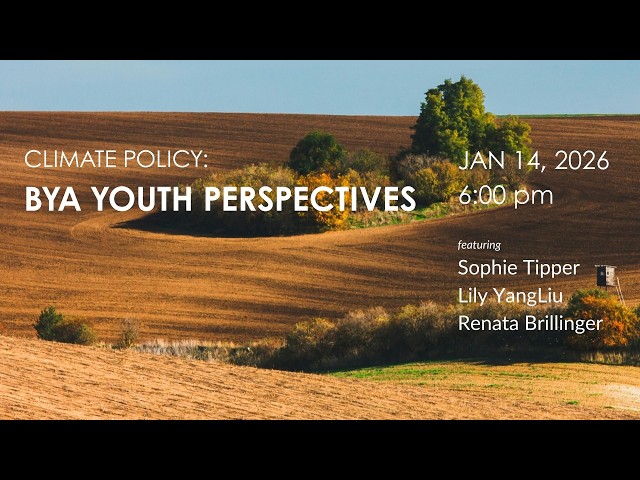
On January 14, 2026, the New Leaders Initiative hosted a virtual panel featuring 2025 BYA alums Lily YangLiu and Sophie Tipper. YangLiu discussed using climate education to promote youth participation in political and environmental decision-making. Tipper focused on policymaking and passing environmental justice legislation in Colorado.
The conversation was facilitated by Renata Brillinger, Director of the California Climate and Agriculture Network (CALCAN), a project of Earth Island.

On January 29, 2026, the New Leaders Initiative hosted a virtual panel featuring 2025 BYA alums Inaam Chattha and Kyle Trefny. Chattha discussed establishing a safe space for youth experiencing climate anxiety.
Trefny shared his journey from fearing fire to adapting and coexisting with it as a firefighter. The conversation was facilitated by BYA alum Jess Rimington, founder of One World Youth.

Izabela Iglewska, Minister Advisor at Poland's Ministry of Digital Affairs and the ITU-T Regional Representative for Europe for the Network of Women (NoW), discusses the vital role of the Network of Women in telecommunication standardization.
For more details, visit: itu.int/go/NOWT

Over the past 20 years, youth incarceration has plummeted by 75% as states closed prisons and reformed policies. In her new book, *In Our Future We Are Free*, journalist Nell Bernstein dissects this transformation. She chronicles the forces that moved us from a "moral panic" to a time when youth prisons are rapidly fading.
Bernstein's book highlights the pivotal role of imprisoned youth, mothers, activists, and even prison officials in challenging the "racist brutality of youth prisons" and closing institutions. Join Nell Bernstein and moderator Chesa Boudin to learn how this coalition reformed a "racist and destructive institution" and what other social movements can learn from their struggle.

Discover the latest highlights from the Network of Women in ITU-D.
These concise summaries showcase their key activities and achievements from 2023 through 2025.

Rebecca Solnit, a renowned writer, historian, and influential feminist thinker, authored "Men Explain Things to Me." This essay famously articulated an experience shared by millions of women worldwide.
In a conversation with writer Marina Espasa, Solnit reflects on contemporary feminism, the narratives perpetuating inequality, and the urgent need to collectively rethink our relationships with nature, culture, and one another.

On November 18, at COP30 in Belém, Brazil, WECAN hosted "Women on the Frontlines of Climate Action." Global women leaders, including representatives from Africa, Colombia, Brazil, and Turtle Island, shared powerful insights. They addressed ending fossil fuels, ensuring rights-based Just Transition, advocating for Indigenous Peoples' rightful place, and building a just world.
At the conference, WECAN also launched its report, "Justice-Based Climate Finance for COP30 and Beyond." This report provides in-depth analysis and strategies for governments to advance effective, rights-based climate finance. Read the full WECAN report: https://wecaninternational.org/climate-finance.
For more information on WECAN’s COP30 advocacy goals, delegation, events, and speakers, visit their website: https://tinyurl.com/COP30blog.

At COP30 in Belém, Brazil, on November 13, WECAN hosted a press conference where Amazonian leaders issued urgent calls to protect Indigenous rights, women land defenders, forests, water, communities, and the global climate.
WECAN also launched its “Escazú Agreement Toolkit for Women Land Defenders and Frontline Communities.” This resource offers eleven country-specific guides to help women land defenders navigate domestic laws for Escazú Agreement protections, ensuring their rights and environmental safeguards. Access the toolkit: WECAN Escazú Toolkit.
Prominent Indigenous leaders spoke at the event. For more details on WECAN’s COP30 advocacy and speakers, visit: WECAN COP30 Blog.

On November 13, WECAN hosted the press conference, “Women Leading Fossil Fuel Phaseout and a Just Transition,” at COP30 in Belém, Brazil. Speakers shared critical strategies to advance a fossil fuel phaseout, uplift Indigenous and human rights, stop extraction, and implement a Just Transition that supports communities and ecosystems.
The event featured global experts including Dr. Ameria Sawas, Colette Pichon Battle, Esq., gina cortés valderrama, and Majo Andrade Cerda (Kichwa). Osprey Orielle Lake, WECAN’s Executive Director, provided comments and moderated the discussion.
Learn more about WECAN’s advocacy goals, delegation, events, and speakers on their website: https://tinyurl.com/COP30blog

At COP30 in Belém, Brazil, WECAN hosted "Rights of Nature: A Systemic Solution to the Climate Crisis." This press conference highlighted how Rights of Nature offers a new legal and economic framework for living in balance with Earth, providing a systemic solution for defending biodiversity, communities, and our climate.
WECAN also released its report, "Rights of Nature as a Central Pillar of a Just Transition," underscoring its critical role in global climate responses. Read the full report here. Speakers included Casey Camp-Horinek, Nnimmo Bassey, and Osprey Orielle Lake. Learn more about WECAN's COP30 advocacy on their website.

A comprehensive report from the Bullard Center for Environmental and Climate Justice at Texas Southern University, titled "Green Light to Pollute in Texas," analyzes 89 new or expanding petrochemical facilities across five regions of the state.
The study reveals stark findings: 9 out of 10 facilities are planned in counties with higher concentrations of people of color and families in poverty. Nearly half are in neighborhoods ranked among the worst 10% nationally for toxic air releases. Furthermore, 93% sit near other high-risk chemical plants, compounding threats of explosions, leaks, and chronic disease. Residents in an accompanying documentary detail how this industrial expansion has altered their communities.

"Green Light to Pollute in Texas," a report by the Bullard Center for Environmental and Climate Justice at Texas Southern University, reveals that proposed petrochemical facilities disproportionately target vulnerable communities. The study analyzed 89 new or expanding plants across five regions.
Findings are stark: most facilities are planned in counties with higher concentrations of people of color and poverty, often among the worst 10% nationally for toxic air releases. These sites also sit near existing high-risk chemical plants, compounding threats of explosions, leaks, and chronic disease.
A documentary further details how residents' communities have been transformed by this industrial expansion.

The Bullard Center for Environmental and Climate Justice at Texas Southern University released "Green Light to Pollute in Texas," a report analyzing 89 new or expanding petrochemical facilities across five Texas regions.
The study reveals stark environmental justice concerns. Nine out of ten facilities are planned in counties with higher concentrations of people of color and families in poverty. Nearly half are in neighborhoods ranked among the worst 10% nationally for toxic air releases. Furthermore, 93% are near existing high-risk chemical plants, escalating threats of explosions, leaks, and chronic disease.
Residents detail the profound community impacts of this industrial expansion in an accompanying documentary.
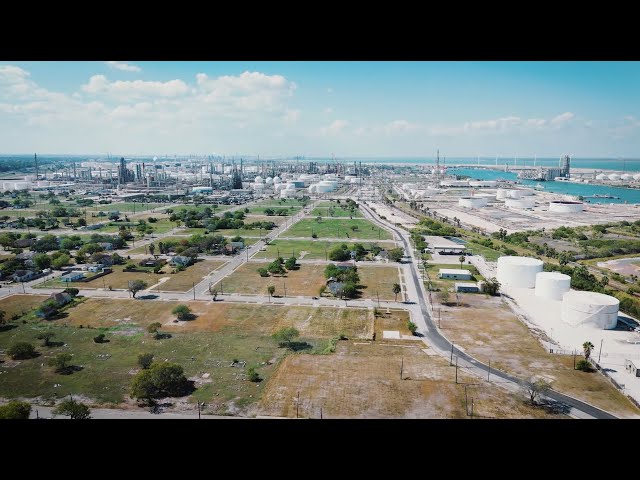
"Green Light to Pollute in Texas," a comprehensive report from the Bullard Center for Environmental and Climate Justice at Texas Southern University, analyzes 89 new or expanding petrochemical facilities across five Texas regions.
The study reveals stark findings: 9 out of 10 facilities are planned in counties with higher concentrations of people of color and families living in poverty. Nearly half are in neighborhoods ranked among the worst 10% nationally for toxic air releases. Furthermore, 93% are near other high-risk chemical plants, significantly compounding the threat of explosions, leaks, and chronic disease.
A related documentary features residents detailing how this industrial expansion has profoundly altered the fabric of their communities.

The International Telecommunication Union (ITU) addresses a critical digital gender gap. By 2025, an estimated 250 million fewer women than men will be connected to the internet. Maud Abaa underscores the vital importance of closing this disparity.
Discover more about ITU's efforts and initiatives by visiting their website: https://www.itu.int/160/.

On November 20, 2025, WECAN hosted the virtual event, "Global Voices and Women-Led Calls to Action in Response to COP30."
This conversation brought together women on the ground at COP30. They reported on negotiations, sharing highlights, report releases, and diverse global demands and calls to action.
From Belém and beyond, people's movements are actively responding to the escalating climate crisis, addressing the urgent needs of both people and the planet.

On Indigenous People's Day at COP30, WECAN participated in an action within the blue zone. There, we released our report, "Indigenous Rights are Vital to a Healthy and Just World: Guidance and Recommendations for the UNFCCC and Governments."
This report underscores a crucial message: Indigenous rights are a climate solution.

According to the IPCC, fossil fuels are responsible for nearly 75% of global CO2 emissions. Daniela Durán González, Head of International Affairs for Colombia's Minister of Environmental and Sustainable Development, emphasized that effective mitigation necessitates discussing a just and orderly transition away from fossil fuels.
At the COP30 closing plenary, several Parties, including Panama, Paraguay, Uruguay, and Colombia, formally objected to outcome documents on the Global Goal on Adaptation and the Mitigation Work Program. This alarm was raised due to the continued removal of language on transitioning away from fossil fuels, despite agreements made in the COP28 UAE Consensus. Recent texts still lack these crucial references.

The Amazon Rainforest, particularly in Ecuador, faces a critical tipping point from rampant deforestation and extractive industries. Ecuador's deforestation surged 80% from 2021, destroying 18,902 hectares. This crisis violates Indigenous rights, sacrifices global ecosystems, and puts Indigenous women land defenders at heightened risk.
The WECAN Indigenous Women of the Ecuadorian Amazon Reforestation and Forest Protection project, led by Kichwa Pueblo leader Patricia Gualinga, restores and defends 135,000 hectares of Sarayaku territory. This project safeguards endemic tree species through reforestation, forest monitoring, and advocacy, explicitly avoiding market-based mechanisms like carbon offsets. Learn more: wecaninternational.org/ecuador-en

At COP30 in Belém, Brazil, on November 17, 2025, WECAN hosted its formal UN Side Event, "Women for Climate Justice Leading Solutions." Women leaders globally presented climate justice strategies and solutions for a fossil fuel phaseout and a Just Transition.
Discussions covered vital areas including forest protection, feminist climate finance, Indigenous rights, and campaigns for government accountability. Diverse speakers shared critical updates and insights on the COP30 negotiations.
For more details on WECAN’s COP30 advocacy, events, and speakers, visit our website: https://www.wecaninternational.org/cop30
Environmental Scientist and Advocate
What EarthSayers stands for
Discover Diverse Voices on EarthSayers
Unlike algorithm-driven platforms that push you into a content bubble, we ensure you hear a variety of perspectives from scientists, activists, Indigenous leaders, business innovators, and everyday citizens working toward sustainability.
EarthSayers CINEMA
Watch, learn and lead—sustainability starts with you.
How to Live on Earth | Feature Documentary | Presented by Benedict Cumberbatch
What if the solutions to building a better future already exist? How to Live on Earth is an ambitious documentary that explores how humanity can create a thriving future by collaborating with nature. Presented by Benedict Cumberbatch, the film reveals the potential of teaming up with nature to address our greatest challenges.
Heartwarming and energizing, it offers a hopeful vision for a future where both nature and humanity can thrive. How to Live on Earth is produced by Open Planet Studios in association with Villars Institute Foundation and Silvania. Join the conversation by downloading film assets and sharing your reaction at howtoliveonearth.net/social-toolkit. Explore educational resources from the Villars Institute at YouTube.


