




Special Collections:
The Future: Our Kids

UC Merced student Martin Figueroa spearheaded a campus movement to reduce water use. In 2011, he organized the "UC Merced Water Battle," a month-long competition involving over 600 students across residence halls. Utilizing real-time monitoring, participants collectively cut water use by 14 percent, saving 89,000 gallons.
Figueroa is now encouraging other UC campuses to implement similar "Water Battles" to expand conservation efforts.

Growing up in Detroit, Brittany Stallworth, a 2012 Brower Youth Award Winner, faced environmental injustice, including limited healthy food access and exposure to factory emissions. This experience fueled her to establish "Green is the New Black" at Howard University, a campaign dedicated to food and environmental justice.
Through her initiative, Stallworth organized expert-led workshops for students and a symposium that connected over 35 green organizations with college students for internships and jobs. Her passion has inspired others to advance food accessibility and environmental justice in underserved communities.

The 88,000-acre Scotchman Peaks Roadless Area, straddling the Idaho-Montana border, is one of the region's largest remaining wild areas. Inspired by its natural beauty, Jacob Glass produced "En Plein Air," a film documenting the Friends of Scotchman Peaks Wilderness. This grassroots group, formed in 2005, seeks federal protection for the region, with the film highlighting two painters who use their art to advocate for the mountains.
The documentary received nationwide media attention, dramatically increasing the Friends' membership. This surge of public support for wilderness designation led to endorsements from many area chambers of commerce and Montana Governor Brian Schweitzer.

Maya Salsedo, a 2012 Brower Youth Award winner, champions food justice, driven by her family's history of food insecurity. Descendants of Puerto Rican emigrants who worked in Hawaiian sugar cane fields, her family consistently faced challenges accessing healthy food.
This experience spurred Salsedo to action. In 2011, as a youth organizer with Rooted in Community, she proposed the Youth Food Bill of Rights. This declaration envisions a food system that benefits consumers, producers, and the planet, granting local communities more control over their food. Her work has since inspired peers nationwide, establishing a foundation for dialogues on what food justice means to today's youth.

Inspired by the maxim "when one teaches, many learn," 2012 Brower Youth Award Winner Ryland King founded Environmental Education for the Next Generation (EENG). This program recruits college students to teach elementary children about the environment. To promote sustainable action from society's youngest members, King designed an eight-week curriculum, aligned with California State Board of Education standards, covering topics like bee importance, composting, and water conservation.
In less than three years, EENG has engaged 400 college volunteers, teaching over 3,000 elementary students in 200 California classrooms. King aims to significantly expand this reach, with a goal of teaching 14,000 elementary students annually by 2015.

Jill Sheffield, President of Women Deliver, spoke at the BSR Conference 2012 about the link between women's reproductive rights and sustainability, advocating for a faster pace of change.
Women Deliver is a global advocacy organization that unites voices worldwide to improve the health and well-being of girls and women.
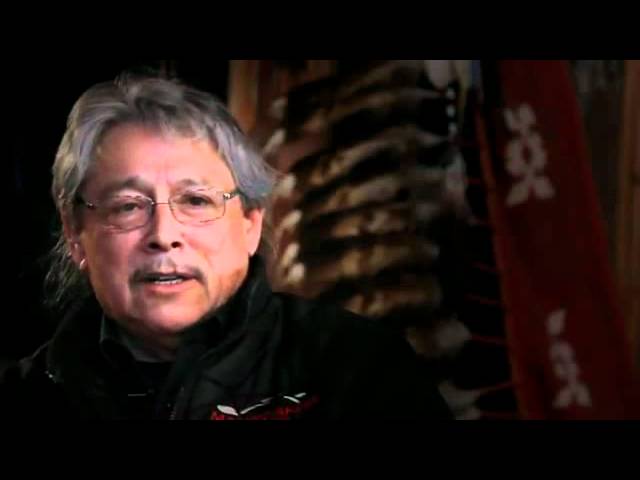
This short film by JustTV highlights the Fire Inside Program, an alternative Aboriginal Justice initiative in Winnipeg. It documents young men and women's journey to the Turtle Lodge last March.
At the Turtle Lodge, participants received spiritual names, underwent a two-day fast, and engaged in traditional teachings and ceremonies. Watch the video to hear the youth's own stories.

Join the One Billion Rising movement on February 14, 2013. Share your reasons for rising at onebillionrising.org.
What does one billion look like? On February 14, it will look like revolution.

Demonstrate our collective strength, numbers, and solidarity across borders. We want the world to witness our unified stand.
Tell us why you are rising on February 14th, 2013. Share your story and connect with the movement at onebillionrising.org.

This communication expresses explicit support for the strike scheduled to occur on February 14th.
The action aims to address specific concerns, though further details are not provided here.
Those involved are encouraged to continue their efforts towards achieving their objectives.

On February 14, 2013, V-Day launched "ONE BILLION RISING," a global call to action. It invited one billion women and their allies to walk out, dance, and rise up.
This initiative demanded an end to violence, aiming to activate women and men worldwide and create a significant global impact.

On February 14, 2013, V-Day marked its 15th Anniversary by launching ONE BILLION RISING. This global call-to-action invited one billion women and their allies to WALK OUT, DANCE, and RISE UP to demand an end to violence.
The initiative aimed to activate women and men across every country, showcasing collective strength and solidarity across borders. V-Day envisioned this massive demonstration as a REVOLUTION.

Jasmina, a Serbian author, feminist, political activist (Women in Black, Code Pink), translator, and filmmaker, delivered a TEDx presentation exploring the "design of war." She began by discussing the Srebrenica genocide, where 8,000 Muslims were killed.
She connected this "design of crime" to the abuse and pornography women face in warfare. Her core message emphasized that design must be founded on responsibility, ethics, and morality.

Leaders must be responsible for the Seventh Generation and all life. Creating a better future requires combining the visions of youth, the wisdom of elders, and practical solutions to global challenges. This synergy unlocks the compassion, imagination, and creativity needed in our troubled times.
The Feather Project unites these elements – vision, wisdom, and action – to foster a just, peaceful, and sustainable future. Intergenerational dialogue and collaboration are crucial for this vital task. Join the Feather Project!

Santa Cruz's Kyle Thiermann, a 2011 Brower Youth Award Winner from the Earth Island Institute, is celebrated for his impactful work.
His "Surfing for Change" videos have generated millions of dollars in environmentally responsible investments, demonstrating the power of surf activism.

Victor Davila founded EcoRyders, a series of summer workshops that make environmental and health education engaging for youth through skateboarding. Participants build their own skateboards while learning about pressing local environmental issues. EcoRyders addresses high youth obesity rates and public transportation challenges in the community.
Davila received the Brower Youth Award. This award recognizes North Americans aged 13 to 22 who demonstrate outstanding leadership on projects with positive environmental and social impact.

In 2007, Rhiannon Tomtishen and Madison Vorva founded Project ORANG (Orangutans Really Appreciate and Need Girls Scouts). They discovered that palm oil, a key ingredient in Girl Scout cookies, contributes significantly to orangutan habitat destruction.
This revelation prompted them to campaign for the Girl Scouts to replace palm oil with an eco-friendly alternative. Partnering with Rainforest Action Network, they co-authored a petition that generated over 70,000 emails to the Girl Scouts headquarters. Both are admirers of Jane Goodall.

Alex Epstein co-founded the New York 2 New Orleans Coalition, a network of NYC high school students addressing parallel community struggles. After moving to Philadelphia for college, he co-founded The Philadelphia Urban Creators (PUC), an organization of young community organizers dedicated to fostering sustainable and equitable development from the ground up.
Epstein is a recipient of the prestigious Brower Youth Award. These awards recognize North American individuals aged 13 to 22 who demonstrate outstanding leadership on projects with significant positive environmental and social impact. Learn more at Brower Youth Awards.

Tania Pulido runs the Berryland community garden in Richmond, CA. More than just a food source in a food desert, it offers local youth summer apprenticeships to learn about climate change and environmental racism. You can watch a video about her work.
Pulido actively campaigns for her community's health, including against the local Chevron oil refinery. Her dedication earned her the Brower Youth Award.
The Brower Youth Awards recognize North American youth (ages 13-22) who demonstrate outstanding leadership in projects with positive environmental and social impact.
Severn Cullis-Suzuki, daughter of renowned Canadian scientist David Suzuki, developed a profound connection to nature early in life. In her lecture, she discusses her evolution as an environmentalist, emphasizing humanity's dangerous disconnection from the natural world that unequivocally sustains us.
Cullis-Suzuki argues that our collective arrogance and ignorance have pushed us to the brink of planetary disaster. She challenges individuals to confront their consumptive impact and explore ways to reduce their personal ecological footprint, urging a critical re-evaluation of our relationship with the planet.
Environmental Scientist and Advocate
What EarthSayers stands for
Discover Diverse Voices on EarthSayers
Unlike algorithm-driven platforms that push you into a content bubble, we ensure you hear a variety of perspectives from scientists, activists, Indigenous leaders, business innovators, and everyday citizens working toward sustainability.
EarthSayers CINEMA
Watch, learn and lead—sustainability starts with you.
How to Live on Earth | Feature Documentary | Presented by Benedict Cumberbatch
What if the solutions to building a better future already exist? How to Live on Earth is an ambitious documentary that explores how humanity can create a thriving future by collaborating with nature. Presented by Benedict Cumberbatch, the film reveals the potential of teaming up with nature to address our greatest challenges.
Heartwarming and energizing, it offers a hopeful vision for a future where both nature and humanity can thrive. How to Live on Earth is produced by Open Planet Studios in association with Villars Institute Foundation and Silvania. Join the conversation by downloading film assets and sharing your reaction at howtoliveonearth.net/social-toolkit. Explore educational resources from the Villars Institute at YouTube.


