




Special Collections:
Forests and Oceans
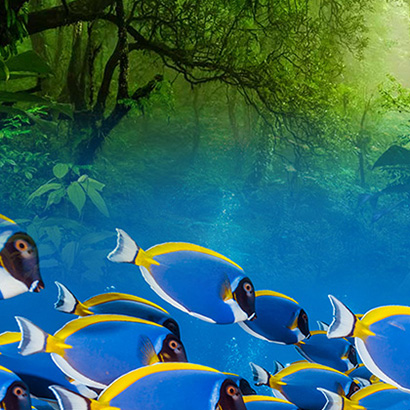

Decorator crabs achieve camouflage by attaching pieces of their surroundings—algae, sponges, leaves, or even small animals like anemones—to curved, hooked bristles on their shells. These bristles function like Velcro, allowing the crabs to easily change their decorations.
Explore more in our Marine Life Encyclopedia: https://bit.ly/3E0FYie. Subscribe to our channel and join our community of Wavemakers! p>

Sea otters are threatened and highly vulnerable to extinction due to oil pollution, shifts in the food web, and habitat loss. When doused in oil, an otter’s fur loses its insulating properties, putting the animal at risk of hypothermia.
Symbolically adopt a sea otter today: https://bit.ly/3KJ0J5V
Stay connected with us. Follow Oceana on Instagram, Twitter, and Facebook.

Beluga whales are often called the "canaries of the sea."
Discover more about these fascinating marine mammals in our Marine Life Encyclopedia.

Watch to discover the names of five baby marine animals you might not know.
Join our Wavemakers community by subscribing to our channel. Stay connected with us on social media:
INSTAGRAM: https://www.instagram.com/oceana/
TWITTER: http://twitter.com/oceana
FACEBOOK: https://www.facebook.com/oceana/

The whale shark, the ocean's largest fish, consumes tiny prey such as plankton, fish eggs, and schooling fish. Discover more in our Marine Life Encyclopedia.
Join our community of Wavemakers! Subscribe to our channel and stay connected on social media: Instagram, Twitter, and Facebook.

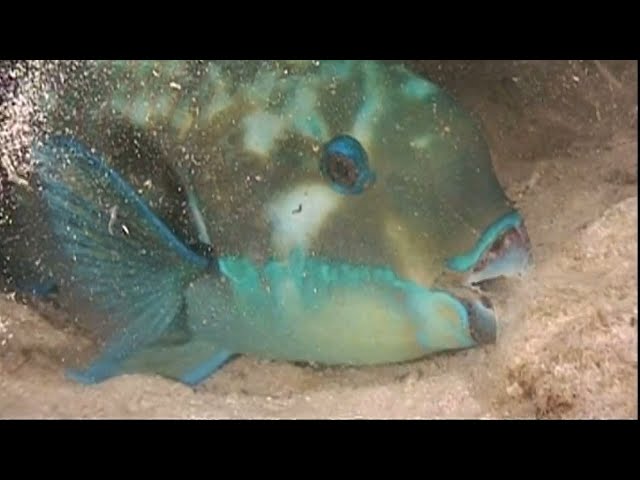

While unicorns are mythical, our oceans teem with real-life horned wonders like narwhals and unicornfish. Discover these and other incredible marine species in our Marine Life Encyclopedia.
Join our community of Wavemakers! Subscribe to our channel for more amazing content. p>
Stay connected with us on social media: Instagram, Twitter, and Facebook.

Mudskippers are unique amphibious fish, notable for their ability to thrive both in water and on land. Unlike most fish, they spend significant time out of aquatic environments.
These fascinating creatures are particularly known for their distinctive locomotion, utilizing their pectoral fins to "walk" or "skip" across terrestrial surfaces.

The sailfish, one of the ocean's fastest fish, can reach speeds up to 68 mph. These speedsters use their long bill to swipe and stab, stunning prey. Scientists believe their large, namesake sail enhances bill accuracy, acting as a keel for stability or a fence to herd prey.
Discover more about marine life in our Marine Life Encyclopedia. Join our community of Wavemakers by subscribing to our channel.
Stay connected with us on social media: Instagram, Twitter, and Facebook.

These fish all sport a grin! Subscribe to our channel to join our Wavemakers community.
Stay connected with us on social media:
Instagram: https://www.instagram.com/oceana/
Twitter: http://twitter.com/oceana
Facebook: https://www.facebook.com/oceana/


Zebra sharks undergo a remarkable transformation. While juveniles display distinctive stripes, their pattern shifts to spots as they mature, resembling a leopard more than a zebra.
Discover more about marine life in our Marine Life Encyclopedia. Join our community of Wavemakers by subscribing to our channel! p>


The narwhal's tusk, an elongated tooth, can reach nearly 10 feet. Learn more in our [Marine Life Encyclopedia](https://bit.ly/3YSsUW5).
Join our community of Wavemakers! Subscribe to our channel and stay connected on social media.
Find us on [Instagram](https://www.instagram.com/oceana/), [Twitter](http://twitter.com/oceana/), and [Facebook](https://www.facebook.com/oceana/).

Longsnout seahorses are poor swimmers, often found clinging to mangroves, seagrasses, or gorgonian corals. They evade predators by camouflaging into their surroundings through their ability to change color.
To learn more, visit our [Marine Life Encyclopedia](https://bit.ly/3OBEKir). Join our community of Wavemakers by subscribing to our channel! p>
Stay connected with us on [Instagram](https://www.instagram.com/oceana/), [Twitter](http://twitter.com/oceana), and [Facebook](https://www.facebook.com/oceana/).

Support the world's tallest penguins through symbolic adoption. Celebrate these special animals and learn more today: Adopt a Penguin.
Join our community of Wavemakers by subscribing to our channel. Stay connected and follow us on Instagram, Twitter, and Facebook.

Male blue-footed boobies flaunt their blue feet during an elaborate courtship display. Discover more in our Marine Life Encyclopedia: https://bit.ly/3OXECuV
Join our community of Wavemakers! Subscribe to our channel and stay connected with us on social media: Instagram, Twitter, and Facebook.

Clownfish uniquely reside among venomous anemone tentacles, protected by a mucus coating that shields them from painful stings. Discover more about marine life in our Marine Life Encyclopedia.
Join our community of Wavemakers! Subscribe to our channel and stay connected:

Discover the gentoo penguin in our Marine Life Encyclopedia: https://bit.ly/3QHHJIF.
Join our community of Wavemakers! Subscribe to our channel and stay connected on social media: Instagram, Twitter, and Facebook. p>
Environmental Scientist and Advocate
What EarthSayers stands for
Discover Diverse Voices on EarthSayers
Unlike algorithm-driven platforms that push you into a content bubble, we ensure you hear a variety of perspectives from scientists, activists, Indigenous leaders, business innovators, and everyday citizens working toward sustainability.
EarthSayers CINEMA
Watch, learn and lead—sustainability starts with you.
How to Live on Earth | Feature Documentary | Presented by Benedict Cumberbatch
What if the solutions to building a better future already exist? How to Live on Earth is an ambitious documentary that explores how humanity can create a thriving future by collaborating with nature. Presented by Benedict Cumberbatch, the film reveals the potential of teaming up with nature to address our greatest challenges.
Heartwarming and energizing, it offers a hopeful vision for a future where both nature and humanity can thrive. How to Live on Earth is produced by Open Planet Studios in association with Villars Institute Foundation and Silvania. Join the conversation by downloading film assets and sharing your reaction at howtoliveonearth.net/social-toolkit. Explore educational resources from the Villars Institute at YouTube.


